Table of Contents
Zapata County Courts, TX *

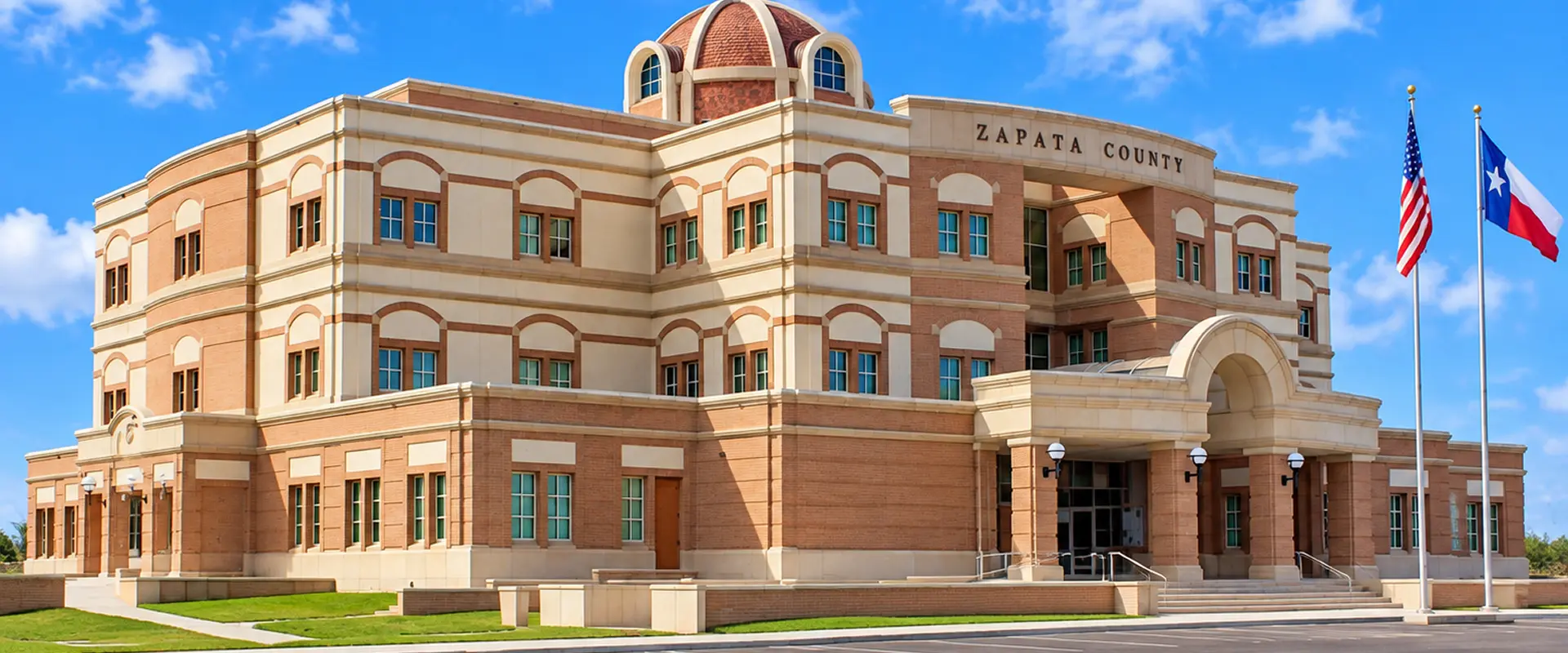
There are more than 13,800 people in Zapata County, and they are governed by the Texas judicial system. The county courthouse is located in Zapata and stands at the center of most of the legal proceedings in the region. Residents, students, legal professionals, businesses, and local residents all interact with the legal system, whether it means accessing government and court records for research or background checks, or assistance with various tasks.
Zapata County's court system is largely influenced by the Texas judicial system, where the structure is well-organized. The Supreme Court is at the highest level in the state, followed by the Court of Criminal Appeals, then the rest of the courts that operate at the local county level. The people in Zapata have access to various courts that handle major and minor cases, starting from the District Courts to the Justice of the Peace Courts.
Overview of the Zapata County Court System
Zapata County's court system is largely influenced by the Texas judicial system, where the structure is well-organized. The Supreme Court is at the highest level in the state, followed by the Court of Criminal Appeals, then the rest of the courts that operate at the local county level. The people in Zapata have access to various courts that handle major and minor cases, starting from the District Courts to the Justice of the Peace Courts.
There is one District Court in Zapata County, whose affairs are managed by the District Clerk, whose roles include recording the court's proceedings and judgments, and performing other duties as directed by Texas law. The next high-level court in the county is the Constitutional County Court, whose main aim is to assist the District Court with handling civil and family matters. It also serves as the court of appeal for cases that come in from the lower-level courts.
Lastly, the locals of Zapata County are served by four Justice of the Peace Courts. Here is where most minor cases like traffic violations, evictions, and small claims are heard, which makes these courts famously the most accessible ones to the citizens. Notably, this county doesn't have Municipal Courts. This is because, unlike most other Texas Counties, there are no incorporated areas. There are no municipal governments in unincorporated areas, so Zapata County is not organized to render any municipal services.
Types of Courts in Zapata County, Texas

There are three main types of courts operating in Zapata County. Here is a more detailed look at the courts and their jurisdictions.
 District Court
The 49th District Court serves Zapata and Webb Counties and is known for being the highest level trial court in the region. The main cases brought to these courts include:
- Felonies
- Divorce
- Adoptions
- Child support
- Child protection
- Civil matters
- Election contests
The presiding judge serves two counties and also has a seat in the Auditor's Board, Bail Bond Board, and the Juvenile Board. The voters of Zapata and Webb Counties are the ones who elect the judge for a four-year term. The 49th District Court has jurisdiction in civil, criminal, domestic, and tax matters and usually acts as an appellate court for cases coming from the lower-level courts.
Primary Location: Zapata County Courthouse
 Constitutional County Court
The Constitutional County Court in Zapata County is the second-highest level court, also handling some of the major cases alongside the District Court. The cases to expect here are:
- Probate matters
- Guardianships
- Juvenile cases
- Civil disputes
- Class A and Class B misdemeanors
- Appeals from the Justice of the Peace Courts
The Constitutional County Court is next in line and a high-level court, meaning it also handles major civil matters and felonies. It is presided over by the County Judge, who is elected on a four-year term and must be an expert in matters of law. This court is also an appellate court, given its high status, so appeals from the Justice of the Peace Courts are brought here.
Primary Location: Zapata County Courthouse
 Justice of the Peace Courts
There are four Justice of the Peace Courts in Zapata County, operating from four precincts. They are the only courts that work at the lowest local level in the county, so they help the citizens solve some of the most common issues, like:
- Truancy
- Evictions
- Small claims
- Debt claims
- Traffic violations
- Mortgage foreclosures
- Class C misdemeanors
The Justice of the Peace Courts have original jurisdiction over the cases above. This means that, unlike appellate courts, they accept new cases, try them, and give resolutions according to what the law dictates. These courts only try offenses that are punishable by fines. Besides hearing the minor cases, these courts also perform other functions, such as issuing arrest warrants, administering oaths, and performing marriages.
Primary Location: Justices of the Peace Precincts throughout Zapata County
How to Access Zapata County Court Records

Texas allows the members of the public to gain access to court records from the County Clerk's office. No one can ask anyone why they need them, and one cannot be prohibited from reviewing them, whether they need them for work, research, or important information for ongoing cases. There are only a few exceptions where some records are sealed. This restriction is mostly for cases involving minors, where the court wants to protect their privacy. This is why juvenile, adoption, and other family matter records may not be accessible. However, other records are accessible, and anyone can preview and get copies, for a small per-page fee.
 Online Access
Parties seeking court records in Texas district or county courts can use re:SearchTX. This is the official database from which all the records from various counties are accessed. It allows the public to access district and county court records across all 254 counties in Texas. Some Justice of the Peace records will also be available. As long as residents have specific details about the case, they can preview the documents and even access certified copies. They will only have to pay a small fee, but they are sure to get verified court records.
 Alternative Online Options
Apart from the official platform where everyone goes to find records from Texas courts, there are alternative options that offer more information. CourtCaseFinder, for instance, not only compiles records from Texas but also goes further to organize records from various counties in other states. It offers access to a more massive database that parties can access from anywhere in the country, which comes in handy when they need multiple court records from several states. Third-party aggregators are also useful if residents don't have all of the information they may need to access data, such as a filing date or case number.
 In-Person Requests
The County Clerk and the District Clerk are the custodians of all court records in Zapata County. Here is where the records from court proceedings are collected and organized, so if, for any reason, one cannot find what they seek online, they can go to the County or District Clerk's offices, located in the Zapata County Courthouse. They will find computers available to the public, and if they are having trouble, the staff will also be ready to help. Note that neither the County Clerk's nor the District Clerk's office is liable for any inaccuracies found, and they are also not mandated to offer legal help or advice.
 Archived Records
If the records needed from the District or County Clerk's office are not available, then chances are high that they are not digitized. This could mean that there may be archived records that can only be obtained from the Texas State Library and Archives Commission. Here is where the state keeps old records that the public can only find in hard copy. So, to access them, parties may have to make a formal written request for them, which may take a while depending on the type of records needed. People who have questions about archived records should check with the County and District Clerks for additional information.
For Attorneys and Legal Professionals
One of the most important things attorneys and legal professionals do is to know how to access important records, and thankfully, the state provides convenient online access. Apart from that, there are alternative third-party platforms that compile records from other states. They can also get help from the Court Clerk's office because this is where records from the courts are kept. They may not step in to offer legal advice, but the office is a valuable source of information.
Professionals should also know how to file a case, and again, digitization has made filing hassle-free. Unlike conventional methods, most case filings in Zapata County are done online, which saves a lot of time. Legal professionals can dedicate their time to preparing for the case without worrying about accessing records or filing in person. These same systems also come in handy when they want to track their case, informing them about any minor changes made, so they are always prepared.
Lastly, they must also stay updated when it comes to the Texas Rules of Civil Procedure, checking that they comply. The last thing they want is to be on the wrong side of the court when it comes to decorum or other guidelines. Following these tips, they can be sure that their case will proceed uninterrupted and they will have a great shot at getting justice for their client.
How to File a Case in Zapata County

Thanks to digitization, filing a case in Zapata County has been made simple, but that means that some tiny details can be overlooked, unless parties are very keen on following the procedure. Here are the steps they should follow to make sure that they successfully file their case.
 Step 1: Choose the Correct Court
There are three main courts in Zapata County: the District, County, and Justice of the Peace Courts, and each has its own role. So when someone files a case, it goes under one of these chambers. The goal is to be sure that the case filed is under the jurisdiction of that particular court. Otherwise, it will only be derailed, and the parties will have to redo the process. It helps to remember that the District Court hears felony cases, as well as contested divorces and civil cases with high damage amounts. The County Court hears probate, guardianship, and custody cases, as well as misdemeanor cases. Justices of the Peace hear small claims cases, traffic violations, and evictions.
 Step 2: Complete Required Forms
After establishing exactly where the case will be handled, the next step is to take the forms from the appropriate Court Clerk and fill them out. Forms for both the County and District Courts can be found on the Texas Judicial Branch website. These documents should contain the most important details of the case, so filers should be careful, making sure that they fill in the correct details without leaving any fields blank. Regardless of the type of case being filed, it is very important that the forms are filled out correctly and submitted on time. People who need help with forms should contact the Clerk of Court.
 Step 3: File the Case
E-filing in Texas has made the process very convenient. Legal professionals can use eFile Texas to file cases from all the counties, not just Zapata. Besides filing, they can now add new documents and enter other relevant details to help their case. Non-professionals are also encouraged to use the simple system since it is not only for legal professionals. People who are representing themselves can choose between filing online and filing in person.
 Step 4: Pay Filing Fees
Filing fees are mandatory for cases to proceed. The County Clerk Fee Schedule of Zapata County outlines how much it costs to file probate, guardianship, civil, and other cases, and usually, the charge depends on the type of case. The District Court also has court fees. There are also additional fees that must be accounted for, and in case of any issues, filers can always reach out to the office to confirm and see if there are any changes. If the fees are too high, they can also submit the Statement of Inability to Afford Payment of Court Costs, which, if approved, will allow them to have the fees waived, and they can proceed with the case.
 Step 5: Serve the Other Party
Another important step that cannot be skipped is the service of the citation. Texas law requires that filers notify the opposing party about the case they have filed against them, and when done, also notify the court by submitting a proof of service. They can have a constable do it or send it via a registered server or certified mail with return receipt requested. If citizens don't serve the other party, the judge cannot pass any judgment for or against them.
 Step 6: Monitor the Case
The very last step is now to track the case. Using the case number obtained from previous processes, parties can monitor the various activities, including what the opposing sides are doing. People can track the progress of their case using re:SearchTX. They can also call the County or District Clerk for additional information on filings, dockets, and calendars. This way, nothing catches them by surprise, so they can adequately prepare for their case.
Zapata County Courthouse Directory
Below are the addresses and contact details of the various courts in Zapata County.
Zapata County Courthouse
Houses the 49th District Court and the County Court.
49th District Court
Address: 200 E. 7th Avenue, Ste. 330, Zapata, TX 78076
Phone: (956) 765-9935
Website: 49th District Court Zapata County
Constitutional County Court
Address: 200 E. 7th Avenue, Ste. 115, Zapata, TX 78076
Phone: (956) 765-9920
Website: Constitutional County Court
Justice of the Peace Courts
Operate at the local level, handling cases that are only punishable by fines.
Precinct 1
Address: 604A Delmar St. Zapata, TX 78076
Phone: (956) 765-9165
Website: Precinct 1
Precinct 2
Address: 1103 US Hwy 83, San Ygnacio, TX 78067
Phone: (956) 765-9811
Website: Precinct 2
Precinct 3
Address: 200 E. 7th Ave, Ste. 205, Zapata, TX 78076
Phone: (956) 765-9945
Website: Precinct 3
Precinct 4
Address: 301 E. 7th Ave, Ste. 205, Zapata, TX 78076
Phone: (956) 765-6655
Website: Precinct 4
Legal Help and Self-Help Resources
If seeking justice but not sure of where to start, the following are the various organizations ready to help residents win their cases, especially if they come from marginalized communities.
 Free Legal Assistance
If one cannot afford to find a good attorney to help argue their case, Texas RioGrande Legal Aid (TRLA) offers low-income residents of Zapata with free legal aid. There are so many attorneys ready to partner to resolve their issues in matters of housing, family, evictions, education, and employment. On the other hand, if someone is a sexual assault survivor, they can get help from Legal Aid for Survivors of Sexual assault (LASSA). This organization works in 68 counties in Texas, and anyone can apply or refer someone from their official site or by leaving a confidential message on the agency's main line.
 Local Legal Support
For the communities struggling with tax issues and tax disputes, they can get local legal support from Texas A&M University School of Law (Tax Dispute Resolution Clinic). This is free assistance for low-income communities to solve issues with IRS audits and IRS negotiations. The volunteers don't prepare tax returns but offer these services under supervision by expert tax attorneys. The Refugee and Immigrant Center for Education and Legal Services (RAICES) also steps in to offer legal support for immigrants and refugees in the country who are seeking asylum. They can help keep families safe by offering administrative help or representing affected parties in court.
FAQs
How do I search for a case in Zapata County?
For convenience, one can find cases online from the state-mandated site re:SearchTX, which contains records from Texas counties, but if looking for a bigger database that holds records from all the other states and their counties, parties can use CourtCaseFinder. Alternatively, if what they seek is not available online, they can always check at the County Clerk's office.
What does it mean for a court to have original jurisdiction over a case?
When a court has original jurisdiction, it means that it has the authority to receive a case, try it, and make a decision based on the law and the evidence presented. It doesn't receive the case from another court, because the others serve as the appellate courts, while it retains the original jurisdiction.
How many types of courts are in Zapata County?
The highest level court in Zapata County is the 49th District Court, which handles major cases in the region. The next one is the Constitutional County Court, which is led by the County Judge, and finally, at the grassroots level, are the Justice of the Peace Courts, which solve the minor cases that are only punishable by fines.
What is the small claims limit in Zapata County?
The Justice of the Peace courts are also the small claims courts for civil matters in the county that are outside the jurisdiction of the other two courts. They only handle civil disputes when the amount in question is not more than $20,000. Any amount higher than that will be taken to the County or District Court.
Are there municipal courts in Zapata County?
No, Zapata County doesn't have municipalities, so it doesn't have municipal courts. This is because there are no incorporated areas, so there is no clear organization that would support the municipal courts. The local and most accessible courts that hear minor cases in Zapata County are the Justice of the Peace Courts.
Can I get a fee waiver in Zapata County?
If one cannot afford the court fees requested, they can apply for a fee waiver by submitting the Statement of Inability to Afford Payment of Court Fees. This will only be granted if they can prove to the court that they deserve it and are from a low-income household.
Other Counties in Texas
- Anderson
- Andrews
- Angelina
- Aransas
- Archer
- Armstrong
- Atascosa
- Austin
- Bailey
- Bandera
- Bastrop
- Baylor
- Bee
- Bell
- Bexar
- Blanco
- Borden
- Bosque
- Bowie
- Brazoria
- Brazos
- Brewster
- Briscoe
- Brooks
- Brown
- Burleson
- Burnet
- Caldwell
- Calhoun
- Callahan
- Cameron
- Camp
- Carson
- Cass
- Castro
- Chambers
- Cherokee
- Childress
- Clay
- Cochran
- Coke
- Coleman
- Collin
- Colorado
- Comal
- Comanche
- Concho
- Cooke
- Coryell
- Crockett
- Crosby
- Culberson
- Dallam
- Dallas
- Dawson
- De Witt
- Deaf Smith
- Delta
- Denton
- Dimmit
- Duval
- Eastland
- Ector
- Edwards
- El Paso
- Ellis
- Erath
- Falls
- Fannin
- Fayette
- Fisher
- Foard
- Fort Bend
- Franklin
- Freestone
- Frio
- Gaines
- Galveston
- Garza
- Gillespie
- Glasscock
- Goliad
- Gonzales
- Gray
- Grayson
- Gregg
- Grimes
- Guadalupe
- Hale
- Hamilton
- Hansford
- Hardin
- Harris
- Harrison
- Hartley
- Haskell
- Hays
- Henderson
- Hidalgo
- Hill
- Hockley
- Hood
- Hopkins
- Houston
- Howard
- Hunt
- Hutchinson
- Jack
- Jackson
- Jasper
- Jefferson
- Jim Wells
- Johnson
- Jones
- Karnes
- Kaufman
- Kendall
- Kenedy
- Kerr
- Kinney
- Kleberg
- Lamar
- Lamb
- Lampasas
- Lavaca
- Lee
- Leon
- Liberty
- Limestone
- Live Oak
- Llano
- Loving
- Lubbock
- Madison
- Marion
- Matagorda
- Maverick
- Mcculloch
- Mclennan
- Medina
- Midland
- Milam
- Mitchell
- Montague
- Montgomery
- Moore
- Morris
- Nacogdoches
- Navarro
- Newton
- Nolan
- Nueces
- Ochiltree
- Orange
- Palo Pinto
- Panola
- Parker
- Parmer
- Pecos
- Polk
- Potter
- Rains
- Randall
- Red River
- Reeves
- Robertson
- Rockwall
- Runnels
- Rusk
- Sabine
- San Augustine
- San Jacinto
- San Patricio
- Scurry
- Shelby
- Sherman
- Smith
- Somervell
- Starr
- Stephens
- Tarrant
- Taylor
- Terrell
- Terry
- Titus
- Tom Green
- Travis
- Trinity
- Tyler
- Upshur
- Uvalde
- Val Verde
- Van Zandt
- Victoria
- Walker
- Waller
- Ward
- Washington
- Webb
- Wharton
- Wichita
- Wilbarger
- Willacy
- Williamson
- Wilson
- Wise
- Wood
- Yoakum
- Young
- Zavala
Table of Contents
