Table of Contents
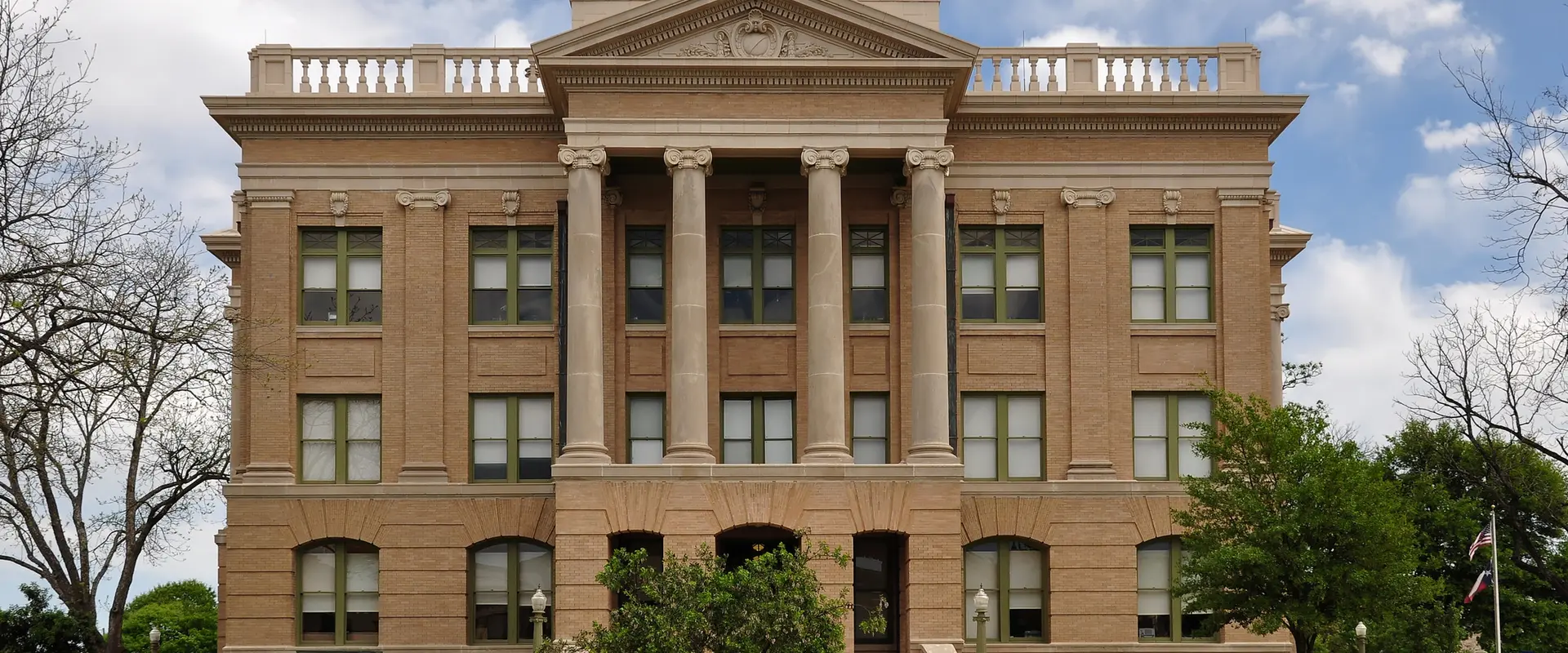
Williamson County Courts, TX *

Williamson County is among the top 20 most populous counties in Texas, housing over 700,000 residents. As with any other county in Texas, the court uses a multilayered system with a trial structure comprising the District Courts, County Courts at Law, Justice of the Peace Courts, and Municipal Courts. The complexity of the system makes the justice-seeking process frustrating for its people, especially for those who do not have lawyers.
Navigating such a system may require residents to have some basic knowledge of the courts and what they do. Also, one needs to understand the clerks who handle specific records and filing to avoid wasting time by visiting the wrong clerk.
Overview of the Williamson County Court System
The Williamson County courts are under the large Texas court system. The structure is not unified but layered instead, meaning it has multiple courts with each one having its own jurisdiction. The District Courts are at the top and handle serious felony level criminal and civil cases. At the bottom are the Justice of the Peace Courts and the Municipal Courts, dealing with smaller claims, traffic tickets, and local ordinance violations. In the middle, we have the County Courts at Law that handle cases that are higher than those of the Justice of the Peace Courts and lower than those of the District Courts.
Court records and filings are managed by the District and County Clerks, with each one of them having their own roles. It is critical to understand the courts and their roles, how to access records, and the filing process to avoid frustrations that come with the justice-seeking process in Williamson County.
Types of Courts in Williamson County, Texas

Williamson County's court system has several courts, with each one having its own jurisdiction. Below is a section that describes the role of each court.
 District Courts
At the top of the trial courts in Williamson County are the seven District Courts, which have their own unique focus. The courts include the 26th District Court, 277th District Court, 368th District Court, 395th District Court, 425th District Court, 480th District Court, and 512th District Court. Generally, the courts have jurisdiction over:
- Felony criminal cases
- Divorce proceedings
- Civil disputes involving more than $200
- Family law and child custody matters
- Juvenile proceedings
- Election contests
The District Clerk's office manages the records and filing of the cases that pass through the District Courts. In case of any questions the public might have, the District Court staff is available to point people in the right direction.
Primary Location: Williamson County Justice Center
 County Constitutional Court
Williamson County has a County Constitutional Court that has both administrative responsibilities and hears probate tial matters. The court is presided over by a County Judge, who does the same for the Commissioners Court. Specifically, they deal with:
- Administration
- Probate matters
- Misdemeanor appeals
In probate, it handles wills, estates, guardianships, and mental health proceedings. Being in Washington is a big County. The majority of the trial issues at the county level are handled with the County Courts at Law.
Primary Location: Williamson County Justice Center
 County Courts at Law
Williamson County Courts at Law are in the middle tier of the structure and handle civil and criminal cases that fall between the District Courts and the Justice of the Peace Courts. The county has five County Courts at Law, each with a specific area they handle.
Also, the court has concurrent jurisdiction with the District Courts in family law and Justice of the Peace Courts in criminal matters, which can create confusion. Generally, the courts handle:
- Civil cases between $200 and $250,000
- Class A and Class B misdemeanors, like
- First DWI offense
- Assault
- Certain drug possession charges
- Some family law cases
Unlike the other counties, where all County Court records are maintained by the County Clerk, in Williamson County, the role is shared between the two clerks, depending on the type of case at hand. The County Clerk maintains misdemeanor records, while the District Clerk manages family law cases that have been heard in these courts.
Primary Location: Williamson County Justice Center
 Justice of the Peace Courts
Williamson County has four precincts spread across different geographic locations, with each one having its own Justice of the Peace Court. The courts are the entry-level courts, and they handle the minor issues affecting residents daily. In most cases, they are the only court that the people get to interact with throughout their justice-seeking process. The cases they handle include:
- Small claims up to $20,000
- Eviction cases
- Class C misdemeanors (traffic violations and minor offenses)
- Requests for search and arrest warrants
- Coroner in counties without a medical examiner
- Magisterial responsibilities like presiding over wedding ceremonies
Justice of the Peace Courts (JP) are not courts of record, meaning that the verbatim transcripts of proceedings are not automatically created. In case one needs a transcript, they will have to hire a court reporter themselves to help them record.
Primary Location: Precinct 1 (Round Rock), Precinct 2 (Cedar Park), Precinct 3 (Georgetown), Precinct 4 (Taylor)
 Williamson County Commissioners Courts
Unlike other courts, the Williamson County Commissioners Court is not a trial court, but a governing body for the county. It ensures that:
- Local policies are set
- The county budget is managed efficiently
- Public services are well managed
Additionally, the Commissioners Court also holds regular public meetings where residents can stay informed, raise concerns, or follow how decisions are made.
Primary Location: Williamson County Justice Center
Specialty and Treatment Courts
Williamson County has several specialty dockets within the court structure, but they follow their own procedures. The courts include:
- Veterans Treatment Court
- Felony Mental Health Docket
- Transformative Justice Program
- Felony DWI and Drug Court
Despite the courts having their procedures, they ensure they remain accountable by working closely with judges, probation officers, counselors, treatment providers, and social service agencies.
Primary Location: Williamson County Justice Center
 Municipal Courts
Williamson County has eleven Municipal Courts that operate at the city level and not the county level. Each incorporated city has a mandate to maintain its own municipal court. The responsibilities include handling:
- Violations of city ordinances
- Traffic infractions
- Class C misdemeanors
Cities can establish Municipal Courts of Record under Chapter 30 of the Texas Government Code, even though Municipal Courts are generally not courts of record. Appeals from municipal court are transferred to the County Court at Law for a new trial and review of the decision.
Primary Locations: Georgetown, Round Rock, Cedar Park, Leander, Hutto, Taylor, Liberty Hill, Jarrell, Florence, Granger, and Thrall City Halls
How to Access Williamson County Court Records

Court records in Williamson County are subject to a free public access rule with few exemptions, including juvenile courts and other sealed records restricted by a judge for specific legal reasons.
 Online Access
The people of Williamson County can access court records through an official public record portal called the Williamson County Judicial Records website. It allows them to view information on pending or recently closed cases in the District Courts, County Courts, and Justice of the Peace Courts with a free account. One is required to search using a case number, party name, or date filed. Also, it allows access to court assignments and court docket information at the site. Residents can also access records from District and County Courts through re:SearchTX.
 Alternative Online Options
For those who are not sure of the court a case was filed in, third-party tools such as CourtCaseFinder can be a good starting point. It aggregates records across Texas counties and provides access to available court records across the state's court system. As much as it gives well-researched information, it is important to confirm the most recent information from the court's official website. Third-party search engines can also locate court cases throughout Texas, even when information is missing or incomplete.
 In-Person Requests
Some records that cannot be accessed online can be located in person from the office of the District and County clerk. The District Clerk's office manages records from the District Courts and family law cases at the County Court. The County Clerk's office manages those from the County Courts and critical documents like birth and death certificates.
The non-certified documents can also be accessed via an email request. To avoid delays, the request should include the name of the party, enough case information, and the record search fee. In both courts, general copies cost $1 and certified ones cost $5 per page.
 Archived Records
A record retention schedule determines how long a record can be stored. Once a record surpasses its retention period, Williamson County transfers it to the Texas State Library and Archives Commission (TSLAC). Different courts and case types determine the retention time. In most cases, the District Court's criminal records are stored permanently or longer than those of lower courts according to the record retention schedule. It is important to visit or contact the clerk's office first before checking the statewide options.
For Attorneys and Legal Professionals
Thanks to Williamson County and the state of Texas, lawyers do not have to go through the hassle of calling or visiting the clerk's office to monitor their clients' cases; instead, they use the Judicial Records website and eFile Texas, which grants them access to records. It is important to note that the District Clerk's office not only coordinates e-filing for District Court cases, but also those of family law matters in the County Courts at Law.
Attorneys can always be on top of their game by contacting the District Court administrator, who can assist them with scheduling, case questions, and filing procedures. The County Clerk has information on County Court and Justice of the Peace cases. When dealing with family, civil, juvenile, or probate matters in Williamson, always comply with the guidelines in the Texas Rules of Civil Procedure and those provided by Williamson County.
How to File a Case in Williamson County

Filing a case in Williamson County is simple, as long as one follows the necessary steps that are broken down below.
 Step 1: Choose the Correct Court
Different courts have different jurisdictions, so citizens should file in the relevant court that handles their particular case. The major issues are taken at the District Courts, while minor ones are taken at the Justice of the Peace Courts and the municipal courts. Matters in between the two levels are handled at the County Courts at Law. Residents would not need to file anything with the Municipal Court. Municipal Courts in Texas are only tasked with hearing cases of minor infractions or violations brought by government agencies, such as police departments, fire departments, and animal control. Filing in the wrong court can lead to dismissal or delays.
 Step 2: Complete Required Forms
The court forms are the only way that one can present their case to the court. Texas has standardized court forms that are used for case filing available through TexasLawHelp. Residents can also look for forms at the Texas Judicial Branch, which is the governing body over all state trial courts in Texas. One increases the chances of getting justice on time by filling them out accurately and completely. Citizens who have trouble filling out the paperwork or have questions about procedures should contact the Court Clerk's office.
 Step 3: File the Case
Once the forms are accurately and completely filled out, one needs to take the documents for filing. People who are representing themselves have a choice whether to file online or in person. The eFile Texas platform is the norm for the people filing cases in Texas and is mandatory for cases with lawyers. The District Clerk's office handles serious cases to be filed at the district court and family law cases, while the County Clerk's office handles cases for the County Courts. Small claims cases are filed through the Justices of the Peace Courts. In case a resident is not sure of how to progress, the staff at the clerk's office will help point them in the right direction.
 Step 4: Pay Filing Fees
Filing fees vary depending on the type of case and the court in which the case is filed. Cases filed at the district court are more expensive compared to those of lower courts. The clerk's office has an updated fee schedule showing the fee for each case. In some cases, one may end up having a higher cost when miscellaneous items are added. Residents who file in person can pay with cash, cashier's check, or money order. People who are filing electronically can pay with a credit or debit card. If one cannot afford filing fees, they can request a waiver by submitting a Statement of Inability to Afford Payment of Court Costs.
 Step 5: Serve the Other Party
Texas law requires that one serve the other party when they file a case against them, and once done, the court must be notified. Service can be through a registered server in the county, a sheriff, a constable, or a certified mail carrier. Whoever serves the paperwork to the other party will have to file a Proof of Service Form with the court, which is usually done by the process server business or law enforcement agency. Once done, the proof must be retained and confirmed to the court. Without this process, the case cannot proceed.
 Step 6: Monitor The Case
Once the case is filed and the other party is aware, the judge sets the court hearing dates. It is expected that each party will appear without fail. Residents can monitor their case through the Judicial Records website or through eFile Texas. These are free-to-use sites that allow viewing information on pending or recently closed cases in the County or District Courts by searching with case number, party or defendant name, attorney, or date filed. If a citizen gets confused about how to monitor the case, it is always appropriate to ask the Court Clerk.
Williamson County Courthouse Directory
Some key contacts are critical when navigating a court process. Below is a contact list for important courts in Williamson County.
District Courts
Handle serious criminal and civil cases in Williamson County.
Georgetown
Williamson County Courthouse Address: 405 Martin Luther King Street, Georgetown, TX 78626
26th District Court
Phone: (512) 943-1228
Website: 26th District Court
277th District Court
Phone: (512) 943-1277
Website: 277th District Court
368th District Court
Phone: (512) 943-1368
Website: 368th District Court
395th District Court
Phone: (512) 943-1395
Website: 395th District Court
425th District Court
Phone: (512) 943-3380
Website: 425th District Court
480th District Court
Phone: (512) 943-1100 (Main Courthouse)
Website: 480th District Court
512th District Court
Phone: (512) 943-3881
Website: 512th District Court
District Clerk
Phone: (512) 943-1212
Website: District Clerk
County Courts at Law and Constitutional County Court
Midlevel courts that handle criminal and civil cases that are lower than the district court and higher than the justice courts.
Georgetown
Address: 405 Martin Luther King Street, Georgetown, TX 78626
County Court at Law 1
Phone: (512) 943-1200
Website: County Court at Law 1
County Court at Law 2
Phone: (512) 943-1410
Website: County Court at Law 2
County Court at Law 3
Phone: (512) 943-1160
Website: County Court at Law 3
County Court at Law 4
Phone: (512) 943-1681
Website: County Court at Law 4
County Court at Law 5
Phone: (512) 943-3671
Website: County Court at Law 5
County Clerk
Phone: (512) 943-1515
Website: County Clerk
Constitutional County Court
Phone: (512) 943-1550
Website: Constitutional County Court
Justice of the Peace Courts
Entry-level courts that deal with minor issues affecting people daily.
JP Precinct 1
Address: 1801 E Old Settlers Blvd., Round Rock, TX 78664
Phone: (512) 244-8622
Website: JP Precinct 1
JP Precinct 2
Address: 350 Discovery Boulevard, Cedar Park, TX 78613
Phone: (512) 260-4210
Website: JP Precinct 2
JP Precinct 3
Address: 100 Wilco Way, Georgetown, TX 78626
Phone: (512) 943-1501
Website: JP Precinct 3
JP Precinct 4
Address: 211 W 6th Street, Taylor, TX 76574
Phone: (512) 352-4155, (512) 525-8688
Website: JP Precinct 4
Municipal Courts
Deal with violations of city ordinances.
Georgetown Municipal Court
Address: 510 W. 9th Street, Georgetown, TX 78626
Phone: (512) 930-3625
Website: Georgetown Municipal Court
Round Rock Municipal Court
Address: 301 W. Bagdad Avenue, Round Rock, TX 78664
Phone: (512) 218-5490
Website: Round Rock Municipal Court
Cedar Park Municipal Court
Address: 911 Quest Parkway, Cedar Park, TX 78613
Phone: (512) 260-4300
Website: Cedar Park Municipal Court
Leander Municipal Court
Address: 200 W Willis St, Leander, TX 78641
Phone: (512) 259-1239
Website: Leander Municipal Court
Hutto Municipal Court
Address: 401 W Front St, Hutto, TX 78634
Phone: (512) 759-1011
Website: Hutto Municipal Court
Taylor Municipal Court
Address: 109 W 5th St, Taylor, TX 76574
Phone: (512) 352-5977
Website: Taylor Municipal Court
Liberty Hill Municipal Court
Address: 2801 RR 1869, Liberty Hill, TX 78642
Phone: (512) 515-5410
Website: Liberty Hill Municipal Court
Jarrell Municipal Court
Address: 161 Town Center Blvd, Jarrell, TX 76537
Phone: (512) 746-4593
Website: Jarrell Municipal Court
Florence Municipal Court
Address: 106 S Patterson Ave, Florence, TX 76527
Phone: (254) 793-8037
Website: Florence Municipal Court
Granger Municipal Court
Address: 214 E Davilla St, Granger, TX 76530
Phone: (512) 859-2755
Website: Granger Municipal Court
Thrall Municipal Court
Address: 104 S Main St, Thrall, TX 76578
Phone: (512) 898-5395
Website: Thrall Municipal Court
Legal Help and Self-Help Resources
The process of seeking justice without a lawyer in a complicated court system like the one Williamson County uses can be very challenging. Accessing available free and local assistance can help simplify the process. Below are a few resources the people can take advantage of.
 Free Legal Assistance
The first help is the Texas Rio Grande Legal Aid, which provides free civil legal services to eligible low-income individuals throughout Central Texas, including Williamson County. Also, one can access fillable forms, plain-language guides, and county-specific information at the Texas Legal Services Center. The site focuses on civil cases like divorce, custody, landlord-tenant issues, and debt. Lastly, the State Bar of Texas can connect the residents with an attorney at a reduced fee during an initial consultation through its Lawyer Referral Service program.
 Local Legal Support
Williamson County ensures that the self-represented litigants have an easy court process by providing several local legal support resources to assist its people through the process. First, the Williamson County Courthouse is open to the public and gives them access to legal databases. Additionally, the Williamson County District Courts can appoint an attorney for individuals in criminal matters who cannot afford one in certain matters. People with mental issues can benefit from the Texas Advocacy Project, which provides free legal services related to family violence, sexual assault, and stalking, and can also help connect individuals with the county's specialty court programs.
FAQs
How does someone look up a court case in Williamson County?
The first place that one can access the records is the Judicial Records website, which allows people to view information on pending or recently closed cases in the District Courts. In case one is not sure of the court that handled their case, they can use tools like CourtCaseFinder that aggregate available court data across Texas.
How much does it cost to get a copy of a court record in Williamson County?
The cost of a copy varies depending on whether it is general or certified. In most cases, general copies will cost $1 per page. Certified copies at the District Clerk's office are $1 per page and an additional $5 certification fee. For the County Clerk, citizens will pay $5 per document. Non-certified copies are $1 per page from either office. Also, the process has an additional $5 search fee.
Are juvenile court records public in Williamson County?
Juvenile records are not accessible to the public because they are generally sealed to protect the minors. But the law exempts records for cases like the felony tried as serious adult cases. Accessing the records is mainly through an in-person request from the clerk's office
What happens if one misses a court date in Williamson County?
In case one missed a court case with a valid reason, they can contact their lawyer or the courts immediately to explain themselves. The situation is not one to brush off, hoping the court will forget. It can lead to a default judgment for civil cases and the issuance of a warrant of arrest for criminal cases.
Can one request court records by email?
The non-certified copies from the District or County Clerk's office can be requested via email by writing an official email to the clerk's office. Including the name of the party, enough case information, and the record search fee will ease the search process for the staff and save time.
Other Counties in Texas
- Anderson
- Andrews
- Angelina
- Aransas
- Archer
- Armstrong
- Atascosa
- Austin
- Bailey
- Bandera
- Bastrop
- Baylor
- Bee
- Bell
- Bexar
- Blanco
- Borden
- Bosque
- Bowie
- Brazoria
- Brazos
- Brewster
- Briscoe
- Brooks
- Brown
- Burleson
- Burnet
- Caldwell
- Calhoun
- Callahan
- Cameron
- Camp
- Carson
- Cass
- Castro
- Chambers
- Cherokee
- Childress
- Clay
- Cochran
- Coke
- Coleman
- Collin
- Colorado
- Comal
- Comanche
- Concho
- Cooke
- Coryell
- Crockett
- Crosby
- Culberson
- Dallam
- Dallas
- Dawson
- De Witt
- Deaf Smith
- Delta
- Denton
- Dimmit
- Duval
- Eastland
- Ector
- Edwards
- El Paso
- Ellis
- Erath
- Falls
- Fannin
- Fayette
- Fisher
- Foard
- Fort Bend
- Franklin
- Freestone
- Frio
- Gaines
- Galveston
- Garza
- Gillespie
- Glasscock
- Goliad
- Gonzales
- Gray
- Grayson
- Gregg
- Grimes
- Guadalupe
- Hale
- Hamilton
- Hansford
- Hardin
- Harris
- Harrison
- Hartley
- Haskell
- Hays
- Henderson
- Hidalgo
- Hill
- Hockley
- Hood
- Hopkins
- Houston
- Howard
- Hunt
- Hutchinson
- Jack
- Jackson
- Jasper
- Jefferson
- Jim Wells
- Johnson
- Jones
- Karnes
- Kaufman
- Kendall
- Kenedy
- Kerr
- Kinney
- Kleberg
- Lamar
- Lamb
- Lampasas
- Lavaca
- Lee
- Leon
- Liberty
- Limestone
- Live Oak
- Llano
- Loving
- Lubbock
- Madison
- Marion
- Matagorda
- Maverick
- Mcculloch
- Mclennan
- Medina
- Midland
- Milam
- Mitchell
- Montague
- Montgomery
- Moore
- Morris
- Nacogdoches
- Navarro
- Newton
- Nolan
- Nueces
- Ochiltree
- Orange
- Palo Pinto
- Panola
- Parker
- Parmer
- Pecos
- Polk
- Potter
- Rains
- Randall
- Red River
- Reeves
- Robertson
- Rockwall
- Runnels
- Rusk
- Sabine
- San Augustine
- San Jacinto
- San Patricio
- Scurry
- Shelby
- Sherman
- Smith
- Somervell
- Starr
- Stephens
- Tarrant
- Taylor
- Terrell
- Terry
- Titus
- Tom Green
- Travis
- Trinity
- Tyler
- Upshur
- Uvalde
- Val Verde
- Van Zandt
- Victoria
- Walker
- Waller
- Ward
- Washington
- Webb
- Wharton
- Wichita
- Wilbarger
- Willacy
- Wilson
- Wise
- Wood
- Yoakum
- Young
- Zapata
- Zavala
Table of Contents
