Table of Contents
Stephens County Courts, TX *

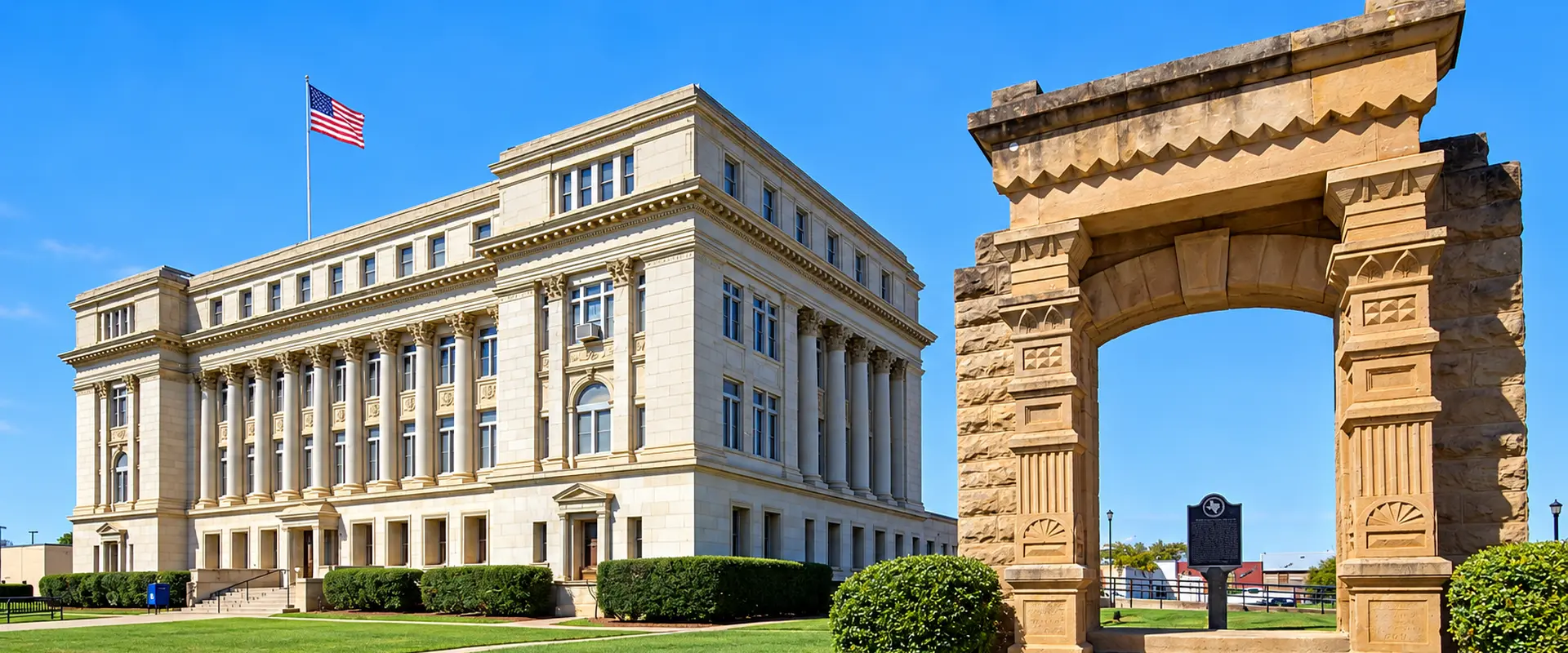
In the heart of downtown Breckenridge sits the historic Stephens County Courthouse. Here, residents from all walks of life come to seek help with civil, probate, family, and property disputes. Attorneys, researchers, journalists, and even self-represented litigants also visit the courthouse to access court records for different purposes.
Whether filing a petition, obtaining court records, or tracking a case, Stephens County courts provide a wide range of legal services. Understanding how to access Stephens County's court records and how the court system works can help one resolve their legal issue swiftly and conveniently.
Overview of the Stephens County Court System
Stephens courts operate under the complex, multi-tiered Texas Court Structure. This fragmented court system has five levels, with multiple courts having overlapping jurisdiction. The county has a District Court, a single Constitutional County Court, a Justice of the Peace Court, and a Municipal Court.
The majority of the courts are in the Stephens County Courthouse in Breckenridge, where most legal proceedings take place. The courthouse also houses the sheriff's, constable's, and tax collector's offices. With a single building housing multiple courts and legal offices, residents can conveniently seek help with their legal matters in one location.
Types of Courts in Stephens County, Texas

Understanding the different court types in Stephens County can help one know where to go for litigation and where to find specific court records. Each court has its own responsibilities, meaning it can only hear cases assigned to it. Here is a breakdown of the different types of courts in Stephens County:
Understanding the different court types in Stephens County can help one know where to go for litigation and where to find specific court records. Each court has its own responsibilities, meaning it can only hear cases assigned to it. Here is a breakdown of the different types of courts in Stephens County:
 District Court
The 90th District Court is the main trial court in Stephens County. It handles severe offenses that carry the possibility of a prison sentence.
Primary location: Stephens County Courthouse
Jurisdiction includes:
- Felonies
- Divorce cases
- Civil suits of $200 or more
- Land-title disputes
- Election contests
- Juvenile matters
The 90th District Court serves Stephens and Young Counties. It has original jurisdiction in serious criminal cases and high-value civil claims. The court also hears appeals from lower courts. Since most cases at this level are complex, litigants should consider working with an attorney to resolve their legal issues.
 Constitutional Court
Located at the Stephens County Courthouse, the Constitutional County Court handles serious misdemeanors that may result in a fine or imprisonment.
Jurisdiction includes:
- Class A and B infractions
- Civil actions not exceeding $10,000
- Probate hearings
- Juvenile matters
- Appellate functions
The County Court has original jurisdiction in civil lawsuits with monetary value not exceeding $10,000. It also handles misdemeanors that carry a fine exceeding $500 or a possible jail sentence. If one disapproves of a decision at the Justice or Municipal Court, they can file an appeal to the County Court for review.
 Justice of the Peace Court
The Justice of the Peace in Breckenridge handles minor cases at the lowest level.
Jurisdiction includes:
- Class C offenses
- Civil cases $200-$20,000
- Small claims cases
- Magistrate functions
This trial court has limited jurisdiction at the precinct level and handles fine-only misdemeanors. The court can oversee civil actions that do not exceed $20,000 in damages. Justice of the Peace courts also perform magistrate functions such as conducting inquests, issuing arrest/search warrants, and administering oaths.
 Municipal Court
The Breckenridge Municipal Court has since moved to the Stephens County Courthouse. It hears Class C misdemeanors punishable only by a fine.
Jurisdiction includes:
- City ordinance violations
- Traffic offenses
- Limited civil offenses
- Magistrate functions
If someone has a traffic ticket for speeding or running red lights, the Municipal Court will hear their case. The court handles traffic violations and other minor cases, for which fines do not exceed $500. It also hears city ordinance violations, which may carry a fine of up to $2,000.
How to Access Stephens County Court Records

Someone may want to access Stephens County court records for case management, legal research, or professional purposes. Whatever the reasons, most court records are public and accessible to anyone. However, the court may restrict access if the record involves a minor, expunged files, or sensitive information. Public, non-confidential court records are accessible through the following ways:
 Online Access
One of the quickest and most convenient ways of accessing court records is through an online search. Most Texas courts make their records searchable online. While the Stephens County courts do not have a dedicated online database, one can use re:SearchTX, the official statewide portal, to view criminal and civil records, as well as other legal information. Accessing court records on this site is free, but one may need a paid subscription for value-added features, such as individualized alerts, case tracking, and in-document text searches.
Before performing an online search, one should have the necessary details, such as the case number, parties involved, and the filing dates, when available. Providing these details will deliver more accurate results.
 Alternative Online Options
The approved state portal is not the only resource for local District and County court records. Individuals can gather court information from credible third-party sites, such as CourtCaseFinder. This platform aggregates court data from across the state into a single online repository for easy access. Here, they'll find criminal, civil, property, and even conviction records to help them manage their legal issues.
 In-Person Requests
Stephens County residents can visit the District or County Clerk's Office to access public court records or request certified copies. The respective clerk can help them locate case files, physical records, and even archived records. They may have to complete a request form for the clerk to process their applications. Additional information, such as case numbers and party details, can help streamline the process. While viewing court records at the clerk's office is free, small charges may apply for printing, copying, and certification.
 Mail Requests
Anyone unable to visit the courthouse can submit a written request to the District or County Clerk's Office by mail or email. The written request should be clear and include all necessary details (case numbers, relevant names) to expedite the process. For mail requests, applicants should provide a self-addressed stamped envelope to receive the records. Various fees may apply for certified copies.
 Archived Records
Archived records for older criminal or civil cases may not be searchable or accessible online. These court records are usually in hard copy. If someone needs access to archived records for legal research, case studies, or investigative journalism, they can obtain them from the Texas State Library and Archives Commission. One may need to pay fees for extensive research requests and certified copies.
The retrieval method one chooses determines the accuracy of the results. Combining online lookups, mail, and in-person requests can help one find the records they need for their case.
For Attorneys and Legal Professionals
Stephens County courts do not have a consolidated online database. For this reason, attorneys and legal professionals may have to access court records through the official Texas state online portal. The site provides cross-jurisdictional court data from all Texas counties. Attorneys can utilize it to view upcoming court schedules, track cases, research expert witnesses, and get real-time case alerts.
Attorneys seeking to track legal proceedings can refer to the County Court or District Court Dockets. These dockets document all courtroom proceedings, helping litigants and attorneys to manage legal matters. They contain case information, such as the initial filing, the names of the parties, and the final judgment. The District or County Clerk's Office is another helpful resource for attorneys from outside Stephens County, seeking certified copies, archived files, and procedural guidance.
How to File a Case in Stephens County

Filing a case is a vital step in the legal process as it indicates one's formal intent to pursue legal action. However, this sequential process requires careful attention to detail. Procedural errors and incorrect formatting can delay a case or lead to a dismissal. Learning how to file a case correctly can help prevent these legal issues.
 Step 1: Confirm the Correct Court
Filers should first confirm the court that will handle their case. Filing in the incorrect court can cause unnecessary delays or dismissals. Moreover, litigants may have to pay the defendant's costs if they lose the case. Stephens County courts hear different cases. The District Court handles felony and high-value civil matters, while the County Court oversees Class A and B misdemeanors. The Justice Courts handle small claims and fine-only offenses, while Municipal Courts hear city ordinance violations.
 Step 2: Complete Required Forms
One should tell the court in writing the reasons for filing the case and the relief sought. The Texas Judicial Branch publishes standardized forms and filing guidelines that litigants can use to complete the paperwork for their case. Filers should include all the necessary documents and signatures in the correct format before filing their case.
 Step 3: File the Case
Electronic filing is compulsory for attorneys across all District and County Courts for criminal, civil, family, and probate cases. Stephens County courts use the eFile Texas system for electronic filing. Filers will need to select an Electronic Filing Service Provider (EFSP) and complete the provided fields to file their case. Depending on the EFSP one chooses, a usage and convenience fee may apply. Self-represented litigants can file with eFile Texas or in person by presenting their petitions or complaints to the appropriate clerk's office.
 Step 4: Pay Filing Fees
Filing a case costs money. Filers may have to pay base filing, citation, and service fees. The exact amount they'll need to pay to file depends on the court and the case type. Litigants should confirm with their local clerk or refer to the Texas Judicial Branch's Filing Fees & Court Costs guidelines for precise figures before filing. Eligible litigants who cannot afford filing fees and court costs can apply for a waiver.
 Step 5: Serve the Other Party
The penultimate step is the "service of process", which means notifying the defendant or respondent of the lawsuit. A case cannot proceed to a judgment without proper service. One can serve the other party through the local sheriff's office, a private process server, or by certified mail request. Once served, the litigant should file a proof of service document with the court to confirm that the defendant received legal papers or summons.
 Step 6: Monitor the Case
Tracking a case can help one stay informed about court schedules, hearing dates, and other updates. In any case, missing court hearings can have serious legal consequences. The court may dismiss the case or rule in favor of the respondent, resulting in fines and loss of legal rights. One can monitor their case through the county's online portal or by consulting the appropriate clerk's office.
Stephens County Courthouse Directory
Stephens County Courthouse
Maintains the District, County, Justice of the Peace, and Municipal Courts all in one location.
Breckenridge
Address: 200 West Walker St, Breckenridge, TX 76424
90th District Court: (254) 559-3151
Constitutional County Court: (254) 559-3700
Justice of the Peace: (254) 559-5322
Breckenridge Municipal Court: (254) 559-5322
Knowing the location of the court that will handle a case allows for early planning and reduces the stress associated with travel time. Litigants will arrive at hearings on time and avoid potential consequences such as arrest warrants and penalties.
Legal Help and Self-Help Resources
Handling legal matters can be hectic for anyone without legal experience. The good news is that several nonprofit organizations in Stephens County offer free or low-cost resources to help litigants handle different legal challenges. Below is a breakdown of legal resources available in Stephens County:
Handling legal matters can be hectic for anyone without legal experience. The good news is that several nonprofit organizations in Stephens County offer free or low-cost resources to help litigants handle different legal challenges. Below is a breakdown of legal resources available in Stephens County:
 Free Legal Assistance
The Legal Aid of NorthWest Texas (LANWT) offers free legal assistance to eligible low-income litigants in Stephens County. Attorneys from this nonprofit organization handle general civil cases, including housing, family law, public benefits, and healthcare. One may apply for legal aid from LANWT online, by phone, or in person.
Stephens County courts offer self-help resources to assist individuals and businesses in managing their legal issues. These resources include procedural guidelines for filing cases, information on lawyer referral services, and videos about the Texas court system. Alternatively, one can visit the courthouse in Breckenridge to speak to the local clerk. While the clerk does not give legal advice, they provide forms and procedural guidelines to help one with their case.
 Local Legal Support
Attending legal clinics can be helpful to self-represented litigants. These programs empower participants with legal knowledge to help them manage their cases. For instance, organizations like Noah Project, Inc. host weekly legal classes for victims of sexual assault, domestic violence, and human trafficking. During these classes, litigants can speak one-on-one with an attorney about divorce cases, protective orders, and custody issues.
FAQs
Can someone attend court hearings in Stephens County remotely?
One can attend court hearings remotely via Zoom and other similar platforms, but only for non-contested legal matters. While Stephens County courts allow video appearances, parties must obtain the court's prior approval to appear remotely. They must also send any documents related to the case at least one business day before the hearing.
Can anyone search case information online?
All case information held by Stephens County courts is accessible to the public, unless sealed or restricted by a court order. Anyone with the case number or the full name of the parties involved can search for their records online. However, if the case involves a minor or contains sensitive information, the court may withhold or seal it from the public. State laws assure litigants that all confidential records remain inaccessible.
Are court proceedings in Stephens County open to the public?
Stephens County courts accept public hearings. One can attend most trials and hearings in person. The Open Courts Provision of the Texas Constitution mandates that all courts shall remain open to the public. However, the court may restrict access for safety or privacy reasons. Juvenile matters and sealed proceedings are also not open to public hearings.
How long does it take to get records in Stephens County?
Processing times for court records depend on the record type, court, and retrieval method used. Online lookups deliver instant results, as long as the necessary details, such as case name, case number, and parties involved, are available. In-person requests may take a few hours to a few business days, while mail requests might take 5 to 10 business days, depending on the address. Historical and archived records take time to process since they are not readily available online. They are typically in hard copy and require an in-person request to obtain them.
Are online court record searches always accurate?
The accuracy of record search results depends on several factors. Most courts do not update their records in real time, meaning one might not find the records they're searching for. Misspellings, omissions, and incorrect entries can also result in inaccuracies. To obtain more accurate results, applicants should provide all the necessary details, such as case number, case name, and parties involved.
What do I do if I can't find my case online?
Not all court records are searchable or accessible online due to legal restrictions or privacy requirements. If this is the case, applicants will have to visit the appropriate District or County Clerk's Office to access case information. They should provide as much information as possible, including relevant case numbers and the names of the parties involved, to ensure efficient service and reduced wait times.
What records do District Court clerks hold?
A District Court clerk is the custodian of all court records and legal proceedings of their respective court. They manage records filed in criminal, civil, probate, and juvenile matters. Moreover, they keep appearance dockets, case indexes, and court minutes, and also receive and maintain any evidence submitted to the court.
Is it safe to use a third-party records finder?
Alternative records search tools like CourtCaseFinder are safe to use. The site uses high-level encryption and other security mechanisms to secure all searches and ensure confidentiality. It also adheres to the highest data protection and online security standards to thwart malicious hackers and robots from the platform.
Other Counties in Texas
- Anderson
- Andrews
- Angelina
- Aransas
- Archer
- Armstrong
- Atascosa
- Austin
- Bailey
- Bandera
- Bastrop
- Baylor
- Bee
- Bell
- Bexar
- Blanco
- Borden
- Bosque
- Bowie
- Brazoria
- Brazos
- Brewster
- Briscoe
- Brooks
- Brown
- Burleson
- Burnet
- Caldwell
- Calhoun
- Callahan
- Cameron
- Camp
- Carson
- Cass
- Castro
- Chambers
- Cherokee
- Childress
- Clay
- Cochran
- Coke
- Coleman
- Collin
- Colorado
- Comal
- Comanche
- Concho
- Cooke
- Coryell
- Crockett
- Crosby
- Culberson
- Dallam
- Dallas
- Dawson
- De Witt
- Deaf Smith
- Delta
- Denton
- Dimmit
- Duval
- Eastland
- Ector
- Edwards
- El Paso
- Ellis
- Erath
- Falls
- Fannin
- Fayette
- Fisher
- Foard
- Fort Bend
- Franklin
- Freestone
- Frio
- Gaines
- Galveston
- Garza
- Gillespie
- Glasscock
- Goliad
- Gonzales
- Gray
- Grayson
- Gregg
- Grimes
- Guadalupe
- Hale
- Hamilton
- Hansford
- Hardin
- Harris
- Harrison
- Hartley
- Haskell
- Hays
- Henderson
- Hidalgo
- Hill
- Hockley
- Hood
- Hopkins
- Houston
- Howard
- Hunt
- Hutchinson
- Jack
- Jackson
- Jasper
- Jefferson
- Jim Wells
- Johnson
- Jones
- Karnes
- Kaufman
- Kendall
- Kenedy
- Kerr
- Kinney
- Kleberg
- Lamar
- Lamb
- Lampasas
- Lavaca
- Lee
- Leon
- Liberty
- Limestone
- Live Oak
- Llano
- Loving
- Lubbock
- Madison
- Marion
- Matagorda
- Maverick
- Mcculloch
- Mclennan
- Medina
- Midland
- Milam
- Mitchell
- Montague
- Montgomery
- Moore
- Morris
- Nacogdoches
- Navarro
- Newton
- Nolan
- Nueces
- Ochiltree
- Orange
- Palo Pinto
- Panola
- Parker
- Parmer
- Pecos
- Polk
- Potter
- Rains
- Randall
- Red River
- Reeves
- Robertson
- Rockwall
- Runnels
- Rusk
- Sabine
- San Augustine
- San Jacinto
- San Patricio
- Scurry
- Shelby
- Sherman
- Smith
- Somervell
- Starr
- Tarrant
- Taylor
- Terrell
- Terry
- Titus
- Tom Green
- Travis
- Trinity
- Tyler
- Upshur
- Uvalde
- Val Verde
- Van Zandt
- Victoria
- Walker
- Waller
- Ward
- Washington
- Webb
- Wharton
- Wichita
- Wilbarger
- Willacy
- Williamson
- Wilson
- Wise
- Wood
- Yoakum
- Young
- Zapata
- Zavala
Table of Contents
