Table of Contents
Robertson County Courts, TX *

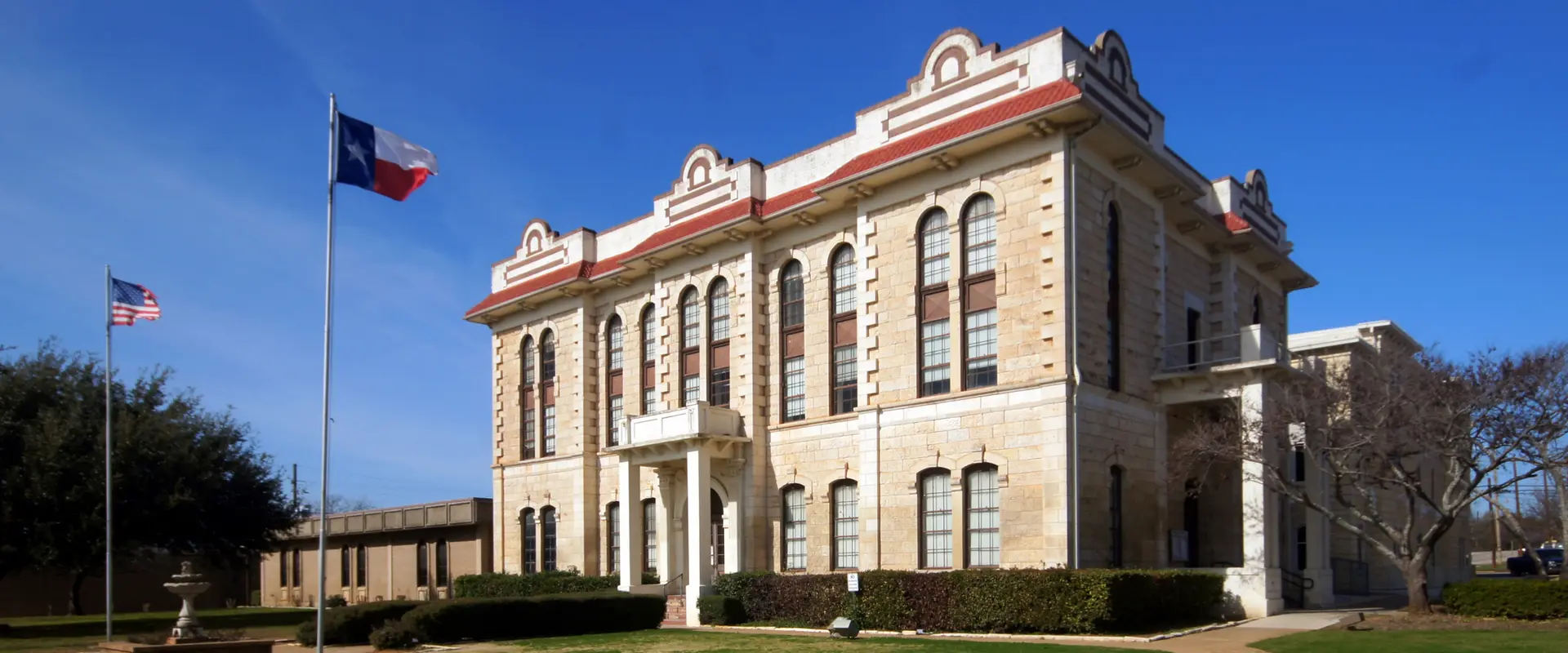
Robertson County was established in 1837 and organized in 1838. The county played a big role in the Civil War, supplying the Confederacy with food, clothing, and financial support. In the heart of Franklin City, the county seat, stands the historic 1882 Second Empire Robertson County Courthouse. The building houses the District and County Courts and the Clerk's Office, where residents can get various legal services.
Robertson County courts hear and decide various cases, including probate, criminal, civil, family law, and juvenile matters. Attorneys and litigants can go to the courts to access court records, file cases, and seek professional legal services. While the Robertson County Clerk keeps criminal, probate, and civil court records, the District Court Clerk maintains all docket files and official civil, felony, and family law records for the District Court.
Overview of the Robertson County Court System
Robertson County courts work under the Texas multi-tiered judicial system that consists of Municipal and Justice Courts down at the local level to the Constitutional County Court and the District Court at the upper level. With most courts housed in the Robertson County Courthouse in Franklin City, they handle all manner of legal issues, from civil and criminal cases to family matters, misdemeanors, and even election petitions.
Robertson County residents go to the courts to obtain court records, settle legal disputes, and seek professional legal advice. With the main District Court and the Constitutional County Court housed in the same building, attorneys and litigants can conveniently access legal services under one roof. The Justice Courts and Municipal Courts are spread across different locations throughout the county for convenient access to legal services.
Types of Courts in Robertson County, Texas

Robertson County has multiple courts, each with its own jurisdiction. Identifying each court's responsibilities can help one know where to file cases, retrieve records, and seek legal services.
 District Court
The 82nd Judicial District Court is Robertson County's highest trial court. It also serves the neighboring Falls County and is among the 510 District Courts spread throughout the state.
Primary location: Robertson County Courthouse
Cases handled here include:
- Civil disputes over $200
- Felony criminal charges
- Divorce proceedings
- Title to land disputes
- Election contests
- Juvenile matters
- Contested probate cases
As the county's highest court, the District Court handles civil lawsuits, family law matters, and felony criminal cases. It also hears juvenile delinquency and dependency matters, focusing on rehabilitation rather than punishment. Civil proceedings in which the money in controversy is more than $200 take place here. The court also reviews appeals from the lower County Court. While a single judge presides over most cases at the District Court, jury trials are available provided that one party demands and pays for them.
 Constitutional County Court
Located at the Robertson County Courthouse, the Constitutional County Court is a mid-tier trial court with limited jurisdiction over civil, probate, and misdemeanor cases.
Types of cases heard here include:
- Civil actions not exceeding $20,000
- Probate matters and guardianship
- Class A & B misdemeanors
- Mental health cases
- Juvenile matters
- Appeals from lower courts
As with all 254 Texas counties, Robertson County has a statutory Constitutional County Court. It handles less serious offenses and serves as an appellate court for cases appealed from the Justice and Municipal Courts. Most cases handled here carry a possible fine of more than $500 or a jail sentence.
 Justice of the Peace Courts
Under the Texas Judicial System, each county must have at least one Justice of the Peace Court. Robertson County is no exception. It has four Justice of the Peace precincts that serve residents at the local level.
Jurisdiction includes:
- Class C, fine-only misdemeanors
- Small claims matters
- Civil cases of not more than $20,000
- Evictions and landlord-tenant disputes
- Magistrate functions
The Justice of the Peace (JP) Courts operate at a local level and handle minor offenses punishable by a fine. They are the first entry point for residents interacting with the county's legal system. JP Courts also undertake magistrate functions such as issuing arrest and search warrants, conducting inquests, and performing marriage ceremonies. Since Robertson County doesn't have a designated coroner, the JP Court judges serve as the county's medical examiner.
 Municipal Courts
Robertson County has four municipal courts in the cities of Bremond, Calvert, Franklin, and Hearne. They hear minor offenses and violations within city limits.
Cases handled by municipal courts include:
- Class C misdemeanors
- City ordinance violations
- Traffic citations
- Dog owner civil cases
- Magistrate functions
These local trial courts hear cases punishable by a small fine, not exceeding $2,000. Cases assigned to this court include non-criminal offenses that break municipal rules, such as erecting an illegal structure, noise pollution, and signage violations. While municipal courts do not hear civil cases, they can take civil action against owners of dangerous dogs. Municipal courts also handle magistrate functions, such as issuing arrest or search warrants.
How to Access Robertson County Court Records

Under the Texas open records policy, most court records are public, meaning anyone can view them. Litigants and attorneys can view or request court records online or in person. However, the court may seal or restrict records if they contain sensitive information or involve minors. Robertson County residents have several options to obtain court records, as outlined below.
 Online Access
One of the most efficient ways to access Robertson County court records is by performing an online search. Attorneys and litigants can use re:SearchTX, the official statewide portal, to access non-confidential court records. This site maintains court records from all 254 Texas counties, allowing one to search by case number, party name, or filing date. The online portal delivers instant results and is remarkably convenient since one does not have to go to the courthouse to obtain records.
 Alternative Online Options
Sometimes, using the official state portal can be challenging. One has to set up an account and log in to access most records. The site also has limited document access, especially for certified copies, which are not downloadable. Here is where third-party platforms like CourtCaseFinder come into play. This site provides quick access to criminal, civil, property, and traffic records from across the country. One can search by case or citation number, party name, email, phone number, or address.
 In-Person Requests
Not all court records are available online through the official statewide portal. Also, some courts do not report in real time, and therefore some records may not be in the database. For certified copies and detailed docket sheets, one should visit the District or County Clerk's Office in person. The clerk maintains all court records for civil, felony criminal, family law, juvenile, and probate cases. Viewing these records is free, but there are fees for extensive research, copying, and certification.
 Archived Records
To access archived court records, one should visit the Texas State Library & Archives Commission (TSLAC). The agency maintains historic or older court records, case files, docket sheets, and petitions from the Supreme Court and the Court of Appeals. TSLAC is open by appointment only for in-person visits. Alternatively, attorneys and litigants may obtain archival court records through the Texas Digital Archive website. The site contains electronic court records from the Texas State Library & Archives Commission.
Several reliable ways to access court records are in-person requests, online searches, and archival research. A combination of these methods offers flexibility, efficiency, convenience, and comprehensive coverage when searching for court records.
For Attorneys and Legal Professionals
Robertson County attorneys and legal professionals can use the official statewide court records re:SearchTX website or any reputable third-party court records finder service for court records. These sites offer online access to court case documents, such as the summary and full filing. The platforms can also provide legal teams with information about the upcoming hearing dates and the status of cases. It is also possible to configure case alerts to be notified when cases are scheduled for court and when there are case updates. Legal counsel may obtain certified copies and original records by visiting the clerk's office. This will take time, but the clerk and other staff will be able to provide hands-on assistance and clarify procedures.
How to file a Case in Robertson County

Before filing a case, one should be aware of the jurisdiction of each court. One wrong move can result in delays or perhaps a termination of the case.
 Step 1: Choose the Correct Court
Prior to filing a case, the filer should understand what types of cases are heard in each court. This is because a case mistakenly filed in the wrong court can cause legal difficulties. The County Court processes misdemeanors and small civil cases, while the District Court processes serious crimes and decides them. Minor and fine-only offenses are heard in the Justice of the Peace and Municipal Courts.
 Step 2: Complete the Required Forms
A case is submitted by filling out a written complaint, with details about the claims, relief, and parties. The Texas Judicial Branch offers several types of forms on which to file a case. Be sure to choose the correct one and fill in the details correctly. Court clerks can also provide the forms.
 Step 3: File the Case
All attorneys must file electronically in Robertson County courts. They can file cases in criminal, civil, family, and probate matters through the eFile Texas portal. The statewide portal provides detailed instructions on how to file a case. One needs to register an account and select an Electronic Filing Service Provider to file their case. While e-filing is compulsory for attorneys, self-represented litigants are exempt from this mandate. They can file their case in person by submitting their documents to the appropriate clerk's office.
 Step 4: Pay Filing Fees
Filing a case incurs some costs, and the fees vary by case and court type. Filers must pay the clerk's basic filing, law library, court reporter, and records preservation fees, among other costs. Accepted payment methods include cash, check, money order, and credit card. If one is unable to afford the filing fees and related costs, they can request a waiver by completing a Statement of Inability to Afford Court Costs or an Appeal Bond form.
 Step 5: Serve the Other Party
Before a case can proceed, the complainant must serve the other party to give them notice about the lawsuit. Proper service of process is important because it not only gives notice to the defendant but also gives them time to respond. Service of process may be effected through the local constable, sheriff, or a certified process server. Once service of process is complete, the server must file an affidavit with the court as proof of service.
 Step 6: Monitor the Case
The importance of monitoring a case cannot be understated. Attorneys and litigants should monitor their cases through re:SearchTX to keep tabs on status updates, hearing dates, and court schedules. Parties to the case can use the official statewide portal for electronic updates and set up alerts for new hearings and filings.
Robertson County Courthouse Directory
Knowing court locations matters as it helps attorneys and litigants determine where to file their case and seek legal services. The District and County Courts in Robertson County operate from the Robertson County Courthouse in Franklin, while the Justice of the Peace and Municipal Courts are spread across the county. Notable legal locations include the following:
82nd District Court
82nd District Court
Address: 102 W Decherd St., Franklin, TX, 77856
Phone: (979) 828-3636
Website: 82nd District Court
County Court
Address: 102 W Decherd St., Franklin, TX, 77856
Phone: (979) 828-4130
Website: County Court
Justice of the Peace 1
Address: 610 S Railroad Ave., Calvert, TX, 77837
Phone: (979) 364-2750
Website: Justice of the Peace 1
Justice of the Peace 2
Address: 1104 S. Market St., Hearne, TX, 77859
Phone: (979) 279-2301
Website: Justice of the Peace 2
Justice of the Peace 3
Address: 102 W Decherd St., Franklin, TX, 77856
Phone: (979) 828-3929
Website: Justice of the Peace 3
Justice of the Peace 4
Address: 113 E. Jack St., Bremond, TX, 76629
Phone: (254) 746-7836
Website: Justice of the Peace 4
Bremond Municipal Court
Address: 201 South Dallas Street, Bremond, TX, 76629
Phone: (254) 746-7730
Website: Bremond Municipal Court
Calvert Municipal Court
Address: 620 S Main Street, Calvert, TX, 77837
Phone: (979) 364-2355
Website: Calvert Municipal Court
Franklin Municipal Court
Address: 319 Bremond Street, Franklin, TX, 77856
Phone: (979) 828-3257
Website: Franklin Municipal Court
Hearne Municipal Court
Address: 306 W 3rd St. Hearne, TX, 77859
Phone: (979) 279-6677
Website: Hearne Municipal Court
The main Robertson County courts operate from the main courthouse, while Justice and Municipal courts are spread across the county to bring legal services closer to the people. Since different courts have varying official hours, attorneys and litigants should first confirm court schedules to avoid disappointment.
Legal Help and Self-Help Resources
Several local, regional, and statewide resources are available to unrepresented litigants in Robertson County. The county offers free legal aid and low-cost legal services to veterans, seniors, low-income families, and other residents.
 Free Legal Assistance
Low-income litigants can turn to organizations like Lone Star Legal Aid for free legal assistance. The nonprofit offers free legal services to eligible Texans on matters concerning housing, benefits, consumer rights, protective orders, disaster relief, and family law. For civil cases, family law matters, and CPS mediations, unrepresented litigants can contact the Brazos Valley Dispute Resolution Center for free legal help.
While Robertson County courts do not provide direct legal services, they offer several self-help resources to underserved residents in need of legal assistance. Self-represented litigants can use these resources to research legal information, get legal forms, and obtain procedural guidelines.
 Local Legal Support
Several law firms and legal organizations, like the Twin City Mission, often host weekly and monthly legal clinics. These clinics allow unrepresented and self-represented litigants to speak one-on-one with an attorney to help manage their legal issues.
The District and County Clerks can be of great help when seeking local legal support. While they do not provide legal advice, they can help with legal forms, certified copies, access to case files, and court record searches. They also answer procedural questions and provide filing guidance.
FAQs
How does one search Robertson County court records?
One can search Robertson County court records using online tools or in-person requests. The county courts maintain a statewide online portal that preserves civil, criminal, family law, and probate records. Viewing records is free, but one may have to pay a small fee to download and save full court records. Alternatively, requesters can search for and access court records directly at the appropriate District or County Clerk.
Are court records public in Robertson County?
Most court records in Robertson County are public. However, access depends on the case and the sensitivity of the data. A judge may seal or restrict certain records, making them inaccessible. Records related to juveniles, adoption, mental health, and protective orders remain confidential. They are accessible only by court order and to the parties involved in the case.
Are third-party record finders helpful?
Third-party record finders like CourtCaseFinder can be helpful when performing record searches. This site provides aggregated data from all courts throughout the county. It delivers instant access to court records, eliminating the need to visit the courthouse in person. Requesters can search for records by name, address, case number, phone number, or email address.
What do Robertson County docket records contain?
Docket records document all legal proceedings in a case. They contain the case numbers, party names, legal action, and filing dates. Docket records also include the original complaint or petition, rulings, motions, and answers from the other party. They may also contain hearing and trial dates, judge orders, and final disposition or judgment.
How long does it take to get court records in Robertson County?
The time it takes to get court records depends on the access method and record type. Online requests are efficient and provide immediate access to court records. The requester only needs to enter the case or citation number and the party name to receive search results. In-person requests return results the same day. However, requesters should allow one or two business days to obtain archival records and certified copies.
What can one do if they can't find court records online?
If one cannot find court records online, they should book an in-person visit with the appropriate clerk. The District and County Clerks are the custodians of all public court records. Requesters should confirm the correct jurisdiction of each office to find the records they need. The District Clerk keeps civil, criminal, and family records, while the County Clerk maintains probate, misdemeanor, and property records.
Other Counties in Texas
- Anderson
- Andrews
- Angelina
- Aransas
- Archer
- Armstrong
- Atascosa
- Austin
- Bailey
- Bandera
- Bastrop
- Baylor
- Bee
- Bell
- Bexar
- Blanco
- Borden
- Bosque
- Bowie
- Brazoria
- Brazos
- Brewster
- Briscoe
- Brooks
- Brown
- Burleson
- Burnet
- Caldwell
- Calhoun
- Callahan
- Cameron
- Camp
- Carson
- Cass
- Castro
- Chambers
- Cherokee
- Childress
- Clay
- Cochran
- Coke
- Coleman
- Collin
- Colorado
- Comal
- Comanche
- Concho
- Cooke
- Coryell
- Crockett
- Crosby
- Culberson
- Dallam
- Dallas
- Dawson
- De Witt
- Deaf Smith
- Delta
- Denton
- Dimmit
- Duval
- Eastland
- Ector
- Edwards
- El Paso
- Ellis
- Erath
- Falls
- Fannin
- Fayette
- Fisher
- Foard
- Fort Bend
- Franklin
- Freestone
- Frio
- Gaines
- Galveston
- Garza
- Gillespie
- Glasscock
- Goliad
- Gonzales
- Gray
- Grayson
- Gregg
- Grimes
- Guadalupe
- Hale
- Hamilton
- Hansford
- Hardin
- Harris
- Harrison
- Hartley
- Haskell
- Hays
- Henderson
- Hidalgo
- Hill
- Hockley
- Hood
- Hopkins
- Houston
- Howard
- Hunt
- Hutchinson
- Jack
- Jackson
- Jasper
- Jefferson
- Jim Wells
- Johnson
- Jones
- Karnes
- Kaufman
- Kendall
- Kenedy
- Kerr
- Kinney
- Kleberg
- Lamar
- Lamb
- Lampasas
- Lavaca
- Lee
- Leon
- Liberty
- Limestone
- Live Oak
- Llano
- Loving
- Lubbock
- Madison
- Marion
- Matagorda
- Maverick
- Mcculloch
- Mclennan
- Medina
- Midland
- Milam
- Mitchell
- Montague
- Montgomery
- Moore
- Morris
- Nacogdoches
- Navarro
- Newton
- Nolan
- Nueces
- Ochiltree
- Orange
- Palo Pinto
- Panola
- Parker
- Parmer
- Pecos
- Polk
- Potter
- Rains
- Randall
- Red River
- Reeves
- Rockwall
- Runnels
- Rusk
- Sabine
- San Augustine
- San Jacinto
- San Patricio
- Scurry
- Shelby
- Sherman
- Smith
- Somervell
- Starr
- Stephens
- Tarrant
- Taylor
- Terrell
- Terry
- Titus
- Tom Green
- Travis
- Trinity
- Tyler
- Upshur
- Uvalde
- Val Verde
- Van Zandt
- Victoria
- Walker
- Waller
- Ward
- Washington
- Webb
- Wharton
- Wichita
- Wilbarger
- Willacy
- Williamson
- Wilson
- Wise
- Wood
- Yoakum
- Young
- Zapata
- Zavala
Table of Contents
