Table of Contents
Parmer County Courts, TX *

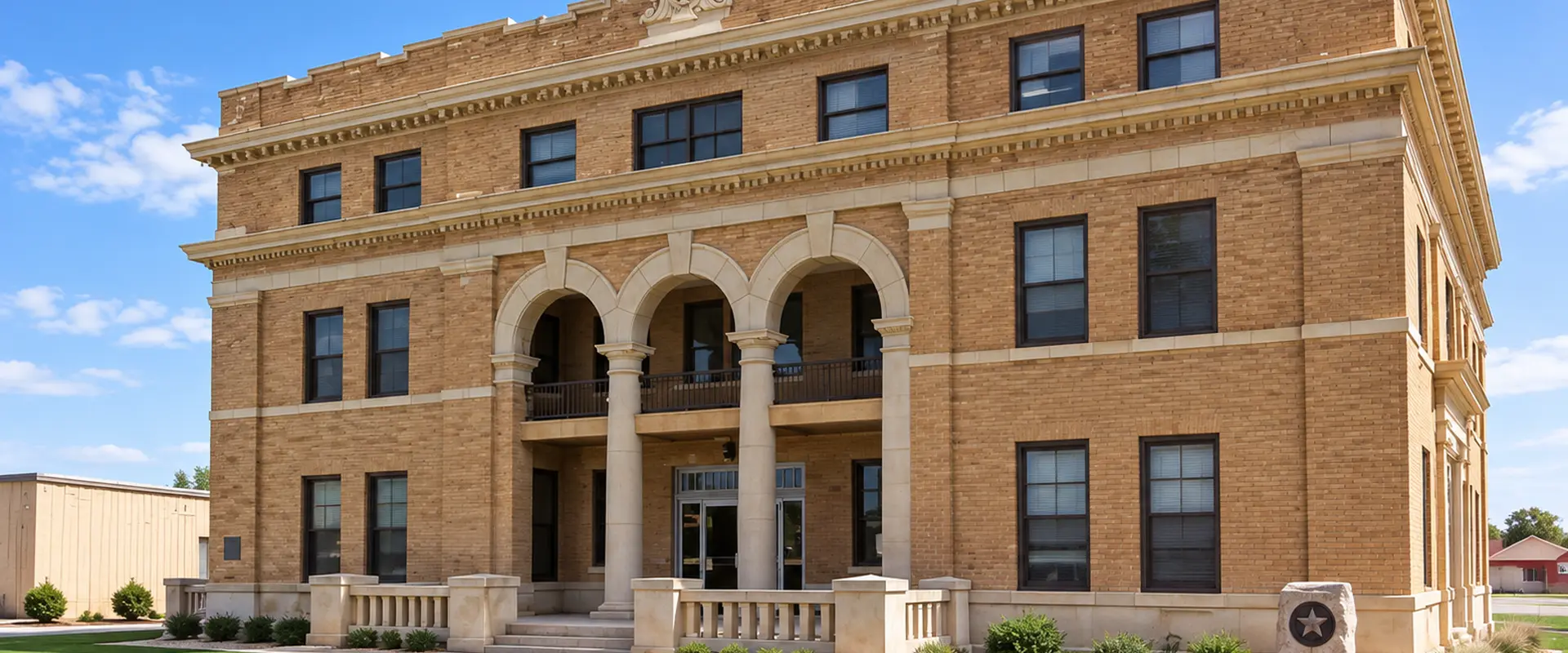
Partitioned from the renowned 3-million-acre XIT Ranch in 1907, Parmer County has grown to become a major agricultural powerhouse. The county heavily relies on beef and crop production as its key economic drivers. In Farwell, the county seat, sits the historic Parmer County Courthouse. The courthouse serves as the center of most legal and administrative functions in the county.
Litigants seeking to resolve different legal matters can visit the Parmer County Courts for assistance. These courts handle a broad range of civil, criminal, probate, and even family law cases. Parmer County Courts also keep records from previous cases that can help you manage your legal issue. Whether you're an attorney preparing for a case or a petitioner seeking legal redress, you'll need to access Parmer County court records at some point to resolve your matter.
Overview of the Parmer County Court System
Parmer County Courts fall under the bifurcated Texas court system, which consists of five levels, from local courts to the Supreme Court. This complex system operates throughout the state, with higher courts setting precedents that are legally binding on lower courts.
The local level is the lowest in the hierarchy and comprises Municipal and Justice of the Peace Courts. Parmer County has three Municipal Courts and three Justice of the Peace Courts in Farwell, Bivona, and Friona. These courts handle minor offenses and small legal issues at the lowest level, and have the highest caseload in the county.
Trial-level courts in Parmer include the Constitutional County Court and the District Court. Located at the Parmer County Courthouse in Farwell, these courts oversee high-stakes cases in which punishment could be a fine or a jail sentence. They also have appellate roles over lower courts, with the County Court performing administrative functions as well.
Types of Courts in Parmer County, Texas

Parmer County has several courts, each with its own jurisdiction. Some handle serious felony crimes, while others oversee small civil disputes. Knowing which court is responsible for what type of case is vital for litigants. Your case can proceed only if you file it correctly with the appropriate court.
 District Court
The 287th District Court is the primary trial court in Parmer County and has original and general jurisdiction over a range of cases.
Primary location: Parmer County Courthouse
Cases handled by the District Court include:
- Felony criminal matters
- Civil suits over $200
- Title to land disputes
- Divorce cases
- Election contests
- Juvenile matters
The 287th District Court serves Parmer and Bailey counties, with legal proceedings held in the respective county courthouses. Parmer residents can go to this court to seek legal redress on a range of high-stakes cases and felony charges. The court also reviews appeals from County, Justice, and Municipal Courts.
 County Constitutional Court
The Parmer County Court has original jurisdiction over misdemeanors that carry a fine exceeding $500 or a jail sentence of not more than one year.
Typical cases include:
- Class A and B misdemeanors
- Civil lawsuits of less than $10,000 in damages
- Probate cases
- Juvenile matters
- Appeals from lower courts
This trial court plays two roles, with the presiding judge performing judicial and administrative functions. It also serves as the appellate court, hearing appeals from the lower Justice and Municipal Courts.
 Justice of the Peace Courts
Parmer County has three Justice of the Peace Courts, serving Friona, Bovina, and Farwell. They handle small civil cases and minor offenses at a local level.
Jurisdiction includes:
- Class C misdemeanors (public intoxication, minor theft)
- Small claims cases
- Landlord-tenant disputes
- Traffic citations
- Appeals from Municipal Courts
Parmer County Justice Courts provide quick, localized resolutions to minor legal matters punishable by fine-only. They also perform administrative duties such as issuing search or arrest warrants and performing marriage ceremonies. Since Parmer County does not have a dedicated medical examiner, the Justice Court acts as a coroner.
 Municipal Courts
Parmer County has three Municipal Courts, located in Bovina, Farwell, and Friona. They focus on less serious offenses that threaten public order.
Jurisdiction includes:
- City ordinance violations
- Class C misdemeanors within city limits
- Traffic violations
- Specific civil matters (dangerous dog determinations)
- Magistrate duties
Municipal Courts play a critical role in promoting public safety and improving the quality of life in local communities. These local trial courts have limited jurisdiction and handle fine-only offenses at the lowest level. They also perform administrative duties, such as issuing emergency protective orders and search/arrest warrants.
How to Access Parmer County Court Records

You may need to access court records in Parmer County for various reasons. Employers, property managers, and landlords often access court records to perform background checks on potential employees and tenants. Court records are also helpful in legal research and investigative journalism. Litigants can utilize these records to track their case status, view upcoming hearings, and check court dockets.
Most court records are presumed public, unless sealed or restricted by law or court order. A judge may restrict access to legal records if they contain sensitive information related to juvenile cases, family law, or trade secrets, among other matters. Knowing how to access non-confidential court records can help you manage your case, saving you time and resources.
 Online Access
An online search is one of the most efficient and convenient ways to access court records. It delivers almost instant results and eliminates the need to go to a courthouse in person. Since Parmer County courts don't have a dedicated online database, litigants can utilize the state's official re:SearchTX portal to access court records. This platform lets you search court documents by case number, party name, or even location. Registration is free, but you may need a paid subscription for value-added features.
 Alternative Online Options
You can look up criminal, civil, property, and even traffic court records through third-party sites like CourtCaseFinder. This platform consolidates court data from across the country into a single online repository for easy and convenient retrieval. It deals with all court types, and you can search by name, case number, or location.
 In-Person Requests
The most recent court records may not be readily available for an online lookup. Parmer County courts may not submit current case information for real-time publication. If your case is time-sensitive, the surest way to access Parmer County court records is to visit the County or District Clerk's office in person. The clerk is the custodian of public court records and can help you locate and process certified copies you need for your case. Provide as much information as possible, such as the case number, party name, and filing dates, for more accurate results.
 Archived Records
You may want to access archived or historical records for legal research, investigative journalism, or educational purposes. Older case files and court records are usually in hard copy and unavailable online. You can access these records from the Texas State Library and Archives Commission. The state agency preserves archival records, including historical court documents.
Finding the right court records for your legal matter can sometimes be complicated. Combining online lookups with in-person and even mail requests can help you obtain the most accurate results.
For Attorneys and Legal Professionals
If you're an attorney from outside Parmer County, you might be unfamiliar with how the local legal procedures work. You'll discover that most record searches are through the state's official re:SearchTX portal. While this platform provides cross-jurisdictional data, you need critical details, such as the case number and party names, to obtain accurate results.
Since Parmer County has multiple courts, you'll need to confirm the appropriate jurisdiction before filing your case. Your filings must comply with local requirements and legal rules for approval. In case you encounter challenges, be sure to visit the County or District Clerk's office in person for procedural guidelines, legal forms, and case information.
How to File a Case in Parmer County

Filing a case in Parmer County requires keen attention to detail and strict compliance with procedural rules. Failure to follow these requirements can cause your case to be struck out or dismissed altogether. Here is a breakdown of how to file a case in Parmer County:
 Step 1: Choose the Correct Court
You first need to figure out which court will process your case. The proper court to file in will depend on your case and the amount of money involved in damages. Parmer County courts have different jurisdictions. District Courts handle serious felony matters and high-stakes cases, while County Courts oversee Class A and B misdemeanors, civil lawsuits, and probate cases. For minor legal issues, such as traffic violations and small claims, you can file your case in the Justice of the Peace or Municipal Court.
 Step 2: Complete Required Forms
When filing a case, you'll have to complete the appropriate forms to submit your petition or complaint. The Texas Judicial Branch provides standardized forms for civil, probate, family law, and even criminal cases. These forms may have detailed instructions for completing the paperwork correctly. Be sure to include all the necessary attachments and signatures before submitting the forms.
 Step 3: File Your Case
Electronic filing is mandatory in Parmer County for attorneys in criminal, civil, family, and probate cases. Filers must use the statewide e-File Texas manager to file legal documents. You'll need to register with an Electronic Filing Service Provider of your choice before you begin. Once logged in, fill out the required fields, including case information, case type, and court information. You can then upload your lead document in the required format. You'll need to set up a payment account to pay convenience and filing fees.
Self-represented litigants can file their case in person at the County or District Clerk's office. The clerk will provide you with procedural guidelines for completing the paperwork. Be sure to include all the requirements to avoid frustrating delays.
 Step 4: Pay Filing Fees
Filing a case in Parmer County is not entirely free. You'll need to pay filing fees and associated court costs. The exact amount you'll need to pay will depend on the case type and court you're filing in. If you cannot afford filing fees and court costs, you can request a waiver by completing a Statement of Inability to Afford Court Costs form.
 Step 5: Serve the Other Party
You must notify the other party for your case to commence. Failure to serve the other parties involved can result in frustrating delays or dismissals. Depending on the case, court rules, and type of documents, you can serve the defendant through the local constable or sheriff's office. Some litigants prefer to hire a private process server to complete the task. Whatever your preference, be sure to keep a copy of the served papers and citations as proof of service.
 Step 6: Monitor Your Case
Tracking your case is equally essential, as it helps ensure you don't miss court dates and important updates. You can monitor your case through third-party platforms or the official statewide portal. These sites let you check case status, upcoming schedules, and other vital information.
Parmer County Courthouse Directory
Despite its sparse population, Parmer County has eight trial courts spread across Farwell, Bovina, and Friona. These courts provide professional legal and administrative services to individuals and businesses in the region. This directory highlights the key court locations in Parmer County.
287th District Court
Address: 401 3rd St., PO Box 195, Farwell, TX 79325
Phone: (806) 481-3419
Website: Link
Constitutional County Court
Address: 401 3rd St., PO Box 506, Farwell, TX 79325
Phone: (806) 481-3691
Website: Link
Justice of the Peace, Precinct 1
Address: 617 Main St. PO Box 635, Friona, TX 79035
Phone: (806) 250-2412
Website: Link
Justice of the Peace, Precinct 2
Address: US 60 PO Box 896, Bovina, TX 79009
Phone: (806) 251-1356
Website: Link
Justice of the Peace, Precinct 3
Address: 401 3rd St., PO Box 781, Farwell, TX 79325
Phone: (806) 481-9965
Website: Link
Bovina Municipal Court
Address: 205 North St., PO Box 720, Bovina, TX 79009
Phone: (806) 251-1116
Website: Link
Farwell Municipal Court
Address: 100 9th Street, Farwell, TX 79325
Phone: (806) 481-3620
Website: Link
Friona Municipal Court
Address: 617 Main St., Friona, TX 79035
Phone: (806) 250-2198
Website: Link
Knowing the exact locations of these strategic legal facilities can help ensure smooth access to justice. You'll know where to go if you want to file a case, access records, or attend hearings, thereby avoiding procedural complexities or legal penalties.
Legal Help and Self-Help Resources
 Free Legal Assistance
Legal matters can be complex, especially if you cannot afford a private attorney. Fortunately, many nonprofit organizations, such as Legal Aid of NorthWest Texas, provide free legal assistance to low-income residents. The nonprofit specializes in civil cases across 114 Texas counties, including Parmer. People with disabilities can contact Disability Rights Texas for direct legal representation on any case that infringes their rights. Eligible persons may have to apply online or by phone for consideration.
Self-represented litigants can seek free legal assistance from the court through the clerk's office. While the District or County Clerk does not give legal advice, they can provide procedural information, filing guidelines, and legal forms to help you with your case. The District Clerk also keeps court records that might be helpful for your legal matter.
 Local Legal Support
Attending local legal clinics is another great way to find legal support. These clinics empower litigants to make informed decisions about their legal issues. The Texas Tech University School of Law regularly hosts taxpayer clinics in Parmer County and its environs. This law school program provides legal support on tax matters to low-income residents in the region.
FAQs
Is electronic filing mandatory in Parmer County?
Electronic filing is mandatory for all attorneys filing civil, probate, family, and criminal cases in District and County Courts. This new rule applies to all Texas counties, including Parmer County. However, self-represented litigants can file their cases in person at the respective District or County Clerk's office.
What records does the Parmer County Clerk keep?
The County Court Clerk is the custodian of crucial judicial records, including civil, probate, criminal, and family law records, as well as appeals from the Justice and Municipal Courts. They also maintain property records, such as deeds, liens, and mortgage instruments, as well as official records (birth and death certificates and marriage licenses). If you wish to access these records, you'll need to visit the clerk's office in person.
Can I talk to the judge about my case?
While a judge's contact and address are available to the public, litigants cannot talk to the judge outside of a court hearing. The reason for this rule is to ensure that legal proceedings are fair, impartial, and transparent. Ex parte communication constitutes gross misconduct and can lead to additional legal issues.
How long does it take to get records in Parmer County?
The duration it takes to get records in Parmer County depends on the retrieval method used. Online lookups are among the most efficient ways of accessing court records. They provide instant results without compelling you to visit the courthouse. In-person requests might take a few hours to a few days, depending on the details provided and the type of record.
Can I use third-party platforms to search for court records?
You can utilize credible third-party platforms like CourtCaseFinder to look up court records online. These sites provide instant records from different courts, case types, and jurisdictions. Typical records include bankruptcy filings, criminal cases, traffic violations, and civil lawsuits. You can search by state, court system, and other criteria.
What do I do if I can't find my case online?
If you can't find your case, confirm that you've entered the correct case number, name, location, or court case details. Sometimes, courts take time to update the most recent case information online. A judge may also restrict or seal your case if it involves sensitive information, making it inaccessible online.
Other Counties in Texas
- Anderson
- Andrews
- Angelina
- Aransas
- Archer
- Armstrong
- Atascosa
- Austin
- Bailey
- Bandera
- Bastrop
- Baylor
- Bee
- Bell
- Bexar
- Blanco
- Borden
- Bosque
- Bowie
- Brazoria
- Brazos
- Brewster
- Briscoe
- Brooks
- Brown
- Burleson
- Burnet
- Caldwell
- Calhoun
- Callahan
- Cameron
- Camp
- Carson
- Cass
- Castro
- Chambers
- Cherokee
- Childress
- Clay
- Cochran
- Coke
- Coleman
- Collin
- Colorado
- Comal
- Comanche
- Concho
- Cooke
- Coryell
- Crockett
- Crosby
- Culberson
- Dallam
- Dallas
- Dawson
- De Witt
- Deaf Smith
- Delta
- Denton
- Dimmit
- Duval
- Eastland
- Ector
- Edwards
- El Paso
- Ellis
- Erath
- Falls
- Fannin
- Fayette
- Fisher
- Foard
- Fort Bend
- Franklin
- Freestone
- Frio
- Gaines
- Galveston
- Garza
- Gillespie
- Glasscock
- Goliad
- Gonzales
- Gray
- Grayson
- Gregg
- Grimes
- Guadalupe
- Hale
- Hamilton
- Hansford
- Hardin
- Harris
- Harrison
- Hartley
- Haskell
- Hays
- Henderson
- Hidalgo
- Hill
- Hockley
- Hood
- Hopkins
- Houston
- Howard
- Hunt
- Hutchinson
- Jack
- Jackson
- Jasper
- Jefferson
- Jim Wells
- Johnson
- Jones
- Karnes
- Kaufman
- Kendall
- Kenedy
- Kerr
- Kinney
- Kleberg
- Lamar
- Lamb
- Lampasas
- Lavaca
- Lee
- Leon
- Liberty
- Limestone
- Live Oak
- Llano
- Loving
- Lubbock
- Madison
- Marion
- Matagorda
- Maverick
- Mcculloch
- Mclennan
- Medina
- Midland
- Milam
- Mitchell
- Montague
- Montgomery
- Moore
- Morris
- Nacogdoches
- Navarro
- Newton
- Nolan
- Nueces
- Ochiltree
- Orange
- Palo Pinto
- Panola
- Parker
- Pecos
- Polk
- Potter
- Rains
- Randall
- Red River
- Reeves
- Robertson
- Rockwall
- Runnels
- Rusk
- Sabine
- San Augustine
- San Jacinto
- San Patricio
- Scurry
- Shelby
- Sherman
- Smith
- Somervell
- Starr
- Stephens
- Tarrant
- Taylor
- Terrell
- Terry
- Titus
- Tom Green
- Travis
- Trinity
- Tyler
- Upshur
- Uvalde
- Val Verde
- Van Zandt
- Victoria
- Walker
- Waller
- Ward
- Washington
- Webb
- Wharton
- Wichita
- Wilbarger
- Willacy
- Williamson
- Wilson
- Wise
- Wood
- Yoakum
- Young
- Zapata
- Zavala
Table of Contents
