Table of Contents
Parker County Courts, TX *

Parker County is located west of Fort Worth, Texas, and has a rapidly growing population. It is served by multiple courts that handle all judicial matters within the county. These courts include several trial courts: District Courts, and two statutory County Courts at Law. There are also local courts, comprising the Justice of the Peace Courts and the Municipal Courts, that provide localized services for smaller claims disputes and Class C misdemeanors.
Navigating the county's official court system efficiently benefits everyone, including residents, visitors, and corporate entities that require legal services. Individuals utilize the county's legal system to access the courts and their records, which are essential to those dealing with cases in these courts, legal professionals, and even legal researchers.
Overview of the Parker County Court System
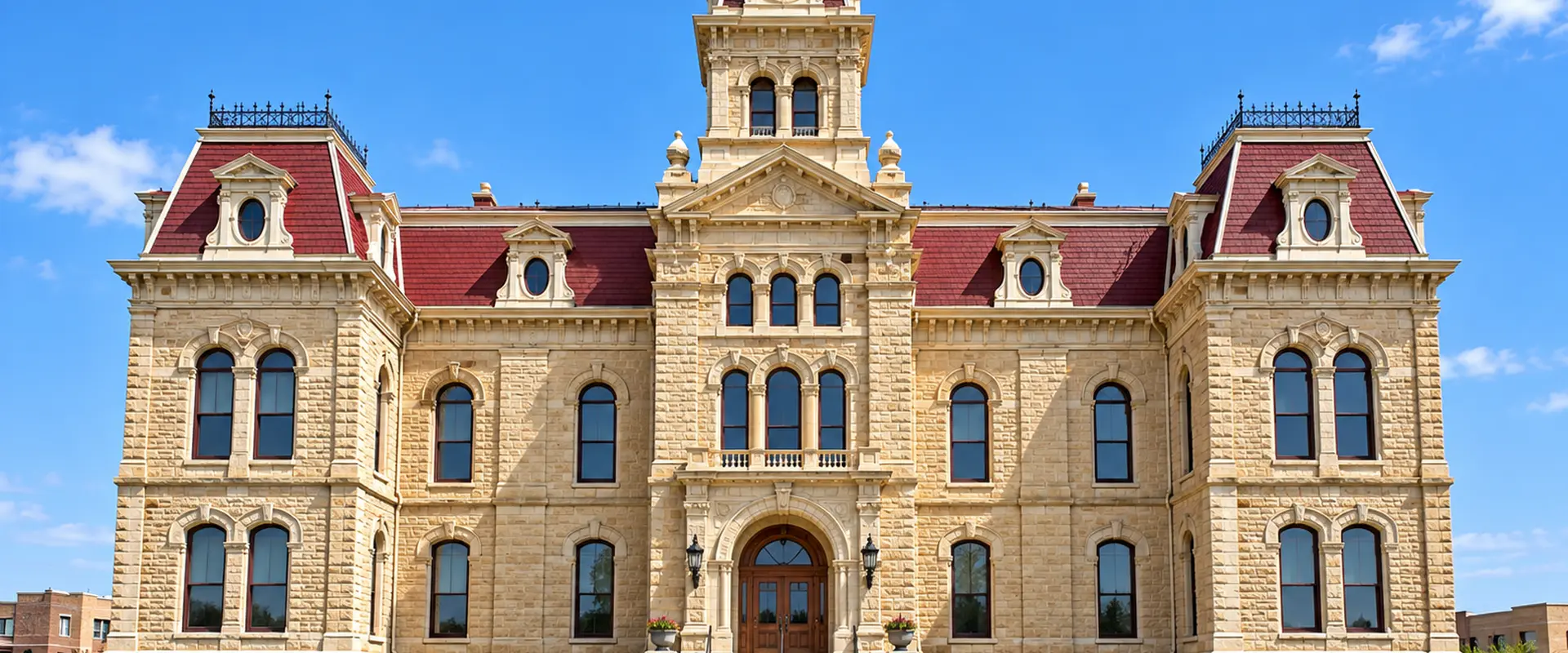
The Parker County court system upholds the legal requirements set by the Texas Judicial Branch, while operating its own courts, clerks, and administrative functions, ensuring local access to justice for everyone. The main courthouse in Weatherford is where most legal services and activities take place, and it houses the District Courts, County Court at Law 2, County Probate Court, and Commissioners' Court. The office of the County Clerk and other courts, such as the County Court at Law 1, are located in the Courthouse Annex. Other local courts, including the Municipal Courts, which serve as the entry point for first-time users of the legal system, are located across the county to provide quick access to legal services.
Types of Courts in Parker County, TX

Individuals should determine which court is responsible for their case before filing to expedite the legal process, as filing in the wrong court may lead to delays, additional costs, and case dismissal. Each court has defined jurisdiction to efficiently resolve matters in accordance with the law.
 District Courts
Parker County District Courts are the highest trial courts in Parker County and consist of two district courts: the 43rd District Court and the 415th District Court. These courts primarily handle serious legal matters.
These courts have original jurisdiction in cases including:
- Felony criminal cases
- Large civil disputes where the amount in controversy is $200 minimum
- Family law cases, such as divorce and custody
- Juvenile matters
- Disputes involving land titles
The District Courts handle cases that often require extensive documentation, multiple hearings, and legal representation, as they are high-stakes matters. Therefore, cases here receive thorough judicial review and may take longer to resolve.
Primary Location: Parker County Courthouse
 County Courts at Law
There are two County Courts at Law in Parker County that operate at the main courthouse. The County Courts at Law function as the intermediate court system existing between the District Courts and the Justice of the Peace Courts, and they deal with:
- Class A and B misdemeanor criminal cases
- Civil cases with limited dollar amounts
- Probate matters
- Appeals from lower courts
The County Courts at Law balance access with a formal legal structure and will generally hear most cases that are of greater complexity than a small claims case, but would not qualify for filing in a District Court. For example, they handle probate matters that require careful management of family interests and estate documents.
Primary Location: Parker County Courthouse and Courthouse Annex
 County Probate Court
Parker County Probate Court, located at the county's main courthouse, handles legal issues involving estates and guardianships specifically.
It handles cases including:
- Wills and estate administration
- Mental health involuntary commitments
- Trust disputes
The court ensures that estates are distributed in accordance with the law and the wishes of the decedent. Since probate proceedings involve substantial documentation, as well as sensitive family relationships, all steps taken during the probate process must be performed accurately and clearly.
Primary Location: Parker County Courthouse
 Justice of the Peace Courts
The Justice of the Peace Courts have been established within Parker County to allow residents to quickly and easily resolve minor legal disputes.
These courts provide access to resolution for:
- Small Claims matters
- Evictions
- Class C Misdemeanors
- Traffic Tickets
Justice of the Peace Courts are more accessible compared to other courts since they operate in four different precincts and handle everyday legal matters, including small claims. Those with cases in these courts can represent themselves because they have simple procedures that are easy to understand.
Primary Location: Four precincts throughout Parker County
 Commissioners Court
The Commissioners Court is the governing body of the county, and it is found within the main courthouse.
This court does not work like the other traditional courts, but its duties include:
- Supervising the county budgets
- Setting policies, including tax rates
- Manages the county's infrastructure
The decisions made by this court indirectly affect the judicial system of the county, including funding o of the court system and legal services. The meetings in this court are open to the public to ensure transparency and fairness.
Primary Location: Parker County Courthouse
 Municipal Courts
 in Parker County include Aledo Municipal Court, Weatherford Municipal Court, Reno Municipal Court, Springtown Municipal Court, and Hudson Oaks Municipal Court, each operating within the limits of its respective city.
The jurisdiction of the Municipal Courts comprises:
- Parking violations
- Violations of city ordinances, such as public intoxication
- Class C misdemeanors, including vandalism
- Traffic offenses
These courts are the first point of contact for individuals entering the legal system in the county. Cases handled by these courts are less severe than those in other county courts, but their resolution may include penalties and fines.
Primary Location: Aledo, Hudson Oaks, Reno, Springtown, and Weatherford City Halls.
How to Access Parker County Court Records

Court records in Parker County are available to the public and are accessible through online tools, where they can find most of the records, or through in-person visits to the court clerks' offices for those who require certified copies and archived court records. Visiting the office is essential for certain records involving sensitive family law matters or juvenile cases, which are sealed and restricted because their privacy must be protected.
Also, there is an access fee depending on the type of court record and the number of pages they are asking for. It is best to confirm these fees with the appropriate court clerk.
 Online Access
The public can access Parker County court records using re:SearchTX, designed for accessing statewide court records. Another online platform, particularly suitable for researchers, is the Odyssey Public Access portal, especially for those looking for civil and criminal cases. They can search the records by case filing dates, name of the party involved, or case number, and ensure to enter the correct information when using online tools for better search results. People who are unsure how to access court records online can contact the county or district clerk.
 Alternative Online Options
There are several alternative platforms to consider using whenever it feels overwhelming to navigate the official portals. These third-party websites include the CourtCaseFinder, which provides collective access to public information gathered from various sources. They ensure easy and efficient access to court documents and information, which is particularly beneficial to first-time users of the county's court system. Aggregator websites are crucial when residents don't have all of the information about a court case, such as a case number or name of the court.
 In-Person Requests
An in-person request is the most efficient way to access certified copies of court records with restricted or sealed access. Plan and pay a visit to the court clerks offices to get access to these records. The staff is skilled and well-equipped to help residents locate:
- Physical case files
- Certified copies, such as marriage and death records
- Assumed name certificates
An individual can also visit these offices in person if they need guidance on how to access the county's court records. The clerks can answer basic questions about the service, and they should bring with them as much information as possible, including the case number and filing date.
 Archived Records
There are archived records consisting of older and historical court records, which are only available at the physical sites found within the county. They must make a formal request to obtain these records. This can be done through the University of Texas at Arlington libraries, which store historical records dating back to the 1800s. The other option is the Parker County Archive Center, where older court documents that have not been digitized are stored. The state of Texas also has a large archival system through the Texas State Archives.
For Attorneys and Legal Professionals
Legal professionals and lawyers practicing in Parker County benefit from understanding the county's court system, in addition to the statewide judicial structure. This is because they are familiar with local procedures, court expectations, and the needs of the local community, which is important since each county has its own administrative operations.
Visiting attorneys or legal professionals should make time in their schedules to learn how the courts in Parker County operate. What can help lawyers and legal professionals the most is coordinating with the local court clerks and visiting the county's official website. Lawyers should communicate early with the appropriate offices, especially when requesting certified or archived court records, to avoid delays.
How to File a Case in Parker County

Filing a case in Parker County involves a step-by-step process that everyone must follow to ensure a successful filing. It is essential to carefully follow this procedure because filing in the wrong court or entering incorrect or incomplete information on the filing forms can negatively affect case progress, including case rejection.
Step 1: Choose the Correct Court
The first step is to identify the court responsible for the case, as every court in the county handles a specific type of case. For example, the District Courts are responsible for large civil disputes; family law cases, such as divorce and custody, juvenile matters, and land title disputes. County Courts at Law handle Class A and B misdemeanor criminal cases, civil cases with limited dollar amounts, probate matters, and appeals from lower courts. There are also the Justice of the Peace Courts, which manage minor legal issues like small claim cases and evictions, and the municipal courts, designed for legal issues such as violations of city ordinances, class C misdemeanors, and traffic offenses. They can check the courts on the county's official website or contact the court clerks to determine the right court for their case and make sure they choose the correct one. Filing in the wrong court can lead to various setbacks, including delays with the case proceedings and even case dismissal.
 Step 2: Complete Required Forms
The second step is to obtain court forms from the eFile Texas portal, then fill them out completely and accurately. Individuals can also visit the local clerks' offices to request these forms. They should ensure they provide all the required information in the documents, including names and signatures. This is essential because incorrect or missing information can lead to the rejection of filings, additional court costs, or delays in the case's processing.
 Step 3: File the Case
The next step is to submit the completed documents to the appropriate clerk's office or precinct in person, depending on the type of case filed. Individuals filing a property dispute case at the County Clerk's office are required to present a photo identification to the Clerk. Also, e-filing in Parker County is mandatory for attorneys through the eFile Texas filing portal. Also, individuals are encouraged to use electronic filing for certain cases, such as civil, criminal, and family law, through the District Clerk's office.
 Step 4: Pay Filing Fees
There are costs associated with filing a legal matter in Parker County, which vary by case type. Serious civil matters have the highest filing costs, while the lowest fees are for minor cases, including evictions. When filing the case, they should confirm the filing fees on the county website or by contacting the clerks offices directly. Those who are unable to afford the filing fees can request a fee waiver by filing out a Statement of Inability to Afford Payment of Court Costs and submitting it to the County or District Clerk.
 Step 5: Serve the Other Party
The following step is to notify the other party after a successful case filing. The notification is done through a process known as service of process. The notification should be carried out by a sheriff, constable, or private process server since individuals are not allowed to serve the other party themselves. They must file the proof of service with the appropriate court to ensure proper service was done, and the case can proceed.
 Step 6: Monitor the Case
Individuals can monitor the progress of the case after a successful filing. Case monitoring is carried out using a case number assigned by the clerks. This is crucial since it helps check for updates and court dates by contacting the clerks' offices. They can also track cases online through the re:SearchTX website to confirm court dates and schedules, ensuring they do not miss any steps. The court clerks can also help residents monitor cases that are moving through the court system.
Parker County Courthouse Directory
Parker County Main Courthouse
This courthouse serves as the central hub for most county court operations, handling major civil, criminal, and probate matters. It houses the District Courts, County Courts at Law, Probate Court, and Commissioners' Court.
Weatherford
Address: 1 Courthouse Square, Weatherford, TX 76086
415th District Court: (817)-598-6162
43rd District Court: (817)-594-7343
County Court at Law 2: (817)-598-6129
District Clerk: (817)-598-6124
Courthouse Annex
This is where people will find the County Court at Law 1 and the County Clerk's office, which handles filings, court records, and case-processing guidance.
Weatherford
Address: 1112 Santa Fe Drive, Weatherford, TX 76086
Phone: (817)-598-6138
Justice of the Peace Courts
Handles small claims, evictions, and minor offenses within each city's limits.
Precinct 1
Address: 1020 E. Highway 199, Courthouse N.E. Annex, Springtown, TX 76082
Phone: (817) 220-5857
Website: Precinct 1
Precinct 2
Address: 207 Fort Worth Highway, Weatherford, TX 76086
Phone: (817) 598-0496
Website: Precinct 2
Precinct 3
Address: Courthouse Annex, 1112 Santa Fe Drive, Weatherford, TX 76086
Phone: (817) 598-6089
Website: Precinct 3
Precinct 4
Address: 16600 Old Weatherford Road, Aledo, TX 76008
Phone: (817) 229-2224
Website: Precinct 4
Municipal Courts
These courts manage city ordinance violations and traffic cases within each city's limits.
Weatherford Municipal Court
Address: 303 Palo Pinto Street, Weatherford, TX 76086
Phone: (817) 598-4120
Website: Weatherford Municipal Court
Hudson Oaks Municipal Court
210 Hudson Oaks Drive, Hudson Oaks, TX 76087
Phone: (682)-229-2400
Website: Hudson Oaks Municipal Court
Reno Municipal Court
Address: 195 W Reno Road, Azle, TX 76020
Phone: (817) 221-2500
Website: Reno Municipal Court
Aledo Municipal Court
Address: 200 Old Annetta Rd, Aledo, TX 76008
Phone: (817) 441-7016
Website: Aledo Municipal Court
Springtown Municipal Court
Address: 102 East Second Street Springtown, Texas 76082
Phone: (817) 220-4834
Website: Springtown Municipal Court
Legal Help and Self-Help Resources
Finding a way through the legal system can be hard, and that's why there are many resources available to help Parker County residents and businesses with legal issues. However, help is not limited to people without attorneys; it is also available to veterans, seniors, people conducting research, and even people with complicated cases who may qualify for additional assistance.
 Free Legal Assistance
The Legal Aid of NorthWest Texas, Weatherford Office, among other organizations, provides free legal aid to low- and moderate-income persons with housing, family law, and public benefit issues. Other organizations, such as Texas Legal Services Center, offer free legal services and representation to low-income residents. Court clerks are available to help individuals through the court process by providing forms, information on how to file, and answering general questions regarding the court system.
 Local Legal Support
Residents in Parker County may receive free consultations or assistance by attending events hosted by local bar associations and legal clinics, such as the Legal Aid of NorthWest Texas Bankruptcy Law Clinic, which specializes in bankruptcy cases. Many volunteer attorney programs, including the Free Legal Advice Clinic for Veterans, which operates under the Texas Law Help organization, assist with preparing documents and advising on next steps in the legal process.
FAQs
Does Parker County allow public access to court cases?
Most court records are public and accessible to individuals for review or research via the re:SearchTX or county clerks' websites, but some cases are restricted or sealed to protect privacy, such as juvenile cases and sensitive family law matters. Therefore, before requesting access, contact the clerks' offices to ensure the records they need are available.
Which court handles eviction cases in Parker County?
Eviction cases in Parker County are addressed by the Justice of the Peace Courts, which have jurisdiction over minor legal matters, including evictions. Individuals can access these records by contacting the appropriate precinct where the property is located or by visiting the court in person. These issues are often resolved quickly through a hearing and not a lengthy trial.
What is the duration it takes to get court records in Parker County?
The time required to obtain court records in the county varies depending on the type of record and the method used to make the request. Online searches provide immediate results, while in-person requests may be available the same day. Certified or archived records may take several days to process.
What are the repercussions of missing a court date?
In Parker County, missing a court date can result in serious consequences, such as fines, case dismissal, or an arrest warrant in criminal cases. People who have missed a hearing or trial date should contact the court immediately to learn about the court's decision in the case and discuss their options.
Do probate cases require legal representation?
Having an attorney is often recommended for those dealing with a probate case due to its complexity, though it is possible to handle some small-claims probate matters independently. This is because complex probate cases require careful documentation, legal compliance, and professional guidance to prevent costly mistakes.
Are Parker County court records accessible from outside Texas?
Yes, the majority of Parker County court records can be accessed online from anywhere through the official records access systems like the re:SearchTX. However, certain documents, particularly certified copies such as marriage and death certificates, as well as older records, may require in-person requests and additional verification at the clerk's office.
What type of legal issues are handled by municipal courts?
The Parker County Municipal Courts handle minor legal issues occurring within the boundaries of the cities in which they are situated. The jurisdiction of these courts consists of city-level violations, including traffic offenses, ordinance violations, and minor misdemeanors. Also, they focus on enforcing local laws as they operate within city limits.
When should I use a third-party records search tool?
Whenever an individual is not sure which court handles their records, or when searching across multiple jurisdictions, they should consider third-party platforms like CourtCaseFinder. These tools provide comprehensive access to court records and legal information from multiple official sources, making it easier to find the information people are searching for.
Other Counties in Texas
- Anderson
- Andrews
- Angelina
- Aransas
- Archer
- Armstrong
- Atascosa
- Austin
- Bailey
- Bandera
- Bastrop
- Baylor
- Bee
- Bell
- Bexar
- Blanco
- Borden
- Bosque
- Bowie
- Brazoria
- Brazos
- Brewster
- Briscoe
- Brooks
- Brown
- Burleson
- Burnet
- Caldwell
- Calhoun
- Callahan
- Cameron
- Camp
- Carson
- Cass
- Castro
- Chambers
- Cherokee
- Childress
- Clay
- Cochran
- Coke
- Coleman
- Collin
- Colorado
- Comal
- Comanche
- Concho
- Cooke
- Coryell
- Crockett
- Crosby
- Culberson
- Dallam
- Dallas
- Dawson
- De Witt
- Deaf Smith
- Delta
- Denton
- Dimmit
- Duval
- Eastland
- Ector
- Edwards
- El Paso
- Ellis
- Erath
- Falls
- Fannin
- Fayette
- Fisher
- Foard
- Fort Bend
- Franklin
- Freestone
- Frio
- Gaines
- Galveston
- Garza
- Gillespie
- Glasscock
- Goliad
- Gonzales
- Gray
- Grayson
- Gregg
- Grimes
- Guadalupe
- Hale
- Hamilton
- Hansford
- Hardin
- Harris
- Harrison
- Hartley
- Haskell
- Hays
- Henderson
- Hidalgo
- Hill
- Hockley
- Hood
- Hopkins
- Houston
- Howard
- Hunt
- Hutchinson
- Jack
- Jackson
- Jasper
- Jefferson
- Jim Wells
- Johnson
- Jones
- Karnes
- Kaufman
- Kendall
- Kenedy
- Kerr
- Kinney
- Kleberg
- Lamar
- Lamb
- Lampasas
- Lavaca
- Lee
- Leon
- Liberty
- Limestone
- Live Oak
- Llano
- Loving
- Lubbock
- Madison
- Marion
- Matagorda
- Maverick
- Mcculloch
- Mclennan
- Medina
- Midland
- Milam
- Mitchell
- Montague
- Montgomery
- Moore
- Morris
- Nacogdoches
- Navarro
- Newton
- Nolan
- Nueces
- Ochiltree
- Orange
- Palo Pinto
- Panola
- Parmer
- Pecos
- Polk
- Potter
- Rains
- Randall
- Red River
- Reeves
- Robertson
- Rockwall
- Runnels
- Rusk
- Sabine
- San Augustine
- San Jacinto
- San Patricio
- Scurry
- Shelby
- Sherman
- Smith
- Somervell
- Starr
- Stephens
- Tarrant
- Taylor
- Terrell
- Terry
- Titus
- Tom Green
- Travis
- Trinity
- Tyler
- Upshur
- Uvalde
- Val Verde
- Van Zandt
- Victoria
- Walker
- Waller
- Ward
- Washington
- Webb
- Wharton
- Wichita
- Wilbarger
- Willacy
- Williamson
- Wilson
- Wise
- Wood
- Yoakum
- Young
- Zapata
- Zavala
Table of Contents
