Table of Contents
Loving County Courts, TX *

Loving County was established in 1893, remained unorganized for decades, and was formally organized in 1931, three decades later. Mentone is the county seat and the only incorporated community in the county. The county has been recognized as the least-populated county in the United States, with recent estimates placing the population at roughly 64 to 139 residents.
Due to its sparse population, Loving County shares judicial resources with neighboring counties. For instance, the District Court judge is a visiting/multi-county judge. Also, the county has neither a County Court at Law nor a municipal court. This has made its court structure one of the most minimal in Texas.
Overview of the Loving County Court System
Loving County has a well-structured court that operates under the Texas Judicial System, overseen by the Office of Court Administration (OCA). Loving County's small population supports a lean court system and has no statutory County Court at Law. The constitutional county judge serves as the sole county-level court, handling both judicial and administrative functions simultaneously. Also, the county has no municipal court since there is no incorporated city beyond Mentone, and Mentone is too small to operate one. Loving County also has only one Justice of the Peace court, which serves the entire county due to the county's small population.
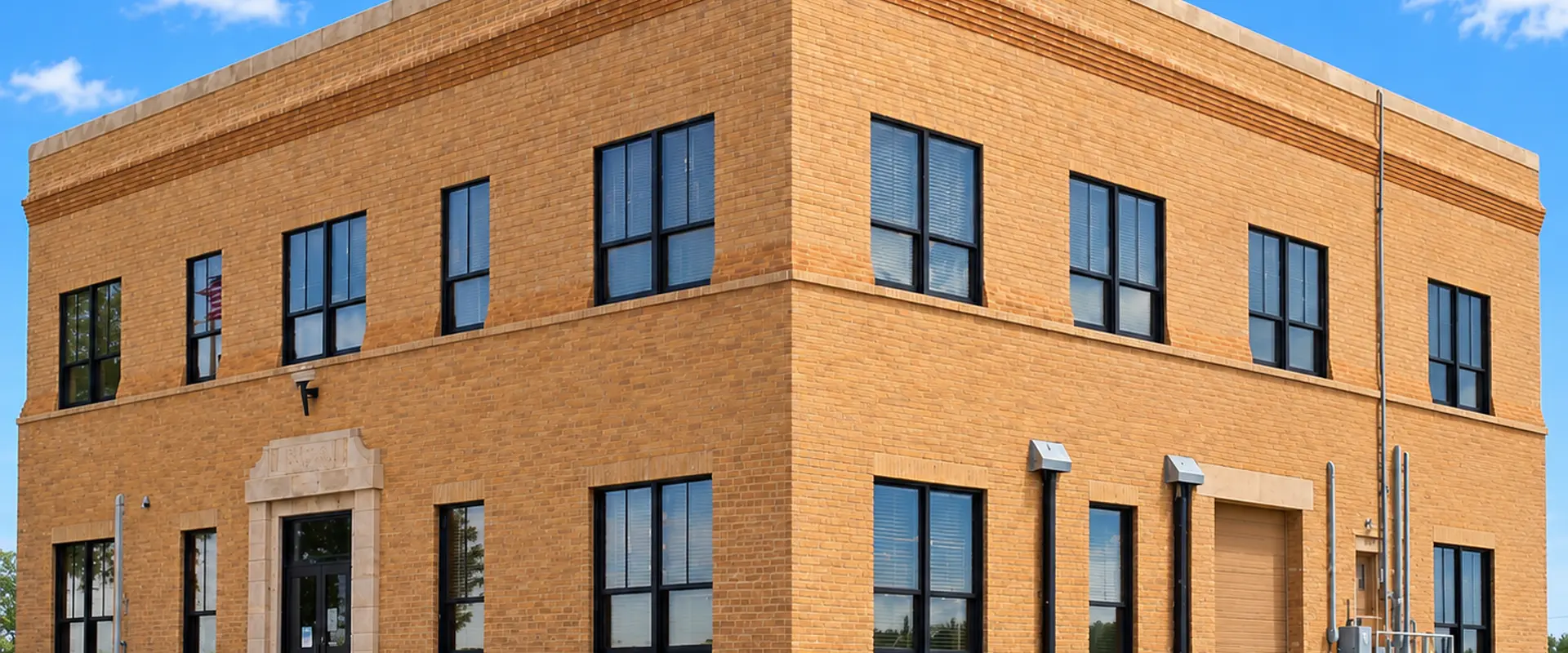
All court functions are based out of the Loving County Courthouse in Mentone. This is the only government facility in the county.
Types of Courts in Loving County, TX

When filing a case in Loving County, understanding the different courts is important, especially in a lean court system, where the case load is distributed across the existing lean judicial functions.
 District Court
The 143rd Judicial District Court is the highest trial court serving Loving County and operates from the county's Courthouse. The District Court serves Loving, Ward, and Reeves counties, with the judge rotating across all three on a set schedule. Below is the list of cases presided over by the court:
- Felony criminal cases
- Major civil disputes exceeding $200,000
- Divorce and marriage dissolution
- Child custody and conservatorship
- Child support matters
- Land and mineral rights disputes
- Property title disputes
- Injunctions and equitable relief
- Juvenile felony matters
- Appeals from the lower county court and the Justice of the Peace court
To effectively perform its duties, the 143rd District Court has the help of the District clerk's office. The District Clerk maintains all district court records, processes filings, issues citations, manages the court docket, and provides certified copies of district court documents.
 Constitutional County Court
The Loving County Constitutional County Court is the county-level trial court presided over by the elected county judge. The Court operates from the Loving County Courthouse and presides over the following legal matters:
- Class A and Class B misdemeanor criminal cases
- Civil matters between $200 and $200,000
- Probate and estate administration
- Guardianship proceedings
- Mental health commitment hearings
- Juvenile matters
- Appeals from the Justice of the Peace Court
- Vital statistics filings
- Protective orders
The County Clerk maintains all county court records, processes filings for probate and misdemeanor cases, manages court dockets, issues citations, and handles certified copy requests for county court documents. And as with the district court, the District and County Clerk functions are merged into a single combined office at the Loving County Courthouse due to the county's minimal size and staffing.
 Justice of the Peace
The Loving County Justice of the Peace Court, Precinct 1, is the entry-level trial court and operates out of the Loving County Courthouse. The court has legal jurisdiction over the following legal cases:
- Class C misdemeanor criminal cases
- Small claims disputes up to $20,000
- Minor traffic violations
- Eviction proceedings (forcible entry and detainer)
- Civil cases up to $20,000
- Magistrate functions, including issuing arrest warrants
- Issuing search warrants
- Conducting probable cause hearings
- Conducting occupational driver's license hearings
- Bad check cases
- Animal control violations
Loving County has only one Justice of the Peace precinct, reflecting the county's extraordinarily small population, which makes a single precinct sufficient to cover all Justice of the Peace-level matters across the entire county.
How to Access Loving County Court Records

The vast majority of Loving County Court records are public records and accessible to anyone who requests them. These records may be restricted by court order, expunged, or restricted when they involve juveniles, mental health proceedings, certain family law matters, or cases where a judge has issued a specific protective order over the file. And when accessing the certified court records, a small fee is set by the county. Also, basic record lookups may carry a small administrative fee depending on the request type.
 Online Access
Given how remote Mentone is, which is over 100 miles from the nearest major city, online access to court records is the most suitable mode of court records access to anyone interested in retrieving any case files within the county, as compared to an in-person request. The primary statewide online system for searching Loving County records is re:SearchTX.
 Alternative Online Options
Other than the official state tool, you are able to access Loving County court records from other alternative online platforms. One of them is CourtCaseFinder, a platform that offers aggregated access to public records, including court cases, divorces, arrests, and other public filings drawn from multiple sources.
 In-Person Requests
And for those willing to carry out an in-person request, you are supposed to visit the Loving County District clerk's office and the County Clerk's office at the Loving County Courthouse. With a physical visit, you are able to access certified copies, older case files not yet digitized, archived documents, and any records requiring an official court seal.
 Archived Records
The older or historical Loving County court records that predate digitization are typically held in hard copy at the Loving County Courthouse or may have been transferred to the Texas State Library and Archives Commission. Given that Loving County was only formally organized in 1931, records begin around that period, though the volume of early records is minimal given the population at the time.
For Attorneys and Legal Professionals
The most important thing an out-of-county attorney should know about Loving County's district court before filing is that the 143rd District Court judge rotates across Loving, Ward, and Reeves counties. This means court dates in Loving County are not set on a continuous daily docket but rather scheduled around the judge's rotation, which directly affects litigation timelines. Out-of-state attorneys must also seek pro hac vice admission through the Texas court system, sponsored by a licensed Texas attorney, before appearing in any Loving County court proceeding.
The local nuances attorneys should account for when filing in Loving County are that, with a single combined District and County Clerk's office managing all court records, attorneys should build in extra lead time for document processing, certified copy requests, and docket confirmations because turnaround times may be slower than in larger counties with dedicated staffing per court.
How to File a Case in Loving County

Filing a case in Loving County requires careful attention to detail because, with a bare-bones court structure and minimal staffing, errors such as a wrong court, wrong form, or missing fee when filing a case can cause significant delays in a county where a rotating district judge already limits court dates. Below is a simple step-by-step case filing process that ensures you correctly file your case with no errors.
 Step 1: Choose the Correct Court
The first step is selecting the correct court that has jurisdiction over your case. Loving County operates with only three court levels: the District Court, the Constitutional County, and the Justice of the Peace court, each with distinct jurisdiction. Filing a felony case at the Justice of the Peace level or a small claim at the district court level wastes time and requires refiling entirely. So you need to clearly understand the cases each of the courts presides over.
 Step 2: Complete Required Forms
Once you have the correct court, you now proceed ot getting the correct court forms, which can be physically collected at the District Clerk's office or the County clerk's office, all located at Loving County Courthouse. You can also get these forms online. Texas Law Help provides free, guided form preparation tools for common case types, including divorce, child custody, small claims, and protective orders. And once you have filled out the forms, always counter-check that all required fields are filled, the correct court is identified on the form, all supporting documents are attached, and the filing party's contact information is accurate and current.
 Step 3: File Your Case
This now takes you to filing the case; all filings go through the Loving County District Clerk's office and the County Clerk's office at the Loving County Courthouse. Also in Loving County, cases can be filed electronically. While it is optional for self-filers, Texas mandates electronic filing through eFile Texas for most case types for attorneys.
 Step 4: Pay Filing Fees
When finalizing the case filing process, you must pay a filing fee that varies by case type and court. District court civil filing fees in Texas typically range from $250 to $350, depending on the case type, with additional fees for service of process and other filings. Small-claims filing fees in Justice of the Peace courts generally range from $54 to $100, depending on the claim amount and the precinct. If you are unable to pay the filing fee, you may apply for a fee waiver by submitting a Statement of Inability to Afford Payment of Court Costs, a standardized Texas form available through the courts.
 Step 5: Serve the Other Party
Once the payment is made, you must inform the defendant of the case that has been filed against them. In Loving County, this is called the Service of Process. As per the Texas laws that apply to the Loving County judicial system, you cannot serve a person directly; service is typically carried out by the Loving County Sheriff's office or a licensed process server, depending on the case type and the filer's preference.
 Step 6: Monitor Your Case
Once the defendant has been served, it is now your responsibility to monitor the case status, which you are able to do using the case number given to you when the case was filed. You can do this through the Texas courts portal or eFile Texas, where you can view case status updates. You can also contact the District Clerk or the County Clerk to monitor your case if the online platforms do not offer you enough information.
Loving County Courthouse Directory
Loving County Courthouse
With Loving County's lean court system and small population, all court activities are housed in a single county courthouse. It has jurisdiction over all the legal hearings held in the county.
Mentone
Address: 100 Bell St, Mentone, TX 79754
143rd District Court Phone: (432) 943-2749
Constitutional County Court Phone: (432) 377-2441
Justice of the Peace Phone: (432) 377-2001
Website: co.loving.tx.us/
Legal Help and Self-Help Resources
Loving County residents are able to access state-level legal aid organizations, nonprofit legal assistance programs, court self-help tools, and clerk office guidance, all of which are especially important in a county with no local private law firms or legal clinics of its own.
 Free Legal Assistance
The easiest and most accessible primary statewide legal aid organization serving Loving County residents is Lone Star Legal Aid, which provides them with free civil legal services on matters including family law matters, protective orders, probate and estate issues, housing disputes, and benefits-related legal problems. There is also a statewide legal aid hotline that Loving County residents can call. The Texas Legal Services Center operates a statewide hotline connecting low-income Texans with legal assistance remotely, which is particularly valuable for Loving County residents who cannot travel to a legal aid office.
 Local Legal Support
Loving County has no local bar presence, legal aid office, or law clinic operating within its borders. This means that all local legal support routes through the clerk's office or remote statewide resources. But there are volunteer attorney programs accessible to Loving County residents. The State Bar of Texas Lawyer Referral Service and volunteer legal programs coordinated through regional bar associations in Midland and Odessa can connect Loving County residents with attorneys willing to assist on a reduced-fee or pro bono basis.
FAQs
Does Loving County have its own dedicated district judge?
No, Loving County shares the 143rd District Court judge with several neighboring Permian Basin counties, meaning the judge rotates on a schedule rather than sitting permanently in Mentone. This can affect how quickly hearings are scheduled for local cases.
Can I handle a small claims case in Loving County without a lawyer?
Yes, the Justice of the Peace Court is designed to be accessible to self-represented individuals handling disputes up to $20,000. The clerk's office can provide the necessary forms to get started.
What happens if I need to file a case but cannot travel to Mentone?
Most case types in Loving County now fall under Texas's mandatory e-filing system, allowing you to submit documents through eFile Texas without appearing in person. Self-represented litigants are exempt from mandatory e-filing and may mail paper filings to the clerk's office.
Are mineral rights and oil lease disputes handled in Loving County courts?
Yes, given the county's position atop the Permian Basin, property and mineral rights disputes are among the common civil matters that reach Loving County courts. These cases are typically filed in the 143rd District Court.
How do I find out if someone has an active court case in Loving County?
You can start with the Texas courts portal for recent filings, and if results are limited, a platform like CourtCaseFinder aggregates public records from multiple sources, making it easier to locate cases across rural counties like Loving.
Does Loving County have a public defender's office?
No, given the county's size, there is no standalone public defender's office. Indigent defendants in criminal cases are assigned court-appointed attorneys through the Texas indigent defense system.
Can probate cases be filed in Loving County even for large estates?
Yes, the constitutional county judge handles all probate matters regardless of estate size, since there is no separate probate court in Loving County. Complex estates may benefit from consulting an attorney due to the limited local legal infrastructure.
How long does it typically take to get a court date in Loving County?
Wait times depend heavily on the rotating district judge's schedule for district-level matters, which can extend timelines beyond what you'd experience in counties with a resident judge. County and Justice of the Peace court matters handled by local officials tend to move faster.
Can I get a protective order in Loving County quickly?
Yes, emergency protective orders can be issued by the county judge or a magistrate without prior notice to the other party when immediate danger is present. Contact the Loving County Courthouse or local law enforcement to initiate the process.
What should I do if the Loving County Clerk's office is unavailable when I call?
Given LovingCounty's limited staffing, availability is often limited. Try calling during core business hours Monday through Friday, and follow up with a written inquiry if needed. The Texas courts portal can also answer many procedural questions in the meantime.
Other Counties in Texas
- Anderson
- Andrews
- Angelina
- Aransas
- Archer
- Armstrong
- Atascosa
- Austin
- Bailey
- Bandera
- Bastrop
- Baylor
- Bee
- Bell
- Bexar
- Blanco
- Borden
- Bosque
- Bowie
- Brazoria
- Brazos
- Brewster
- Briscoe
- Brooks
- Brown
- Burleson
- Burnet
- Caldwell
- Calhoun
- Callahan
- Cameron
- Camp
- Carson
- Cass
- Castro
- Chambers
- Cherokee
- Childress
- Clay
- Cochran
- Coke
- Coleman
- Collin
- Colorado
- Comal
- Comanche
- Concho
- Cooke
- Coryell
- Crockett
- Crosby
- Culberson
- Dallam
- Dallas
- Dawson
- De Witt
- Deaf Smith
- Delta
- Denton
- Dimmit
- Duval
- Eastland
- Ector
- Edwards
- El Paso
- Ellis
- Erath
- Falls
- Fannin
- Fayette
- Fisher
- Foard
- Fort Bend
- Franklin
- Freestone
- Frio
- Gaines
- Galveston
- Garza
- Gillespie
- Glasscock
- Goliad
- Gonzales
- Gray
- Grayson
- Gregg
- Grimes
- Guadalupe
- Hale
- Hamilton
- Hansford
- Hardin
- Harris
- Harrison
- Hartley
- Haskell
- Hays
- Henderson
- Hidalgo
- Hill
- Hockley
- Hood
- Hopkins
- Houston
- Howard
- Hunt
- Hutchinson
- Jack
- Jackson
- Jasper
- Jefferson
- Jim Wells
- Johnson
- Jones
- Karnes
- Kaufman
- Kendall
- Kenedy
- Kerr
- Kinney
- Kleberg
- Lamar
- Lamb
- Lampasas
- Lavaca
- Lee
- Leon
- Liberty
- Limestone
- Live Oak
- Llano
- Lubbock
- Madison
- Marion
- Matagorda
- Maverick
- Mcculloch
- Mclennan
- Medina
- Midland
- Milam
- Mitchell
- Montague
- Montgomery
- Moore
- Morris
- Nacogdoches
- Navarro
- Newton
- Nolan
- Nueces
- Ochiltree
- Orange
- Palo Pinto
- Panola
- Parker
- Parmer
- Pecos
- Polk
- Potter
- Rains
- Randall
- Red River
- Reeves
- Robertson
- Rockwall
- Runnels
- Rusk
- Sabine
- San Augustine
- San Jacinto
- San Patricio
- Scurry
- Shelby
- Sherman
- Smith
- Somervell
- Starr
- Stephens
- Tarrant
- Taylor
- Terrell
- Terry
- Titus
- Tom Green
- Travis
- Trinity
- Tyler
- Upshur
- Uvalde
- Val Verde
- Van Zandt
- Victoria
- Walker
- Waller
- Ward
- Washington
- Webb
- Wharton
- Wichita
- Wilbarger
- Willacy
- Williamson
- Wilson
- Wise
- Wood
- Yoakum
- Young
- Zapata
- Zavala
Table of Contents
