Table of Contents
Hartley County Courts, TX *

Located in the north Panhandle of Texas, the Hartley County court system oversees legal matters for the citizens of Hartley County. Texas state law governs Hartley County's court system, and its role is mainly to resolve conflicts, enforce laws and regulations, and provide public order and a system of law. Many legal matters handled in the Hartley County courts include all of the court categories, such as civil, criminal, family, and probate.
Overview of the Hartley County Court System
Hartley County's court system is part of the Texas court system, which divides responsibility among courts based on case type and severity rather than operating as a single consolidated system. Felony criminal cases go directly to the district court, misdemeanors are handled at the county court level, and minor civil and criminal matters like small claims and traffic citations are resolved in the Justice of the Peace court.
Hartley County's system allows for all legal matters to be filed within the county according to Texas law. The Hartley County court system comprises two tiers of general jurisdiction courts and two tiers of special jurisdiction courts. The Hartley County court system's cases are mainly held in the Hartley County courthouse.
Types of Courts in Hartley County, Texas

There are a number of courts in Hartley County, each having its own specified jurisdiction under Texas Law.
 District Court
The 69th District Court is the court of general jurisdiction in Hartley County and is part of the Texas Judicial System.
Jurisdiction includes:
- Felony criminal cases
- Divorce and family law matters
- Civil cases involving higher monetary disputes
- Land title disputes
- Election contests
The District Court is designated for the more serious and complicated issues arising in Hartley County. This court must operate under the formal rules of procedure and evidence for felony cases, serious civil matters, and all family law issues requiring in-depth judicial examination and resolution.
 County Commissioners Court
The Hartley County Commissioners Court is the governing body in Hartley County. The court includes the County Judge and four elected commissioners.
Jurisdiction includes:
- County budget and financial management
- Road and bridge maintenance across precincts
- Setting county tax rates
- Adopting county policies and regulations
- Oversight of general county operations and infrastructure
The County Commissioners Court is a governance body for Hartley County in that it monitors the overall administrative and financial issues of the county. It is the governmental body responsible for the allocation and maintenance of funds and public facilities within the county, including the county courts.
 Justice of the Peace Court
The Justice of the Peace Court, Precinct 1, holds hearings for minor criminal cases and small claims cases at locations within Dalhart.
Jurisdiction includes:
- Small claims cases
- Traffic citations
- Class C misdemeanors
- Landlord-tenant disputes
This court offers a more accessible and less formal setting for handling everyday legal issues. Individuals often represent themselves in these proceedings, which are designed to resolve lower-level disputes efficiently.
 Municipal Court
The Dalhart Municipal Court handles violations of local ordinances and minor criminal matters within city limits.
Jurisdiction includes:
- City ordinance violations
- Minor traffic offenses
- Class C misdemeanors
The municipal court focuses on enforcing local laws and maintaining public order within the city. It handles a high volume of cases involving minor infractions and ensures compliance with municipal regulations.
How to Access Hartley County Court Records

Almost all court documents filed with Hartley County courts are public information and can be obtained in accordance with Texas statutes. However, certain records are sealed or restricted in order to maintain privacy. Examples of these types of records include juvenile records, personal information, and other sensitive documents. Case information and preliminary records can be reviewed at the courthouse's records website. Official certified copies or full court records should be obtained through either the County Clerk or District Clerk offices and may be subject to a modest per-page charge.
 Online Access
re:SearchTX is the primary tool for searching civil case records across Texas courts, including in Hartley County, and you can search by name or case number with a free account, though downloading documents carries a small per-page fee. For appellate court records from the Supreme Court or Courts of Appeals, the Texas Judicial Branch case search handles those separately.
 Alternative Online Options
While online court systems are helpful to look up files, there may be some issues when case numbers or names of involved individuals are not known precisely. Third-party websites like CourtCaseFinder allow aggregated access to public records and may show court cases, divorces, arrests, and other relevant legal documents in one easy interface. This sort of tool is especially helpful if one is unsure where the files are and is seeking records that may be from an organization outside of the public sphere.
 In-Person Requests
A copy of a filed record and official certifications can also be requested in person through the Hartley County Clerk's Office. This method is usually used for obtaining archived records or older court cases for those who need to have an officially signed copy. Bringing along names of involved individuals and/or any relevant dates will help to obtain records from physical storage.
 Archived Records
Archives or files from past cases can also be retrieved from the County or District Clerk's Office, and this sort of request is generally handled by staff in person or via mail. Some records that were filed before the implementation of digital systems are in paper format held at the Texas State Library and Archives Commission, and may take a little longer to retrieve.
For Attorneys and Legal Professionals
Local attorneys practicing in Hartley County are typically acquainted with local court procedures, filing rules, and administrative procedures in all of the various district, county, and justice courts. Attorneys from out of county often receive case information, ensure that filings are completed, and obtain hearing information from the clerk's offices and the state electronic filing system. In this regard, dockets and official filings may only be retrieved or discussed through the district clerk or county clerk, respectively.
Out-of-county attorneys will have to adhere to Texas Rules of Civil Procedure and the court's local administrative rules pertaining to formatting and deadlines for filings. Requests for official copies and/or archived files take an additional amount of time to process because the file must be retrieved from the physical storage location. Coordination may have to be made with the court clerk in order to provide all necessary documentation.
How to File a Case in Hartley County

When you are going to file a case in Hartley County, you will have to be very aware of the procedure, jurisdiction, and documentation standards required in Texas. The procedures in the Hartley County courts are generally as follows to get your case going:
 Step 1: Choose the Correct Court
The first step of filing a lawsuit in Hartley County is to identify and file the case in the right court for jurisdiction. The district court takes jurisdiction over any felony and significant civil cases. Any misdemeanor or probate cases are handled by the county court, any small claims and evictions go before the Justice of the Peace court, and city ordinances and traffic tickets go through the municipal court.
 Step 2: Complete Required Forms
The next step is to fill out all of the required documents for the type of case you have. You can acquire all of the necessary forms through the Hartley County official website, or by visiting the county clerk's office or the district clerk's office in Channing. Depending on whether the case will involve civil, criminal, probate, or family law, different documents will be required from the parties.
 Step 3: File Your Case
After completing all appropriate documents, your petition should be submitted to the county clerk. The county clerk's office will be instructed on how to appropriately check your paperwork to ensure everything needed has been included in your filed documents and how to put the case in the computer system.
 Step 4: Pay Filing Fees
Hartley County filing fees differ according to the type of lawsuit being filed, such as criminal, civil, probate, or family law proceedings. Other charges may be incurred in connection with the process of service, certified copies, or motions. In cases where you are not able to pay the relevant charges, you can ask for a fee waiver by submitting an affidavit of indigency for court review. It allows eligible parties to proceed without an upfront payment.
 Step 5: Serve the Other Party
Once a case has been initiated, the other party will be officially served via a legal process referred to as service of process. This helps to ensure that the parties involved are adequately served and can respond. In Hartley County, service can be conducted by the sheriff, a constable, or a qualified private process server. Proof of the service of process must be provided to the courts.
 Step 6: Monitor Your Case
Once the document is filed and served, the parties involved in the litigation process must follow up on the case by tracking it using the case number that will have been assigned to it. The status of the case, the scheduled hearing dates, and other related information can be obtained via the re:SearchTX or by visiting the clerk's office in charge of the matter in Channing.
Hartley County Courthouse Directory
Below is a list of major courts and offices operating in Hartley County and their relevant addresses.
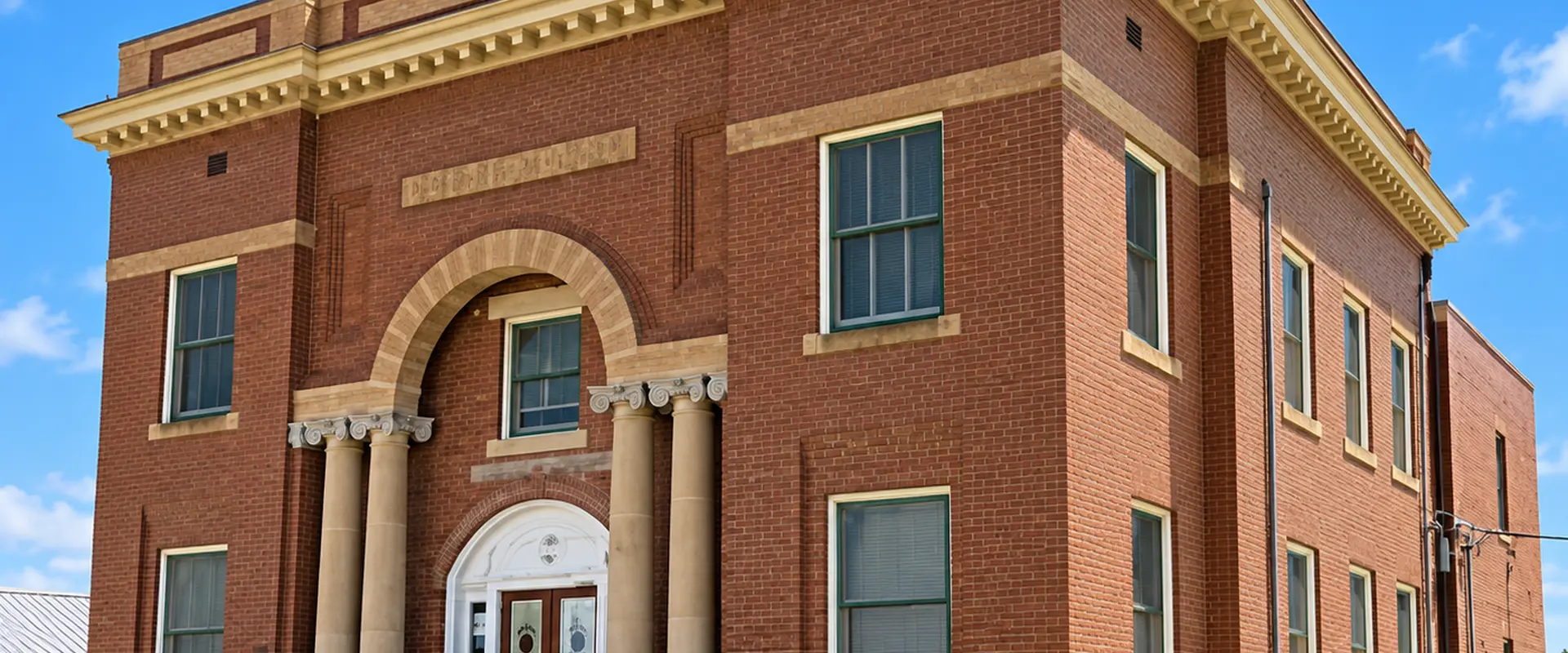
Hartley County Courthouse
Serves as the central hub for most judicial and administrative functions in the county, including district court proceedings, county court matters, and clerk services for filings and records. It handles felony cases, civil disputes, probate matters, and official court documentation for Hartley County.
Channing
Address: 900 Main St, Channing, TX 79012
Phone: (806) 235-3442
Website: Hartley County Courthouse
69th Judicial District Court
Serves Hartley County as the primary trial court for major cases and operates within the Texas Judicial Branch, handling the most serious judicial matters in the county.
Dumas
Address: 715 S. Dumas Avenue, Dumas, TX 79029
Phone: (806) 935-2700
Website: 69th Judicial District Court
County Commissioners Court
Primarily oversees the maintenance and construction of roads and bridges, approving the county budget, setting property tax rates, and managing county infrastructure.
Channing
Address: 900 Main St, Channing, TX 79018
Phone: (806) 235-3442
Website: County Commissioners Court
Justice of the Peace Court, Precinct 1
Precinct 1 covers the entire county and provides a local forum for minor civil and criminal matters, and operates from its offices in Dalhart.
Dalhart
Address: 1401 Walnut Ave., Dalhart, TX 79022
Phone: (806) 244-2939
Website: Justice of the Peace Court
Dalhart Municipal Court
Handles violations of city ordinances and minor criminal matters occurring within city limits.
Dalhart
Address: 205 Rock Island Avenue, Dalhart, TX 79022
Phone: (806) 244-5511
Website: Dalhart Municipal Court
Legal Help and Self-Help Resources
There are multiple local, state, and non-profit organizations available that offer support in following legal proceedings, understanding court processes, and accessing basic legal information. These resources work to promote access to justice through the help they provide in form-filling, understanding filling procedures, and explaining general information about court procedures.
 Free Legal Assistance
Organizations such as Texas Legal Services Center (TLSC) offer free or low-cost legal information and forms that are available for Texas citizens with low or moderate incomes. These resources are often used for legal issues pertaining to family law, property law, and rights, and provide referrals to other legal aid groups when assistance beyond what the group offers is needed. Information regarding forms, filing procedures, and processes is also provided by County and District clerk offices within Hartley County, although legal advice or representation cannot be given.
 Local Legal Support.
Some programs available include local legal aid organizations, volunteer attorneys, and area law school clinics. These provide assistance in areas like family law, property law, and small claims court. Legal Aid of NorthWest Texas (LANWT) serves the area through its Amarillo office. They provide free civil legal services, including family, housing, and consumer issues, to low-income residents. While self-representation is useful for simple and uncomplicated issues, people with issues that are complex or involve disputes should obtain representation by an attorney.
FAQs
Where can I get copies of court records or birth/death certificates?
Residents frequently reach out to the Hartley County Clerk or District Clerk for certified copies of birth certificates, death certificates, and filed court documents.
How do I file a small claims case in Hartley County?
Questions often relate to filing lawsuits for money damages or civil penalties up to $10,000, which are handled by the Justice of the Peace.
How can I apply for an Assumed Name Certificate (DBA)?
Business owners and residents regularly ask the County Clerk for the required forms to register an Assumed Name Certificate or an Abandonment of Assumed Name Certificate.
When would it be beneficial to use a third-party records finder?
A third-party finder would be most beneficial when a party does not know exactly which court record to search for or wishes to check multiple records databases at once. A tool such as CourtCaseFinder could assist with your endeavor.
How do I pay a traffic citation or handle a warrant?
Due to high highway traffic, the Hartley County Justice of the Peace receives questions regarding fine-only misdemeanors, traffic tickets, and the current active warrant list.
Where do I file for a divorce or child custody (Suit Affecting Parent-Child Relationship)?
Questions regarding family law, including initiating divorce proceedings or modifying child support, are directed to the District Clerk.
How do I get an eviction petition or a debt claim?
Landlords and creditors frequently ask for information on filing evictions or debt claim cases through the Justice of the Peace court.
Where is the District Clerk located?
The District Clerk is located at 900 Main Street in Channing at the Hartley County Courthouse.
What are the fees for filing a civil or family case?
The filing fees in Hartley County vary depending on the type of case. The District Clerk maintains an updated fee schedule for civil and family filings, which you can access directly on the District Clerk's page of the Hartley County website.
Other Counties in Texas
- Anderson
- Andrews
- Angelina
- Aransas
- Archer
- Armstrong
- Atascosa
- Austin
- Bailey
- Bandera
- Bastrop
- Baylor
- Bee
- Bell
- Bexar
- Blanco
- Borden
- Bosque
- Bowie
- Brazoria
- Brazos
- Brewster
- Briscoe
- Brooks
- Brown
- Burleson
- Burnet
- Caldwell
- Calhoun
- Callahan
- Cameron
- Camp
- Carson
- Cass
- Castro
- Chambers
- Cherokee
- Childress
- Clay
- Cochran
- Coke
- Coleman
- Collin
- Colorado
- Comal
- Comanche
- Concho
- Cooke
- Coryell
- Crockett
- Crosby
- Culberson
- Dallam
- Dallas
- Dawson
- De Witt
- Deaf Smith
- Delta
- Denton
- Dimmit
- Duval
- Eastland
- Ector
- Edwards
- El Paso
- Ellis
- Erath
- Falls
- Fannin
- Fayette
- Fisher
- Foard
- Fort Bend
- Franklin
- Freestone
- Frio
- Gaines
- Galveston
- Garza
- Gillespie
- Glasscock
- Goliad
- Gonzales
- Gray
- Grayson
- Gregg
- Grimes
- Guadalupe
- Hale
- Hamilton
- Hansford
- Hardin
- Harris
- Harrison
- Haskell
- Hays
- Henderson
- Hidalgo
- Hill
- Hockley
- Hood
- Hopkins
- Houston
- Howard
- Hunt
- Hutchinson
- Jack
- Jackson
- Jasper
- Jefferson
- Jim Wells
- Johnson
- Jones
- Karnes
- Kaufman
- Kendall
- Kenedy
- Kerr
- Kinney
- Kleberg
- Lamar
- Lamb
- Lampasas
- Lavaca
- Lee
- Leon
- Liberty
- Limestone
- Live Oak
- Llano
- Loving
- Lubbock
- Madison
- Marion
- Matagorda
- Maverick
- Mcculloch
- Mclennan
- Medina
- Midland
- Milam
- Mitchell
- Montague
- Montgomery
- Moore
- Morris
- Nacogdoches
- Navarro
- Newton
- Nolan
- Nueces
- Ochiltree
- Orange
- Palo Pinto
- Panola
- Parker
- Parmer
- Pecos
- Polk
- Potter
- Rains
- Randall
- Red River
- Reeves
- Robertson
- Rockwall
- Runnels
- Rusk
- Sabine
- San Augustine
- San Jacinto
- San Patricio
- Scurry
- Shelby
- Sherman
- Smith
- Somervell
- Starr
- Stephens
- Tarrant
- Taylor
- Terrell
- Terry
- Titus
- Tom Green
- Travis
- Trinity
- Tyler
- Upshur
- Uvalde
- Val Verde
- Van Zandt
- Victoria
- Walker
- Waller
- Ward
- Washington
- Webb
- Wharton
- Wichita
- Wilbarger
- Willacy
- Williamson
- Wilson
- Wise
- Wood
- Yoakum
- Young
- Zapata
- Zavala
Table of Contents
