Table of Contents
Erath County Courts, TX *

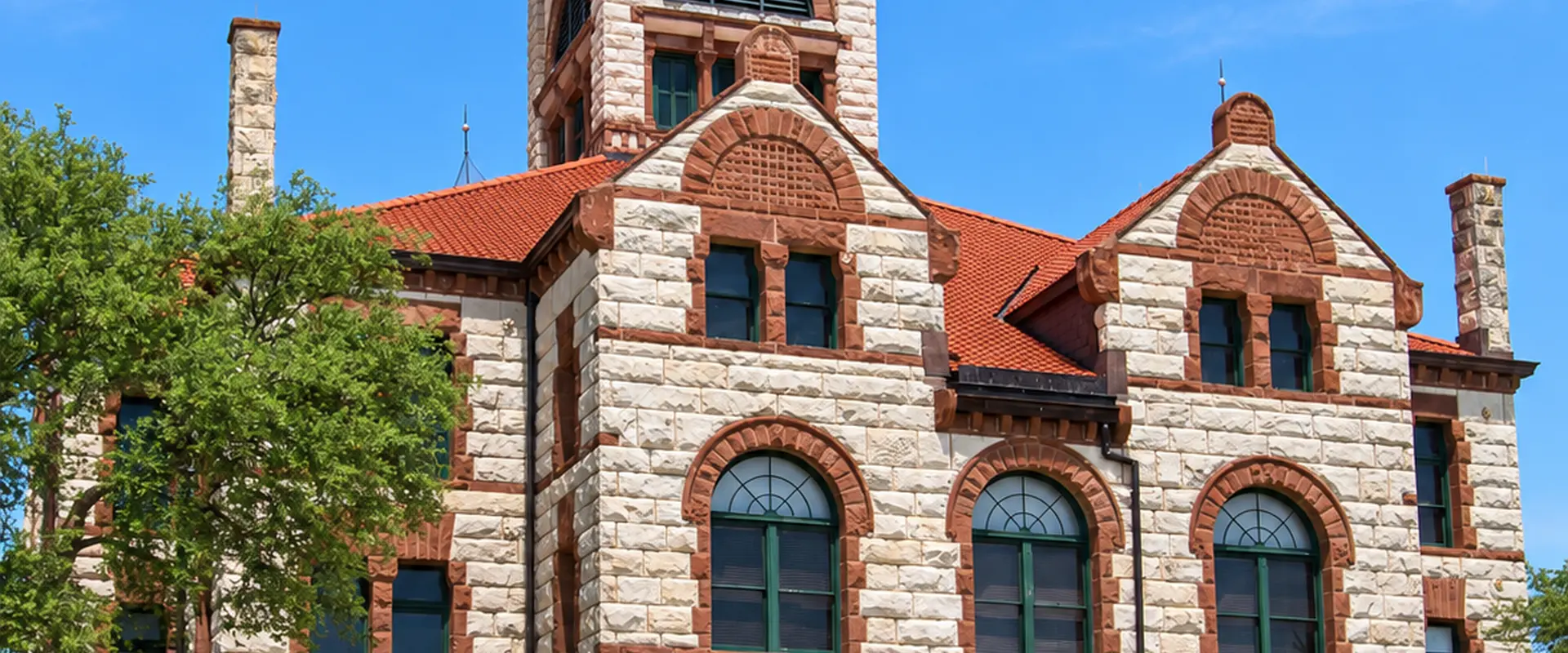
Erath County, located in Central Texas, with its county seat in Stephenville, has a systematic court system that enforces the rule of law for the expanding population. Courts in the county have the jurisdiction to handle cases according to the type, from traffic violations, divorces, and small claims to criminal cases. Each court has an administrative office that handles state-mandated procedures while bringing services closer to the locals.
Knowing which court to go to and how to find the information will save you time, money, and the frustration of navigating the complex justice system. If you choose the wrong court to present your case, you will experience procedural delays that may manifest as unfair outcomes. Understand that even without an attorney, you can easily navigate the court system in Erath County through self-help legal materials that explain the legal procedures for each court.
Overview of the Erath County Court System
The Texas Constitution defines the structure of Erath County courts. At the highest level, the 266th Judicial District Court handles all felony-level cases. The County Court at Law listens to all mid-level civil and criminal cases and acts as the appellate court for unresolved cases in lower courts. Erath County has four Justice of the Peace Courts handling small claims and minor civil disputes. All municipal violations in the city of Stephenville are addressed at the Stephenville Municipal Court.
Types of Courts in Erath County, Texas

The Texas Constitution demands that each court have specific filing procedures and rules that define the cases handled. In Erath County, these courts are located in the same area except for the municipal court. You should know the location and the jurisdiction of each court to speed up the process of finding court records and case filing. Common mistakes when filing can lead to your case being dismissed or a refile, which attracts additional fees.
 District Court
Erath County has a 266th Judicial Court that handles all 1st, 2nd, and 3rd degree felonies as defined under the Texas Constitution. These include:
- Aggravated assault, in addition to murder
- Drug trafficking in large quantities
- Driving while intoxicated (DWI)
- Grand theft with a value of over $2,500
While the court rarely handles misdemeanors, a provision can be created if the criminal history shows habituation that elevates it to a felony.
On the civil side, the jurisdiction of the district court is extensive. Some of the major litigations include:
- Contested divorces
- Disputed termination of parental rights
- Cases with a value of more than $200 with no upper cap
- Child custody cases
The court can also acquit a person for wrongful arrests or seal court records after deferred adjudication is completed.
Primary location: Donald R. Jones Justice Center
 County Court at Law
The intermediate jurisdiction in Erath County is the County Court at Law. It shares some of its authority with the district court in matters pertaining to family law, specifically child care, control, and custody. In addition to this provision, the court handles all the Class A and B misdemeanors on the criminal side. These include:
- Personal injury as a result of assault
- Initial DWI
- Trespass
- Criminal mischief
- Grand theft with values between $100 and $2,500
The criminal cases are often punishable by a jail sentence of up to one year, fines, or both. The County Court at Law also handles noncriminal cases with values starting at $200 up to $250,000.
Probate matters are also heard in this court. You can file cases involving matters over the will of deceased persons or any estate disputes. The court also doubles as the county's juvenile board. Matters involving minor delinquency and supervision are litigated here.
Primary location: Donald R. Jones Justice Center
 Justice of the Peace Courts
Precincts 1, 3, and 4
Erath County jurisdiction at the community level is exercised in two primary locations by four Justice of the Peace Courts. Precincts 1, 3, and 4 are located in Stephenville. They handle all the minor disputes, such as Class C misdemeanors, which are not punishable by jail sentences. Instead, they issue fines or citations. On the civil side, the courts handle small claims of up to $20,000. You can visit any of the precincts if your issue involves debt recovery or damage to property. The courts also solve petitions on driver's licenses, officiate marriages, and issue warrants.
Primary location: Donald R. Jones Justice Center
Precinct 2
For residents outside Stephenville, there is another Justice of the Peace Court Precinct 2 in Dublin. Its judicial oversight mirrors the JP Courts in Erath County. It covers eviction proceedings, small debts recovery, and property seizures. The judge also has the official capacity to advise defendants about their rights, authorize protective orders, and set bail. Overall, the precinct deals with all local infractions that interfere with public safety.
Primary location: Dublin Precinct 2
 Municipal Court
The Stephenville Municipal Court governs in Erath County at the city level. The court only handles fine-only Class C misdemeanors that do not carry a prison term. Your case will land in this court if you receive citations for violations such as speeding, property damage, public disturbances, and indecency. Apart from fines, you can resolve your citation by taking up community service, committing to a driving safety program, or entering a plea. You can also appeal your case to the higher courts.
Primary location: Stephenville Municipal Courthouse
How to Access Erath County Court Records

Most court records in Erath County are available for public view. However, you may fail to find a record even if the case exists. The files might be restricted or redacted, requiring a court order to get access. The methods below are generally used to obtain court records.
 Online Access
You can access all civil and criminal court records in Erath County by searching through the Erath County Court Portal. It is a statewide database that documents and connects users to misdemeanors and felonies committed in each county. Narrow down your search results by selecting Erath County and then the case number, party, or attorney's name. You can also use the smart search option if you have the case record number or the full names of the litigant. An alternative to statewide searches is the re:SearchTX database. It contains all the court records for criminal and case records for all counties in Texas.
 Alternative Online Options
There are additional databases you can use to find a court record in Erath County. The main option is CourtCaseFinder, which lets users access records even if they do not have a case number. It is a good starting point if you want a broader picture of any case history, as it searches across the state and multiple jurisdictions.
 In-Person Requests
If online options do not return results, in-person requests give access to physical records. For major civil cases, felonies, and family law, visit the District Clerk's office. At the County Court Clerk's office in the same center as the district court, you can find records for misdemeanors, probate matters, and vital records. Ensure you carry your ID card to avoid any rejection and time wastage.
 Archived Records
Some records in Erath County might be hard to obtain, especially if they are older. The Texas State Library and Archives Commission has microfilm records for all counties dating back to the 1800s. The database holds vital records, court minutes, and most civil and criminal cases. Use the microfilm inventory to find records specific to Erath County. The court clerks will also have an idea where older documents may be stored, so ask them as well.
For Attorneys and Legal Professionals
Attorneys in Erath County have additional access to court records based on their credentials. re:SearchTX provides redacting software for restricted files. The service is not available to the general public as it requires the Bar ID number for authorization.
Attorneys searching for records in person can present their credentials at the court clerk's office. There should be proof that you are the current legal representative in the case to gain access.
If you are not from Erath County but need to file a case here, you will likely have to file online with eFile Texas. Ask the court clerks for more information that is county-specific.
How to File a Case in Erath County

Filing a case may be a complicated process if you do not understand what each court does. Picking the wrong office often leads to filing the wrong form or skipping a required step. The case cannot go forward if your file is rejected, or even worse, your case could be dismissed entirely if the filing window closes.
Step 1: Choose the Correct Court
Matching the case with the correct jurisdiction is the most important step in the filing process. For example, no other court below the 266th District Court in Erath County can handle a felony charge. Similarly, your court for Class A and B misdemeanors, civil issues, or probate matters is the County Court at Law. The other fine-only charges for traffic citations, small claims below $20,000, and evictions are handled by the Justice of the Peace Court. Since Erath County has four precincts, choose the one closest to you. Lastly, all city-limit cases are filed at the Stephenville Municipal Court.
 Step 2: Complete Required Forms
The type of case determines the required form. Texas uses standardized forms that are provided for download through the Files and Forms page on the official website. The District Court Clerk has forms for family law. If you do not find a form that fits your case, use Texas Law Help for all civil and criminal cases. It also has a section for small claims. The site is particularly helpful for individuals filing pro se (without legal assistance).
 Step 3: File Your Case
The paperwork should be submitted to the respective clerk's office handling your case.
- All felony cases, family matters, and major suits are filed with the District Clerk.
- Major-to-minor civil cases and misdemeanors are recorded with the Court Clerk.
- Small claims and minor crimes are handled at the JP Courts in Stephenville and Dublin.
- The Municipal Court handles violations within the Stephenville city limits.
All civil cases filed through an attorney must be electronically submitted to the eFile Texas database. This rule is pertinent to all JP, district, and county courts in Erath County.
 Step 4: Pay Filing Fees
Filing comes at a fee determined by the case type and court. The respective court clerks in Erath County have the fee schedules. Alternatively, you can find the costs listed online. The eFile Texas charges no fee for civil cases, but criminal cases are billed $2. For criminal and civil cases filed in district and county courts, use the downloadable fee schedules. If you cannot afford an attorney, attach a statement of inability to afford payment with the rest of the case documents.
 Step 5: Serve the Other Party
A service of process must be executed to notify the defendant about an open case. The sheriff serves most citations for civil and family cases. Mail or delivery through an official appointed by the court may be coordinated for small claims. Provide the court with proof of service.
 Step 6: Monitor Your Case
It is possible for an active case to change status depending on the workload in the courthouses. You should track your case to catch any changes in venue, hearing dates, and documents required. Monitoring in Erath County can be done in person by visiting the respective court offices. Online tracking with the Tyler Odyssey Portal is more convenient and gives instant results.
Erath County Courthouse Directory
A detailed directory of multiple ways you can use to reach the court offices is provided below.
266th Judicial District Court
Handles major civil cases, felonies, and family-related matters.
Stephenville
Address: Donald R. Jones Justice Center, 298 S. Graham St., Stephenville, TX 76401
Phone: (254) 965-1485
Email: districtcourt@co.erath.tx.us
County Court at Law
The mid-level court connecting the local courts with the district court.
Stephenville
Address: Donald R. Jones Justice Center, 298 S. Graham St., Stephenville, TX 76401
Phone: (254) 965-1417
Justice of the Peace Courts, Precincts 1, 3, and 4
Handles all small claims and minor misdemeanors.
Stephenville
Address: Donald R. Jones Justice Center, 298 S. Graham St., Stephenville, TX 76401
Phone: (254) 965-1489
Website: co.erath.tx.us/238/Justice-of-the-Peace---Pct-1-3-4
Justice of the Peace, Precinct 2
Serves the residents of Dublin, Texas.
Dublin
Address: 219 S Grafton Street, Dublin, TX 76446
Phone: (254) 445-2766
Stephenville Municipal Court
Local-level court that only deals with fine-only crimes in the city.
Stephenville
Address: 298 W Washington Street, Stephenville, TX 76401
Phone: (254) 552-1227
Legal Help and Self-Help Resources
Showing up in court without the presence of an attorney in Erath County is permitted by some courts, such as JP and municipal courts. However, it is important to understand how the system works to represent yourself successfully. Luckily, most legal and local assistance is available for free throughout the county.
 Free Legal Assistance
The Erath County court system is complex and can be difficult to navigate for persons without an attorney. Understanding the frustrations of residents, some nonprofits offer self-help guides to assist residents in navigating the court processes with ease. In Erath County, you can get free legal assistance from Legal Aid of NorthWest Texas (LANWT). You can apply online or by phone for legal aid on child support, debt claims, family law, and sexual assault, among other legal issues.
Texas Law Help is another database with extensive self-help resources for all legal issues in the state. Some of the programs offered by the organization include eviction processing, divorce, and child custody. The guides are easy to read and can be understood without an attorney's help.
 Local Legal Support
The county's offices in Erath County are the main source of local support. At the county level, the County Attorney's office assists individuals seeking protective orders. It also assists first-time offenders with diversion programs. The Court at Law also posts materials regarding pro se litigants. It explains the documents required by the courts and the steps to take when filing your case.
The Attorney General's office also offers support for incarcerated parents. You can use the free self-help resources to file for a child custody case or receive child support. The office also helps residents who are exposed to family violence.
FAQs
How do I search for a criminal case in Erath County?
You can visit the clerk's office in person and request records. You need to have a case number, party names, or a date to start the search. Alternatively, you can use official online portals, such as the Tyler Odyssey Portal.
Are court records public in Erath County?
Yes. Court records are publicly available in Erath County, but for some cases, such as juvenile records, some information may be redacted for safety. To access restricted data, you will need to present a court order.
Can I file a small claims case online?
Yes. The Justice of the Peace Courts handle all minor claims in Erath County. You can either file in person at the court's office or file online.
How long does it take to get records in Erath County?
The period taken to get records in Erath County depends on the requester's method. Online databases return immediate results. For in-person visits, the service typically takes one to three days. If the records are redacted, it takes more time to process the court order.
When is it helpful to use a third-party records finder?
Third parties like CourtCaseFinder are most sought when you want broad-based results. The site has a nationwide reach, documenting all cases in a single portal. You can get results even without knowing the specific details of the case. You simply need to use a keyword, and the database will return results for all relevant cases. You can then skim through to find the case you are looking for.
Other Counties in Texas
- Anderson
- Andrews
- Angelina
- Aransas
- Archer
- Armstrong
- Atascosa
- Austin
- Bailey
- Bandera
- Bastrop
- Baylor
- Bee
- Bell
- Bexar
- Blanco
- Borden
- Bosque
- Bowie
- Brazoria
- Brazos
- Brewster
- Briscoe
- Brooks
- Brown
- Burleson
- Burnet
- Caldwell
- Calhoun
- Callahan
- Cameron
- Camp
- Carson
- Cass
- Castro
- Chambers
- Cherokee
- Childress
- Clay
- Cochran
- Coke
- Coleman
- Collin
- Colorado
- Comal
- Comanche
- Concho
- Cooke
- Coryell
- Crockett
- Crosby
- Culberson
- Dallam
- Dallas
- Dawson
- De Witt
- Deaf Smith
- Delta
- Denton
- Dimmit
- Duval
- Eastland
- Ector
- Edwards
- El Paso
- Ellis
- Falls
- Fannin
- Fayette
- Fisher
- Foard
- Fort Bend
- Franklin
- Freestone
- Frio
- Gaines
- Galveston
- Garza
- Gillespie
- Glasscock
- Goliad
- Gonzales
- Gray
- Grayson
- Gregg
- Grimes
- Guadalupe
- Hale
- Hamilton
- Hansford
- Hardin
- Harris
- Harrison
- Hartley
- Haskell
- Hays
- Henderson
- Hidalgo
- Hill
- Hockley
- Hood
- Hopkins
- Houston
- Howard
- Hunt
- Hutchinson
- Jack
- Jackson
- Jasper
- Jefferson
- Jim Wells
- Johnson
- Jones
- Karnes
- Kaufman
- Kendall
- Kenedy
- Kerr
- Kinney
- Kleberg
- Lamar
- Lamb
- Lampasas
- Lavaca
- Lee
- Leon
- Liberty
- Limestone
- Live Oak
- Llano
- Loving
- Lubbock
- Madison
- Marion
- Matagorda
- Maverick
- Mcculloch
- Mclennan
- Medina
- Midland
- Milam
- Mitchell
- Montague
- Montgomery
- Moore
- Morris
- Nacogdoches
- Navarro
- Newton
- Nolan
- Nueces
- Ochiltree
- Orange
- Palo Pinto
- Panola
- Parker
- Parmer
- Pecos
- Polk
- Potter
- Rains
- Randall
- Red River
- Reeves
- Robertson
- Rockwall
- Runnels
- Rusk
- Sabine
- San Augustine
- San Jacinto
- San Patricio
- Scurry
- Shelby
- Sherman
- Smith
- Somervell
- Starr
- Stephens
- Tarrant
- Taylor
- Terrell
- Terry
- Titus
- Tom Green
- Travis
- Trinity
- Tyler
- Upshur
- Uvalde
- Val Verde
- Van Zandt
- Victoria
- Walker
- Waller
- Ward
- Washington
- Webb
- Wharton
- Wichita
- Wilbarger
- Willacy
- Williamson
- Wilson
- Wise
- Wood
- Yoakum
- Young
- Zapata
- Zavala
Table of Contents
