Table of Contents
Duval County Courts, TX *

Duval County is located in the southern part of the state of Texas. It acts as one of the key counties in the state judicial system of Texas. The county's courts are regulated by the state laws that help solve disputes among the citizens. Through the court systems, Duval County enforces all legal standards and resolves disputes in a legal manner.
Cases that go through Duval County include those dealing with civil disputes, criminal cases, family law, probate law, and housing. Every individual court has different roles, and thus, various types of cases can be sent to a particular court depending on the nature and complexity of the case.
Overview of the Duval County Court System
Duval County courts are operated under the Texas Judicial Branch courts, which are structured based upon types of jurisdiction, not upon a united court system. The court system in the state consists of four types of courts that include district, county, justice, and municipal courts. Each type of court is assigned the responsibility to adjudicate certain types of cases. For instance, felonies are filed in district courts, civil disputes in county courts, and the like, while small misdemeanors in justice or municipal courts and probate matters are handled in the county court. General information regarding the operation of the Texas Judicial System may be accessed through its web page.
Operating courts in Duval County center their main function in the county seat, San Diego. This is where both the district and county clerks' offices are located. The clerk's office duties consist of recording and maintaining official court records as well as filing and managing case dockets. While Justice of the Peace and municipal courts operate from their own precincts and city offices around Duval County, most formal judicial proceedings happen at the courthouse in San Diego, and that's where most record requests should be directed.
Types of Courts in Duval County, Texas

Duval County has a few distinct courts with designated jurisdictions. Those include the district court, county court, justice of the peace courts, and municipal courts.
 District Court
The 229th District Court provides general jurisdictional power over all criminal and civil cases throughout Duval County and will be held in the Duval County Courthouse, San Diego.
Jurisdiction includes:
- Felonies in criminal proceedings
- Civil litigation involving higher monetary claims
- Family law matters such as divorce, custody, and support
- Juvenile cases and related proceedings
The 229th District court is known to act as the court of original, major jurisdiction, and the laws and rules of Texas apply to these case types. All cases that reach this court will undoubtedly involve complex and extensive legal proceedings.
 County Court
Duval County Court hears medium-level issues, such as civil and criminal cases. It is located at the Duval County Courthouse in San Diego.
Jurisdiction includes:
- Misdemeanor criminal cases
- Civil cases (with monetary caps)
- Will and estate administration probate matters
- Appeals from Justice of the Peace courts
The county court is the intermediate trial court and also has a significant role in probate work. County courts handle appeals from the lower courts as well.
 Justice of the Peace Courts
 in Precincts 1 through 4 in Duval County handle small civil and criminal matters within their precinct, divided geographically. Their proceedings are locally conducted in assigned courthouses.
Jurisdiction includes:
- Civil disputes
- Small Claims and debt-related cases
- Evictions and landlord-tenant cases
- Class C misdemeanors
- Magistrate functions
These courts offer forums for adjudicating lower-level cases and dealing with small crimes. The proceedings may be less formal, but they follow the laws of procedure as provided in Texas. There are also some other responsibilities for justices to carry out, which help in the criminal justice process.
Municipal Courts
Municipal courts in Duval County preside over violations of city ordinance laws and misdemeanors that take place within the city limits, with each court depending upon the jurisdiction of the city. The cities of Benavides, Freer, and San Diego all have municipal courts.
Jurisdiction includes:
- City ordinance violations
- Traffic infractions (within city limits)
- Class C misdemeanor offenses under municipal authority
The main emphasis of municipal courts is the enforcement of city rules and safety laws. Municipal courts conduct their proceedings through municipal powers and process cases in huge numbers, but of lesser seriousness.
How to Access Duval County Court Records

The majority of court documents in Duval County are classified as public records and can be accessed by anyone inquiring. However, some documents may be sealed or otherwise limited when cases involving juveniles, sensitive issues, or cases pending, where public access would be detrimental to a party's right to privacy.
 Online Access
The Texas Courts' main web portal is eFile Texas, which allows courts to manage cases through electronic filings. Users can also look up and check the status of their filings through the same interface tied into the judicial branch in Texas. Before looking up your records, it is recommended to have relevant information available, such as the case number, names of the parties, and types of courts.
 Alternative Online Options
The Texas State Law records guide explains how to look up cases through official channels, but it can be tricky to navigate if you don't already have specific case details on hand. Third-party tools like CourtCaseFinder offer broader search access across civil and criminal records, which can be useful when you're not sure which court holds the case, or you only have partial information. Just remember to verify anything important against the official clerk's office before relying on it.
 In-Person Requests
Certified copies, archived records, and full case files can be requested in person at the Duval County Clerk's Office. You may ask for help locating physical files, archived documents, and certified copies. Bringing case numbers, names, or filing dates helps the clerk's office locate records more efficiently.
 Archived Records
Historical or past records from Duval County are kept in physical paper-based files and not on digitized platforms. You can find these documents at the county clerks' offices or the archived records at the court buildings. The retrieval of these records will involve some additional processing and a physical visit to retrieve the records.
For Attorneys and Legal Professionals
Lawyers practicing in Duval County are likely acquainted with the procedures involved in their jurisdiction. But for lawyers and other legal practitioners from out-of-county jurisdictions, they will be required to familiarize themselves with the new procedures in filing, docketing, and other matters that pertain to the process. Case records can usually be obtained from the clerk's office where the case was filed. But there are also instances where case records can be found via authorized electronic filing services.
Out-of-county lawyers have to resort to using both court databases and clerks to gain access to the records of a case, determine its schedule of hearings, or even obtain certified copies of the case records. They have to make sure that they follow the Texas Rules of Civil Procedure and other local rules regarding filing and other processes related to litigation.
How to File a Case in Duval County

Prior to filing your lawsuit, you must be thoroughly familiar with the laws regarding procedure, filing requirements, and necessary documents, and with jurisdiction, so you may properly file your case in Duval County. All lawsuits must be filed in the appropriate court; otherwise, the case can be delayed in its hearing or dismissed for wrong jurisdiction. Here is a basic, step-by-step guide on filing a lawsuit in Duval County:
 Step 1: Choose the Correct Court
The very first step when you want to file a lawsuit in Duval County is for you to choose the proper court that has jurisdiction over your case. If your case is that of a felony crime, a broad civil case, or a family law matter, then your case will be filed with the district court. If your case is that of a misdemeanor crime, a probate matter, or a minor civil case, then you will need to file the case with the county court.
 Step 2: Complete Required Forms
Once you have identified the right court, you will then need to fill out the proper forms according to the kind of case that you intend to file. The proper forms for filing a case with the court in Duval County can be obtained from the Clerk's office in Duval County and on the county's website as well. The specific forms will depend on the type of case you are filing and vary depending on civil law, criminal law, probate law, or family law cases.
 Step 3: File Your Case
Once all of the appropriate forms are filled out, your petition should be submitted to the county clerk's office. The clerk will then review your forms to make sure they are all appropriate, and then the clerk will record the case on the courts' computer system. Some cases can be e-filed through eFile Texas instead of at the court.
 Step 4: Pay Filing Fees
Duval County filing fees differ according to the type of lawsuit being filed, such as criminal, civil, probate, or family law proceedings. Other charges may be incurred in connection with the process of service, certified copies, or motions. In cases where you are not able to pay the relevant charges, you can ask for a fee waiver by submitting a Statement of Inability to Afford Payment of Court Costs.
 Step 5: Serve the Other Party
Once a case has been initiated, the other party will be officially served via a legal process referred to as service of process. This helps to ensure that the parties involved are adequately served and can respond. In Duval County, service can be conducted by the sheriff, a constable, or a qualified private process server. Proof of the service of process must be provided to the courts.
 Step 6: Monitor Your Case
Once the document is filed and served, the parties involved in the litigation process must follow up on the case by tracking it using the case number that will have been assigned to it. The status of the case, the scheduled hearing dates, and other related information can be obtained via the court system of Duval County or by visiting the clerk's office in charge of the matter.
Duval County Courthouse Directory
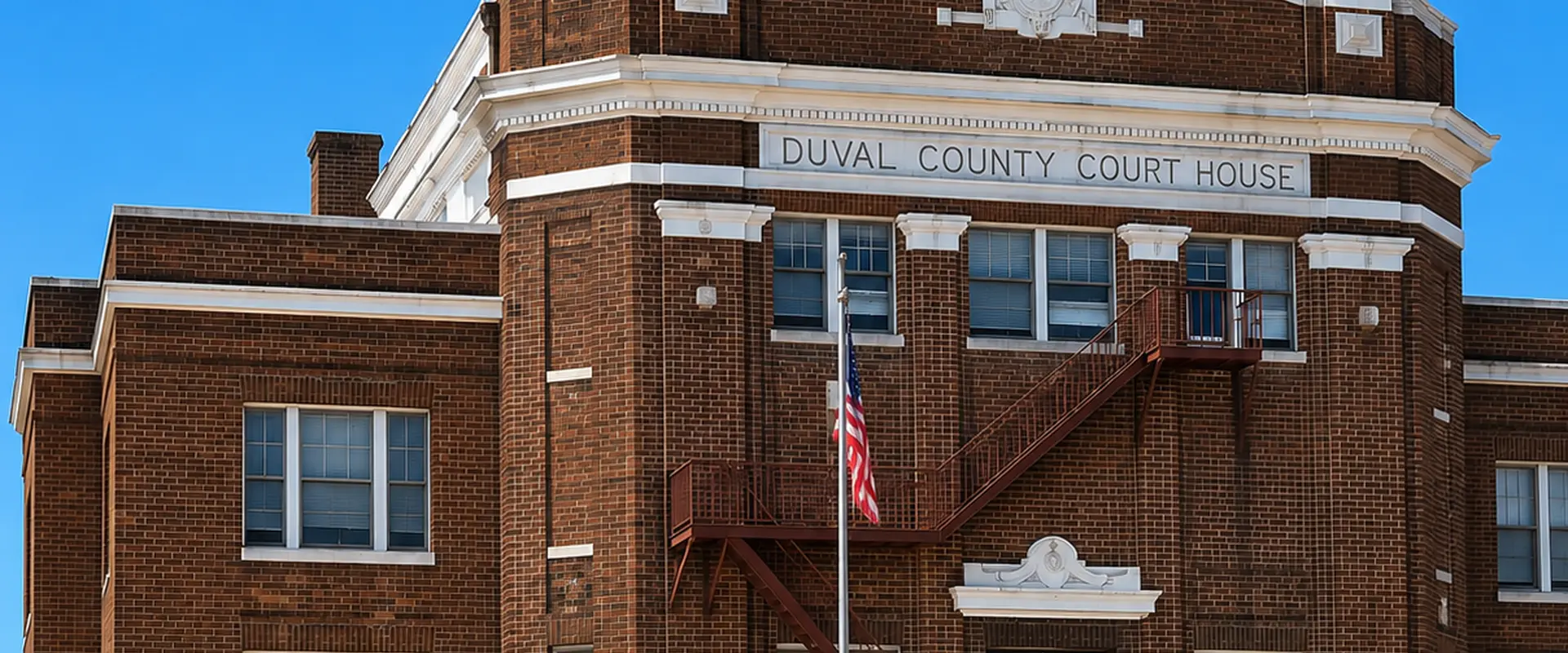
Duval County Courthouse facilities are mostly located in San Diego, and all court offices conduct their proceedings from one centrally located courthouse building. As various offices are responsible for various aspects of the court proceedings, it is important to know where you should send your inquiry to minimize any inconvenience. Below is a list of major courts and offices operating in Duval County and their relevant addresses.
229th Judicial District Court
Holds jurisdiction for all felony crimes, serious civil cases, and family disputes. Serves as a state trial court conducting hearings according to the statutes of Texas.
San Diego
Address: 400 E. Gravis St., San Diego, TX 78384
Phone: (361) 279-6241
Website: 229th Judicial District Court
Duval County Court
The intermediate trial court within the Texas judiciary. Deals with misdemeanor criminal matters, probate actions, and civil cases with a relatively small amount in controversy.
San Diego
Address: 400 E. Gravis St., San Diego, TX 78384
Phone: (361) 279-6204
Website: Duval County Court
Justice of the Peace Court, Precinct 1
This precinct operates within the courthouse area in San Diego and handles small claims, evictions, traffic violations, and Class C misdemeanor cases within its jurisdiction.
San Diego
Address: 400 W. Collins, San Diego, TX 78384
Mailing: P.O. Box 429, San Diego, TX 78384
Phone: (361) 279-6218
Website: Justice of the Peace
Justice of the Peace Court, Precinct 2
Also located in San Diego, this precinct handles similar matters, including small claims disputes, eviction cases, traffic citations, and other fine-only misdemeanor offenses.
San Diego
Address: 109 W Gravis, San Diego, TX 78384
Phone: (361) 279-6245
Email: jp2@co.duval.tx.us
Website: Justice of the Peace
Justice of the Peace Court, Precinct 3
Serving the Benavides area, this precinct processes local small claims matters, landlord-tenant disputes, and minor criminal violations within its jurisdiction.
Benavides
Address: 131 W Main, Benavides, TX 78341
Phone: (361) 256-3982
Website: Justice of the Peace
Justice of the Peace Court, Precinct 4
Serves the Freer area with small claims, eviction proceedings, traffic offenses, and Class C misdemeanors.
Benavides Municipal Court
Handles any city ordinance violations, minor criminal offenses, and traffic cases all from within the Benavides city limits.
Benavides
Address: 213 N. Clark, Benavides, TX 78341
Phone: (361) 256-3283
Website: City of Benavides Municipal Court
Freer Municipal Court
Processes city code violations, low-level misdemeanor offenses, and any traffic-related cases within Freer.
Freer
Address: 304 S. Main Ave., Freer, TX 78357
Phone: (361) 394-6097
Website: Freer Municipal Court
San Diego Municipal Court
Oversees local ordinance violations, Class C misdemeanors, and traffic infractions occurring in the city of San Diego.
San Diego
Address: 404 S. Mier Street, San Diego, TX 78384
Phone: (361) 279-3341
Website: City of SanDiego Municipal Court
Legal Help and Self-Help Resources
There are a number of local, state, and non-profit entities that will provide counseling, technical support with forms, and general advice for parties to proceedings. All of these entities work to increase access to justice and assist people in navigating filing procedures, the court system, and procedural rules.
 Free Legal Assistance
Resources such as Texas Law Help offer free or low-cost legal help for low and moderate-income Texas residents, providing forms and information. These services often concentrate on specific civil issues like family law, tenant issues, and individual rights, and will make referrals for further legal help if needed. Clerk's offices in county court and district court, as well as court clerks, can help with procedural issues like obtaining official forms and information about filing. The clerks cannot provide advice or represent the parties in court.
 Local Legal Support
In this region, some local Texas RioGrande Legal Aid, volunteer attorney groups, and several law school clinics in other counties can help provide legal services in cases dealing with family law, housing, or small claims in Duval County. Even though a party may represent itself in very simple cases, if that party is involved in extended litigation, it may be in its best interest to retain proper representation.
FAQs
How do I search for a criminal case in Duval County?
You will search at the county clerk's office depending on the type of criminal case. Providing your case number or names will make the search more precise.
Are court records in Duval County public?
Most court records in Texas are accessible to the public. However, in a few limited circumstances, portions of the record may be restricted or sealed.
Where can I get an eviction record?
Eviction records are mainly kept with the Justice of the Peace, and they can be requested from them directly or via the clerk.
Can I file a small claims case online?
In most cases, small claims cases are filed in person with the Justice of the Peace. However, certain forms may be available online to download and to fill out beforehand.
How long does it take to receive records in Duval County?
The records you are searching for can either be instantly accessible, or they can take some time. It is highly dependent on whether it is archived material.
When would it be beneficial to use a third-party records finder?
A third-party finder would be most beneficial when a party does not know exactly which court record to search for or wishes to check multiple records databases at once. A tool such as CourtCaseFinder could assist with your endeavor.
Other Counties in Texas
- Anderson
- Andrews
- Angelina
- Aransas
- Archer
- Armstrong
- Atascosa
- Austin
- Bailey
- Bandera
- Bastrop
- Baylor
- Bee
- Bell
- Bexar
- Blanco
- Borden
- Bosque
- Bowie
- Brazoria
- Brazos
- Brewster
- Briscoe
- Brooks
- Brown
- Burleson
- Burnet
- Caldwell
- Calhoun
- Callahan
- Cameron
- Camp
- Carson
- Cass
- Castro
- Chambers
- Cherokee
- Childress
- Clay
- Cochran
- Coke
- Coleman
- Collin
- Colorado
- Comal
- Comanche
- Concho
- Cooke
- Coryell
- Crockett
- Crosby
- Culberson
- Dallam
- Dallas
- Dawson
- De Witt
- Deaf Smith
- Delta
- Denton
- Dimmit
- Eastland
- Ector
- Edwards
- El Paso
- Ellis
- Erath
- Falls
- Fannin
- Fayette
- Fisher
- Foard
- Fort Bend
- Franklin
- Freestone
- Frio
- Gaines
- Galveston
- Garza
- Gillespie
- Glasscock
- Goliad
- Gonzales
- Gray
- Grayson
- Gregg
- Grimes
- Guadalupe
- Hale
- Hamilton
- Hansford
- Hardin
- Harris
- Harrison
- Hartley
- Haskell
- Hays
- Henderson
- Hidalgo
- Hill
- Hockley
- Hood
- Hopkins
- Houston
- Howard
- Hunt
- Hutchinson
- Jack
- Jackson
- Jasper
- Jefferson
- Jim Wells
- Johnson
- Jones
- Karnes
- Kaufman
- Kendall
- Kenedy
- Kerr
- Kinney
- Kleberg
- Lamar
- Lamb
- Lampasas
- Lavaca
- Lee
- Leon
- Liberty
- Limestone
- Live Oak
- Llano
- Loving
- Lubbock
- Madison
- Marion
- Matagorda
- Maverick
- Mcculloch
- Mclennan
- Medina
- Midland
- Milam
- Mitchell
- Montague
- Montgomery
- Moore
- Morris
- Nacogdoches
- Navarro
- Newton
- Nolan
- Nueces
- Ochiltree
- Orange
- Palo Pinto
- Panola
- Parker
- Parmer
- Pecos
- Polk
- Potter
- Rains
- Randall
- Red River
- Reeves
- Robertson
- Rockwall
- Runnels
- Rusk
- Sabine
- San Augustine
- San Jacinto
- San Patricio
- Scurry
- Shelby
- Sherman
- Smith
- Somervell
- Starr
- Stephens
- Tarrant
- Taylor
- Terrell
- Terry
- Titus
- Tom Green
- Travis
- Trinity
- Tyler
- Upshur
- Uvalde
- Val Verde
- Van Zandt
- Victoria
- Walker
- Waller
- Ward
- Washington
- Webb
- Wharton
- Wichita
- Wilbarger
- Willacy
- Williamson
- Wilson
- Wise
- Wood
- Yoakum
- Young
- Zapata
- Zavala
Table of Contents
