Table of Contents
Carson County Courts, TX *

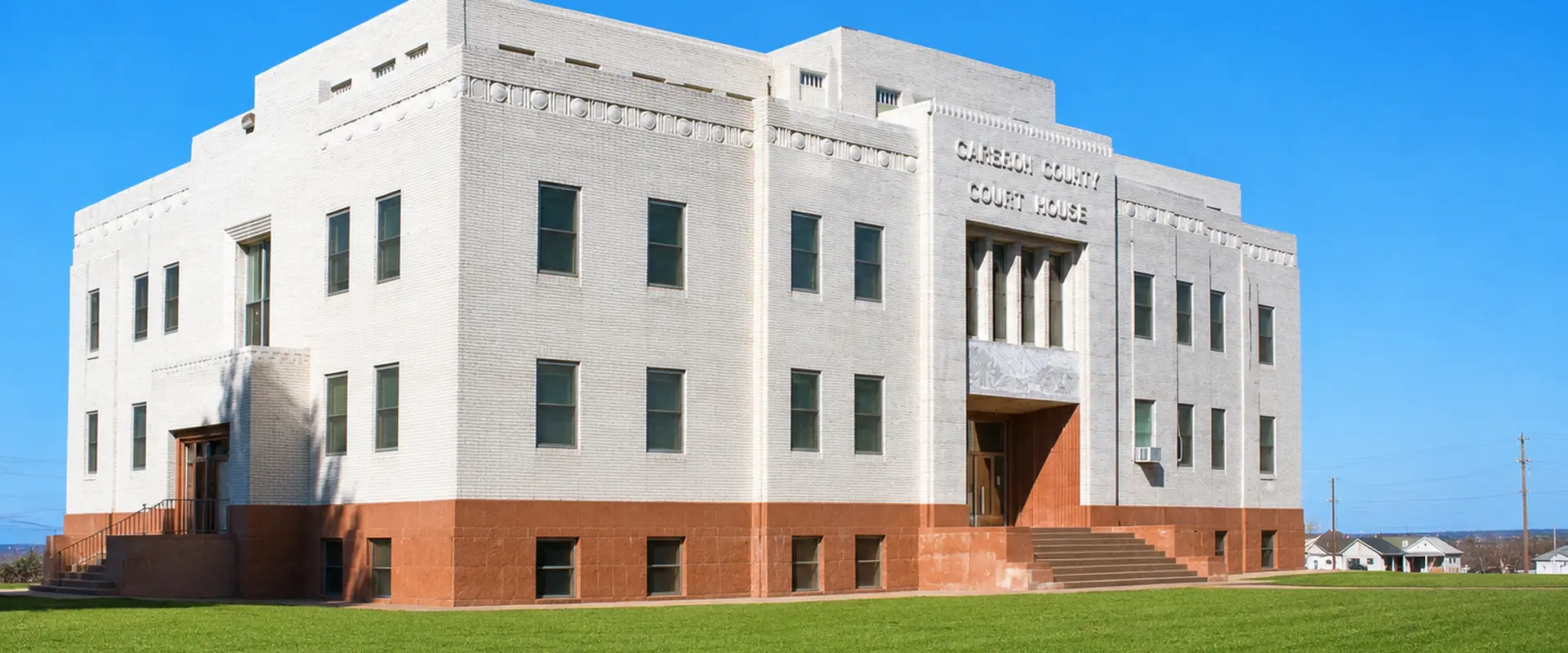
Carson is one of the 254 counties in Texas, and is renowned for its agricultural traditions and rich ranching history. At the county seat of Panhandle sits the modern, three-story Carson County Courthouse, which provides legal services to the county's 5800+ residents. The building houses the Constitutional and District Courts, as well as Justices of the Peace courts.
Carson County courts handle a wide range of cases, including civil disputes, probate matters, misdemeanors, criminal cases, and even family law issues. Lower local courts have binding authority to perform administrative duties, such as conducting marriages, holding inquests, and issuing warrants.
Overview of the Carson County Court System
Carson County courts operate under the Texas five-tiered judicial system, comprising a Supreme Court, Appellate Courts, District Courts, Constitutional County Court, and Justice of the Peace courts. Since Carson County is sparsely populated, it only has a Constitutional County Court, a District Court, and two Justice of the Peace courts.
Moreover, all legal proceedings are held at the Carson County Courthouse in Panhandle. This multi-service courthouse allows residents to conduct all legal activities under one roof, ensuring a smoother judicial process.
Types of Courts in Carson County, Texas

Carson County courts handle different cases. The District Court has general jurisdiction, while the County Court has concurrent jurisdiction. The Justice of the Peace has limited jurisdiction and covers minor legal matters. Choosing the correct court for your case can help expedite the legal process. It can also lower litigation costs and give you a strategic advantage when seeking legal relief. Here is a breakdown of the different court types in Carson County:
Carson County courts handle different cases. The District Court has general jurisdiction, while the County Court has concurrent jurisdiction. The Justice of the Peace has limited jurisdiction and covers minor legal matters. Choosing the correct court for your case can help expedite the legal process. It can also lower litigation costs and give you a strategic advantage when seeking legal relief. Here is a breakdown of the different court types in Carson County:
 District Court
Located at the Carson County Courthouse, the 100th Judicial District Court operates as the county's primary trial court. It has general jurisdiction, meaning it handles a range of cases.
These include:
- Felony criminal cases
- Family law matters and divorce proceedings
- Juvenile matters
- Election contests
- Civil disputes involving $200 or more in damages
- Land title disputes
- Contractual obligations
- Tort claims
It is important to note that the 100th Judicial District Court is a multi-county court. It also serves the nearby counties of Hall, Donley, Collingsworth, and Childress, with each case heard in the courthouse of the respective county. The court oversees the broadest range of high-stakes cases unless assigned to another court. When authorized by statute, the District Court can hear appeals from lower courts.
 Constitutional County Court
The Carson County Constitutional Court is one of the 254 county-level courts in Texas. It has concurrent jurisdiction, meaning it can hear similar cases handled by the District Court.
Typical cases at the Constitutional Court include:
- Class A and B misdemeanors
- Probate lawsuits
- Juvenile matters
- Civil cases between $200 and $20,000
- Appeals from the Justice of the Peace Court
The Constitutional Court oversees serious cases that carry possible jail time. It has shared authority with the District Court, which helps prevent backlog. Litigants in Carson County can file a case with the Constitutional Court if the District Court has a busy schedule.
 Justice of the Peace Court
Carson County has two Justice Courts, including the Justice of the Peace Precinct 1 and the Justice of the Peace Precinct 2. These courts have limited jurisdiction and handle less serious cases and local legal matters.
Jurisdiction includes:
- Class C misdemeanors
- Eviction cases and landlord-tenant disputes
- Small claims cases up to $20,000
- Issuing search warrants
- Performing marriages
- Handling inquests
Justice of the Peace courts help resolve local community disputes. They handle minor offenses and civil matters that are only punishable by fine. And since Carson County doesn't currently have a dedicated medical examiner, the Justices of the Peace conduct coroner duties.
 Court of Appeals
Although located in Amarillo, Texas, the Seventh Court of Appeals serves 46 Texas counties, including Carson County. It has a Chief Justice and three appellate judges who hear and decide appeals from lower courts.
Jurisdiction includes:
- Reviews criminal appeals
- Handles civil appeals from District and County courts
- Interprets statutes
- Guides lower courts
- Defines standards of review
Appellate courts review case appeals from District, County, and lower-level courts. They do not review new evidence but examine trial records for legal errors. It essentially protects litigants from wrongful sentences and convictions.
How to Access Carson County Court Records

Carson County court records provide critical information about ongoing or concluded cases. Most of these records are available to the public unless sealed or expunged by the courts. A judge or court might restrict a file if it involves a minor to protect their legal rights. Some court documents remain restricted to protect victims and witnesses and uphold their privacy. Understanding how to access Carson County court records online can help you know the status of your case and avoid missed deadlines. You may have to pay a fee per page to access non-confidential court records. Below are the most effective ways to access Carson County court records:
 Online Access
You can access Carson County court records remotely. Although the court does not have an online database, you can use EagleWeb to access public, non-confidential court records. This portal preserves Carson County's official public records. You may have to register with the site for free to access court documents. However, the county may require a fee to view case information and court documents through this platform.
 Alternative Online Options
Aside from EagleWeb, Carson County residents can use online portals like CourtCaseFinder to search for and access court records. These online platforms retrieve court data and legal proceedings from across the country and aggregate them into a single database for easy access. You can search for and filter case information by name, court date, or even location. For more accurate results, consider providing the case number if available.
 In-Person Requests
Sometimes, Carson County courts may not report in real time, so some court documents may not be up to date. For this reason, you might experience challenges accessing court records online. A sure way to overcome this issue is to visit the clerk's office in person. The District Clerk is the custodian of felony criminal and civil records, while the County Clerk handles probate, minor civil, and guardianship records, among others. Make sure you prepare the required details in advance for smooth legal assistance when you visit the respective clerk's office.
 Archived Records
Historical case information and court records might not be readily available at the Carson County Courthouse. You can find archived court documents from the Texas State Library and Archive Commission. The institution preserves historical convict records, case files, and even minute books. These archived records are helpful to attorneys, researchers, and litigants, especially when researching an old case or an unresolved probe.
Accessing Carson County court records does not have to be challenging. You only need to combine the above methods to narrow down your search and obtain accurate results.
For Attorneys and Legal Professionals
Local attorneys and legal professionals know their way around the Carson County courthouse and how the court system works. Lawyers from outside Carson will need to familiarize themselves with the county's legal procedures. While court clerks do not provide legal advice, they can offer some guidance on case information and filing procedures.
Make sure you meet all local requirements and comply with Texas law, especially when filing a case, to avoid frustrating delays.
How to File a Case in Carson County

You'll need to submit documents to the court to file a case and initiate legal proceedings. The process requires attention to detail, since filing incomplete paperwork or in the wrong court can lead to delays or even the dismissal of your case. Below are the steps for filing a case in Carson County.
 Step 1: Choose the Correct Court
Carson County courts have different jurisdictions. As such, you need to figure out which court will handle your case before filing your documents. The District Court handles serious felonies, family law matters, and major civil disputes, while the Constitutional Court has jurisdiction over probate matters, misdemeanors, and juvenile matters. The Justice Courts are responsible for small claims cases, landlord-tenant disputes, and other minor offenses.
 Step 2: Complete Required Forms
If you're filing your case electronically, you'll find all the required forms on the e-filing system. For in-person filing, you can obtain the required forms from the Carson County District Clerk's or County Clerk's office. Alternatively, you can download forms from the Texas Judicial Branch website. Make sure you complete the paperwork correctly and attach the necessary documents for the court to approve your case.
 Step 3: File Your Case
By law, all attorneys must file a case in Carson County electronically through the court's e-filing system. This requirement applies to all criminal, probate, civil, and family cases. Self-represented (pro se) filers can do so in person, but the courts encourage electronic filing because it is convenient and saves time. For you to file a case electronically, you'll need to go to the e-filing system and sign up for the Electronic Filing Service Provider of your choice. You must also set up a payment account to file your case.
 Step 4: Pay Filing Fees
You may have to pay different types of fees when filing a case in Carson County. If filing electronically, your selected service provider may charge usage fees to process your submission. State-provided service providers do not charge usage fees. Filing fees may also apply, depending on the court and case. If you cannot afford filing fees, you can request a waiver by filling out a Statement of Inability to Afford Payment of Court Costs form.
 Step 5: Serve the Other Party
You need to notify the other party involved in the case before legal proceedings commence. Without proof of service, the court may delay your case or dismiss it altogether. You can hire a private server or use the local sheriff to serve court papers to the other party on your behalf.
 Step 6: Monitor Your Case
Once legal proceedings commence, you'll need to track your case to avoid missed deadlines and court appearances. You can use platforms like CourtCaseFinder or visit the clerk's office to confirm court dates, hearings, and case status. Make sure you have the case number for easy tracking
Carson County Courthouse Directory
Carson County Courthouse
The courthouse in Panhandle handles every legal matter, from civil and probate matters to criminal and traffic cases. The clerk's offices are also in the same building.
Panhandle
Address: 501 Main St, Panhandle, TX 79068
Phone: (806) 537-2200
Website: Carson County Courthouse
Legal Help and Self-Help Resources
Carson County courts offer a range of self-help resources for anyone seeking legal assistance. Whether you're a Veteran, a senior citizen, or an attorney, you can find legal help from the court's online platform and local institutions.
 Free Legal Assistance
Free legal help is available to anyone who cannot afford court fees. Organizations like Legal Aid of NorthWest Texas provide pro bono services to low-income residents in family law cases, housing issues, debt claims, and other civil matters.
Litigants with criminal cases who cannot afford legal fees can get free legal assistance from a court-appointed attorney. Carson County does not have a dedicated public defender, but the courts can appoint a private lawyer for indigent defendants.
 Local Legal Support
Self-represented litigants can turn to the Carson County courts for free resources to help them manage their cases. You can find legal guidance from platforms like Texas Law Help and Texas Court Help to handle your case. These platforms answer questions on court procedures and other legal matters.
FAQs
What types of cases does the Carson County court handle?
Carson County has a Constitutional County Court, a District Court, and two Justice of the Peace courts that handle different cases under Texas law. The Constitutional Court has jurisdiction over Class A and B misdemeanors, civil suits, probate cases, and even low monetary disputes. The District Court handles felony criminal cases, property disputes, high-value civil lawsuits, and family law proceedings. The Justice of the Peace court handles small claims, Class C misdemeanors, and landlord-tenant disputes.
Are court records public in Carson County?
Most Carson County court records are public and readily accessible to everyone under the Texas Public Information Act. It gives you prompt access to information, including non-confidential court records. However, some court records remain inaccessible to the public for privacy reasons. You cannot access court documents related to victim protection, juveniles, or sealed or expunged cases. Restricted court records are available only to the owners, their attorneys, and authorized parties upon a court order.
How do I request certified court documents in Carson County?
You can request certified court records in Carson County in person, by mail, or online through the District Clerk for District Court files or the County Clerk for County Court records. Choose the correct clerk's office to submit your request and provide the required details, such as the party's name and the case number. You'll have to pay applicable fees for certified copies and wait for the specified processing time to receive your documents.
Can I pay Carson County court fees online?
You can pay Carson County court fees online through the Certified Payments portal. The court accepts online payments for traffic tickets, criminal fines, and filing fees. You'll need to enter the specified court's Bureau Code and the Cause # on your citation to complete the transaction. Entering incorrect details, such as the wrong code, can lead to processing delays.
What payment methods does the Carson County court accept?
Carson County courts accept different payment methods, including major debit and credit cards. You can use your MasterCard, Visa, or American Express card for online or over-the-phone payments. The courts also accept Money Order and Cashier's Check, payable to Carson County via mail. If you need a receipt, include a self-addressed, stamped envelope with your mailed payment.
Does the Carson County Court offer fee waivers?
Carson County courts offer fee waivers for filing fees, fines, and other court costs to eligible individuals. Qualifying litigants include low-income earners and individuals receiving government benefits. You'll have to fill out a Statement of Inability to Afford Payment of Court Costs form to apply for a fee waiver. The court will review your financial information before approving or rejecting your request.
What is the difference between the County and District Clerk in Carson County?
The County and District clerks have varying responsibilities and jurisdictions. While the County Clerk is solely responsible for misdemeanor, minor civil, and probate records, the District Clerk handles high-value civil documents and felony case files. Neither court clerk can offer legal advice or interpret laws. They only provide procedural information and help set up hearing dates.
When is it helpful to use a third-party records finder?
Third-party records finders like CourtCaseFinder help extract non-confidential legal documents. They pull and aggregate court data from throughout the country. You can use them for legal research or track the progress of your case remotely. Make sure you have legal details, such as the party's name and case number, to obtain accurate and timely results.
Can I file a complaint against a lawyer or judge?
Legal professionals and judicial officials, including lawyers and judges, take an oath of office to follow the law and uphold the Constitution. However, some court officers may engage in misconduct or violate the law. Fortunately, you can file a formal complaint against a lawyer in Carson County with the Unauthorized Practice of Law Committee or the State Bar of Texas. The State Commission of Judicial Conduct investigates and handles complaints against judges.
Can I look up a person to see if they have a criminal record?
You can search for criminal case information by visiting the Carson County District Clerk's office in Panhandle. The District Clerk is the custodian of all criminal records in the county. Since Carson County does not have a single online database, an in-person visit to the clerk's office is the surest way to find legal records. Alternatively, you can use platforms like CourtCaseFinder for online case lookups.
Other Counties in Texas
- Anderson
- Andrews
- Angelina
- Aransas
- Archer
- Armstrong
- Atascosa
- Austin
- Bailey
- Bandera
- Bastrop
- Baylor
- Bee
- Bell
- Bexar
- Blanco
- Borden
- Bosque
- Bowie
- Brazoria
- Brazos
- Brewster
- Briscoe
- Brooks
- Brown
- Burleson
- Burnet
- Caldwell
- Calhoun
- Callahan
- Cameron
- Camp
- Cass
- Castro
- Chambers
- Cherokee
- Childress
- Clay
- Cochran
- Coke
- Coleman
- Collin
- Colorado
- Comal
- Comanche
- Concho
- Cooke
- Coryell
- Crockett
- Crosby
- Culberson
- Dallam
- Dallas
- Dawson
- De Witt
- Deaf Smith
- Delta
- Denton
- Dimmit
- Duval
- Eastland
- Ector
- Edwards
- El Paso
- Ellis
- Erath
- Falls
- Fannin
- Fayette
- Fisher
- Foard
- Fort Bend
- Franklin
- Freestone
- Frio
- Gaines
- Galveston
- Garza
- Gillespie
- Glasscock
- Goliad
- Gonzales
- Gray
- Grayson
- Gregg
- Grimes
- Guadalupe
- Hale
- Hamilton
- Hansford
- Hardin
- Harris
- Harrison
- Hartley
- Haskell
- Hays
- Henderson
- Hidalgo
- Hill
- Hockley
- Hood
- Hopkins
- Houston
- Howard
- Hunt
- Hutchinson
- Jack
- Jackson
- Jasper
- Jefferson
- Jim Wells
- Johnson
- Jones
- Karnes
- Kaufman
- Kendall
- Kenedy
- Kerr
- Kinney
- Kleberg
- Lamar
- Lamb
- Lampasas
- Lavaca
- Lee
- Leon
- Liberty
- Limestone
- Live Oak
- Llano
- Loving
- Lubbock
- Madison
- Marion
- Matagorda
- Maverick
- Mcculloch
- Mclennan
- Medina
- Midland
- Milam
- Mitchell
- Montague
- Montgomery
- Moore
- Morris
- Nacogdoches
- Navarro
- Newton
- Nolan
- Nueces
- Ochiltree
- Orange
- Palo Pinto
- Panola
- Parker
- Parmer
- Pecos
- Polk
- Potter
- Rains
- Randall
- Red River
- Reeves
- Robertson
- Rockwall
- Runnels
- Rusk
- Sabine
- San Augustine
- San Jacinto
- San Patricio
- Scurry
- Shelby
- Sherman
- Smith
- Somervell
- Starr
- Stephens
- Tarrant
- Taylor
- Terrell
- Terry
- Titus
- Tom Green
- Travis
- Trinity
- Tyler
- Upshur
- Uvalde
- Val Verde
- Van Zandt
- Victoria
- Walker
- Waller
- Ward
- Washington
- Webb
- Wharton
- Wichita
- Wilbarger
- Willacy
- Williamson
- Wilson
- Wise
- Wood
- Yoakum
- Young
- Zapata
- Zavala
Table of Contents
